

What is an SAA power cord?
Introduction
Navigating international compliance is the single greatest challenge for global hardware brands and appliance manufacturers. When exporting electrical products to Australia and New Zealand, ensuring your equipment is fitted with a fully compliant SAA power cord is not just a matter of operational preference—it is a strict legal requirement. An uncertified AU plug power cord can result in severe customs delays, heavy financial penalties, and catastrophic brand damage.
For international buyers, sourcing high-quality, SAA approved power cord solutions directly from an experienced OEM manufacturer in Guangdong, China, balances regulatory compliance with manufacturing cost-efficiency. This comprehensive guide breaks down everything you need to know about SAA certification, structural specifications, and industry-grade procurement strategies.

What is SAA Certification and Why Does It Matter?
SAA Certification originally stemmed from the Standards Association of Australia, which is now managed by Standards Australia and Joint Accreditation System of Australia and New Zealand (JAS-ANZ). Today, electrical safety compliance in Australia and New Zealand is governed by the EESS (Electrical Equipment Safety System) and the REAS (Declared Electrical Regulations).
An SAA certified AC cable serves as definitive proof that the product has undergone rigorous safety testing and fully complies with the joint Australian/New Zealand standard AS/NZS 3112 (for plugs) and AS/NZS 60227 / 60245 (for cables).
The In-Scope Regulatory Framework (Level 3 Products)
In Australia, power cords and cord extension sets are classified as Level 3 (Declared/High-Risk) Profiles under the EESS framework. This classification means:
* Mandatory Registration: Products cannot be legally sold or cleared through customs without being registered on the national EESS database.
* Visible Traceability: The plug must be clearly stamped with its unique SAA approval number (e.g., *SAA-XXXXXX-EA*) or the Regulatory Compliance Mark (RCM).
> Expert Manufacturer Insight: A common compliance trap for foreign brands is buying cords where only the raw cable is certified, but the molded plug lack valid registration. For bulletproof compliance, both the plug asset and the integrated PVC/rubber cable must carry active, verifiable certifications.
Structural Anatomy and Specifications of an
To ensure safety and reliability in heavy-duty commercial or residential environments, an SAA approved power cord must adhere to precise physical and metallurgical benchmarks.
1. Plug Configurations (AS/NZS 3112)
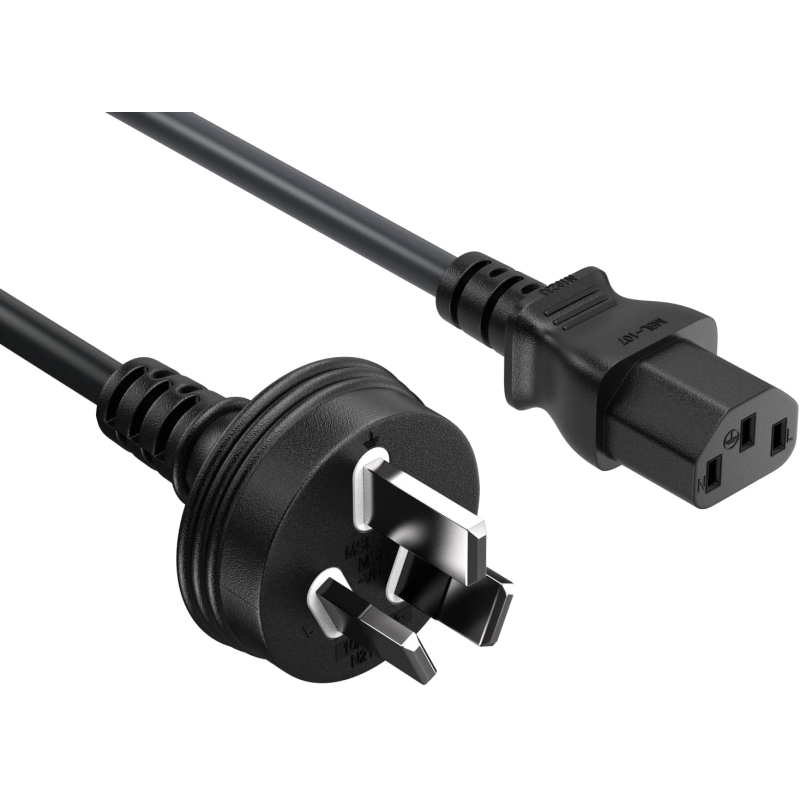
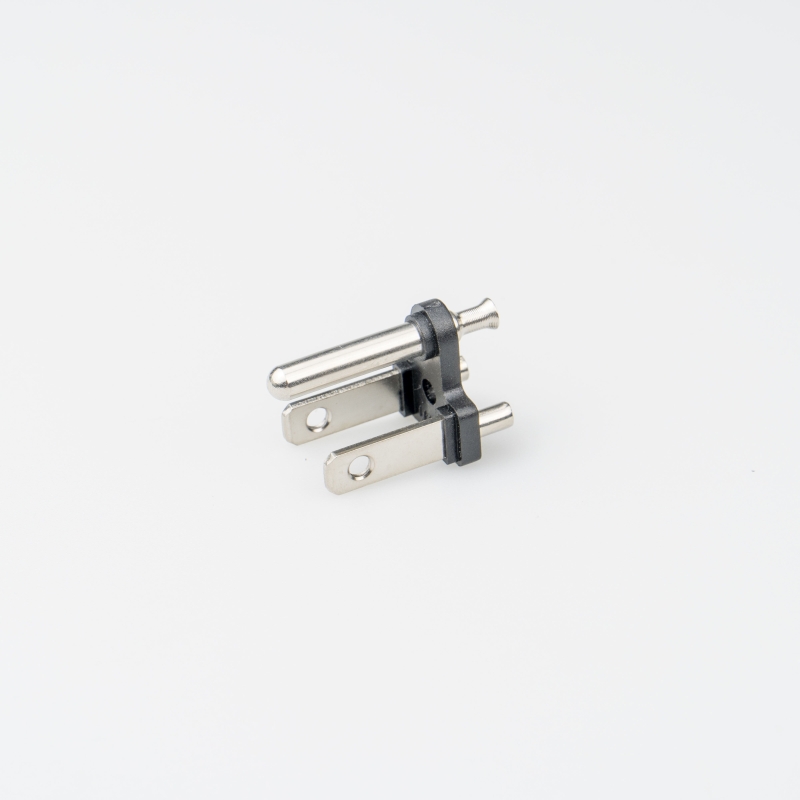
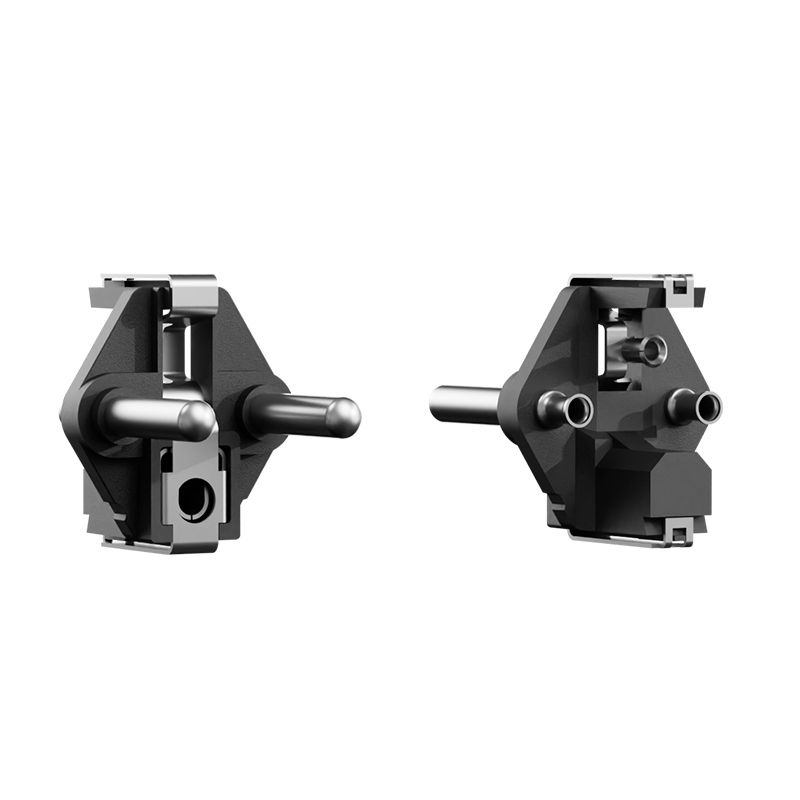
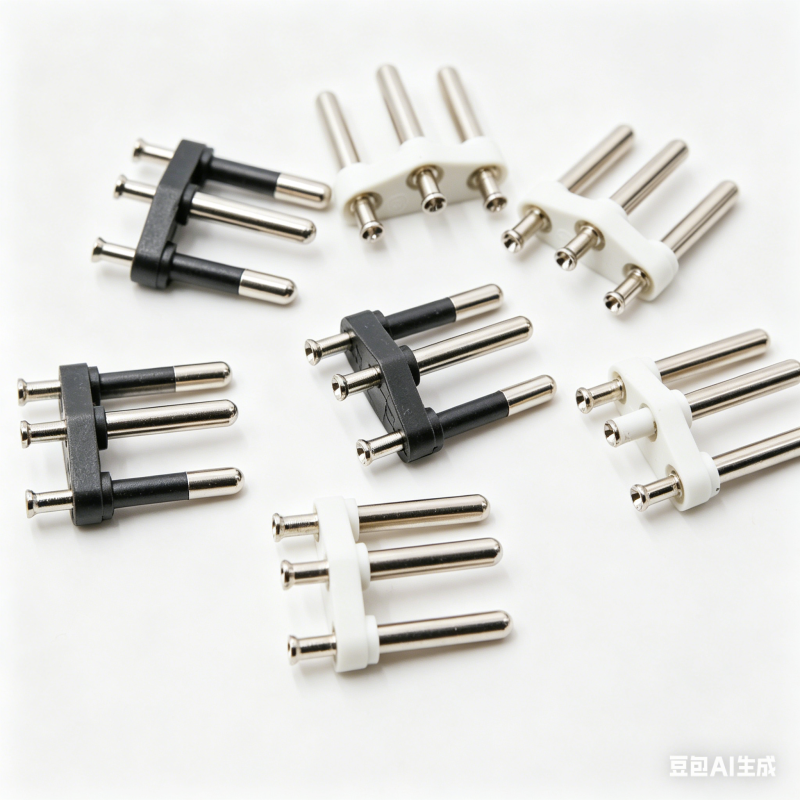
Australian plugs feature distinctive insulated pins arranged in an inverted "V" shape. The insulation on the current-carrying pins (Active and Neutral) is mandatory to prevent accidental electrocution if the plug is partially pulled from a live socket.
* 2-Pin AU Plug (Class II): Non-earthed, used for double-insulated appliances (e.g., consumer electronics).

* 3-Pin AU Plug (Class I): Earthed configuration, required for appliances with exposed metal chassis.
2. Technical Component Matrices
The table below details the standardized cable specifications commonly manufactured for global B2B procurement:
| Parameter / Component | Industry Standard Specification | B2B Application Context |
| Voltage Rating | $250 ext{V AC}$ | Standard Australian/NZ Single-Phase Grid |
| Current Ratings | $10 ext{A}$ (Standard) / $15 ext{A}$ & $16 ext{A}$ (Heavy Duty) | $15 ext{A/16A}$ plugs feature a wider Earth pin |
| Conductor Material | 100% Oxygen-Free Bare Copper ($99.97\%$ Purity) | Low resistance, zero risk of brittle fractures |
| Cable Jacket Options | H05VV-F (Light/Ordinary PVC) H07RN-F (Heavy-Duty Synthetic Rubber) | PVC: Standard indoor appliances Rubber: Industrial tools, extreme temperatures |
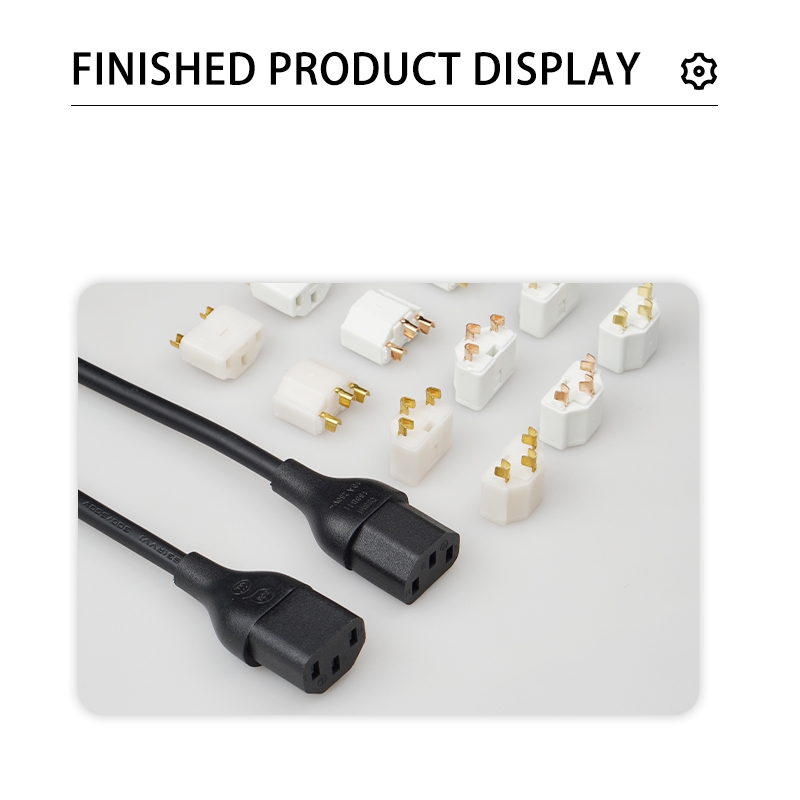
| IEC Connectors | IEC 60320 C7 (Shotgun), C13, C19, C5 (Cloverleaf) | Standardized termination for global hardware |
Technical Information Gap: Factory-Level Quality Testing Standards
When sourcing from an OEM manufacturer in China, verifying their internal testing procedures is essential for maintaining product integrity. Premium manufacturing facilities subject every SAA power cord batch to the following quality checks:
* Hi-Pot (Dielectric Withstand) Testing: Standard 10A 250V AU plug assemblies are subjected to a high-voltage surge (typically $2000 ext{V}$ to $3000 ext{V}$) to ensure the insulation barrier cannot be breached.
* Flexing and Bending Endurance Test: Cable samples are locked into an automated machine and bent at a $90^circ$ angle under a specific load for over 10,000 cycles to simulate long-term real-world wear.
* Insulation Resistance Test: Verifies that insulation resistance exceeds $100, ext{M}Omega$, mitigating short-circuit risks under high thermal loads.
* Copper Purity Verification: Premium factories utilize spectrometer testing to eliminate the risk of brittle, high-resistance Copper-Clad Aluminum (CCA) counterfeits.
Target B2B Applications for SAA Power Cords

Identifying the correct cord configuration depends heavily on the end-use environment of your product line.
Office Equipment and Consumer Electronics
* Typical Setup: SAA power cord for computers, monitors, server racks, and high-speed printers.
Common Spec: H05VV-F 3G $0.75 ext{mm}^2$ or $1.0 ext{mm}^2$ paired with an IEC C13 or C19 connector.
* Design Demand: Sleek aesthetics, flexible jackets, and precise strain-relief molding to fit tight office cubicles.
Domestic and Kitchen Appliances
* Typical Setup: Refrigerators, microwaves, washing machines, and vacuum cleaners.
* Common Spec: H05VV-F 3G $1.0 ext{mm}^2$ to $1.5 ext{mm}^2$ with high heat-resistance profiles.
* Design Demand: Oil and moisture resistance for outer jackets to handle demanding kitchen environments.
Industrial, Commercial, and Construction Environments
* Typical Setup: Site lighting, heavy industrial machinery, and outdoor commercial extensions.
* Common Spec: Heavy-duty PVC jacket power cord sets or H07RN-F Rubber cords rated at $15 ext{A}$ or $16 ext{A}$.
* Design Demand: Exceptional UV stabilization, impact-resistant molded internal plug frames, and IP44+ weatherproofing.
B2B Procurement Guide: How to Select and Source SAA Power Cords
Choosing the right manufacturing partner requires checking more than just a low unit price. Use this framework to optimize your supply chain.
Step 1: Align Cable Gauges with Load Currents
To prevent overheating, the Cross-Sectional Area (CSA) of the copper core must match the expected current draw and cord length:
$0.75 ext{mm}^2$ Conductors: Max $7.5 ext{A}$ load (suitable for short, low-draw consumer electronics).
$1.0 ext{mm}^2$ Conductors: Rated for standard $10 ext{A}$ setups up to $2$ meters.
$1.5 ext{mm}^2$ Conductors: Mandatory for long extension runs and high-draw $15 ext{A}$ industrial appliances.
Step 2: Choose the Correct Jacket Formulation (PVC vs. Rubber)
* Polyvinyl Chloride (PVC): Highly cost-effective, easily color-customized, and perfect for indoor consumer and office devices.
* Synthetic Rubber (Neoprene/EPR): Essential for products exposed to mechanical friction, extreme cold, direct sunlight, or chemicals.

Step 3: Evaluate OEM and Customization Requirements
A Tier-1 manufacturing partner should provide extensive customization options, including:
* Custom Inner Frameworks: Heavy-duty internal modular plug frames that increase structural durability.
* Length & Color Variations: Custom lengths tailored precisely to your device's packaging layout to reduce extra bulk.
* Integrated Branding: Logo embossing on the plug head alongside required regulatory marks.
Strategic Sourcing: Why Sourcing from Guangdong Offers Supply Chain Advantages
Southern China—specifically the Pearl River Delta region in Guangdong—remains the global hub for precision electrical component manufacturing. For international buyers, sourcing directly from this region provides distinct advantages:
1. Fully Integrated Supply Chains: From raw copper smelting to custom PVC compound formulation and advanced injection molding, the entire production process happens within a small geographic area, minimizing lead times.
2. Advanced In-House Testing Capabilities: Established Guangdong manufacturers run dedicated testing labs to handle ongoing compliance testing, avoiding the delays of third-party verification.
3. Flexible OEM Processes: Deep experience serving European, American, and Australian brands allows these factories to seamlessly handle custom packaging, barcoding, and split-shipment logistics.
Frequently Asked Questions (FAQ)
Q1: Can an SAA approved power cord be legally used in countries outside Australia and New Zealand?
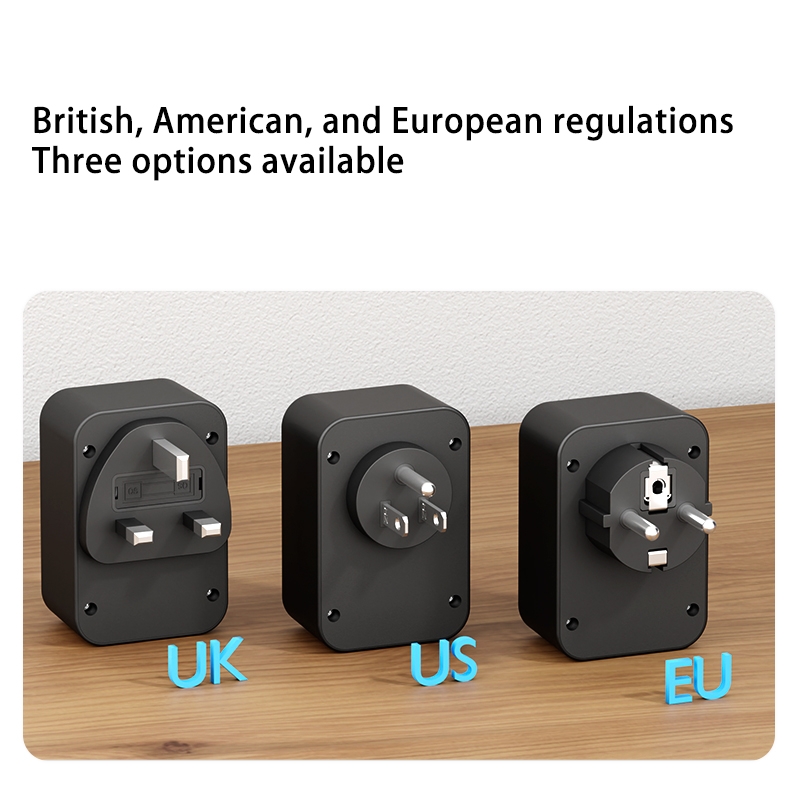
Technically, yes, if the destination country uses the AS/NZS 3112 physical layout (such as Fiji, Papua New Guinea, and parts of Argentina). However, it cannot be used in regions with different grid configurations (like the EU, UK, or US) without an adapter, which is generally discouraged for permanent commercial installations.
Q2: What is the standard validity period for an SAA Certificate?
An SAA electrical product safety certificate is typically valid for five (5) years from its date of issue. Importers must track these expiration dates; selling products with an expired certificate carries the same legal risks as selling uncertified hardware.
Q3: What is the practical difference between a 10A and a 15A Australian plug?
While both feature the same pin layout, a 15A AU plug features a significantly wider Earth pin. This physical safety design prevents a high-power 15A appliance from being plugged into a standard 10A wall outlet, which could overload the building's electrical circuit.

```
Q4: Are H05VV-F and H07RN-F cables fully approved under SAA standards?
Yes. SAA standards harmonize directly with international IEC standard cable designations. When built using pure copper conductors and approved jacket thicknesses, H05VV-F (PVC) and H07RN-F (Rubber) lines are fully certified for compliance in Australia and New Zealand.
Q5: How can a buyer verify if an OEM manufacturer's SAA certificate is authentic?
Importers can verify certifications by checking the official EESS Registration Database or using the public certification search portal on the SAA Approvals website. Valid listings will show matching factory details, correct model profiles, and an active compliance status.
Conclusion
Securing a reliable supply of certified SAA power cords is vital for protecting your brand's regulatory compliance, operational safety, and market reputation in Australia and New Zealand. Working directly with a specialized, factory-direct OEM manufacturer in Guangdong ensures you get pure copper performance, rugged durability, and fully verifiable compliance markings.
Avoid the risks of customs delays and product recalls. Contact our engineering team today to review your specifications, request free engineering samples, and optimize your global product lines.
References
1. Standards Australia Official Portal: [AS/NZS 3112:2017 Approvals and Test Criteria for Plugs and Socket-Outlets]
2. Electrical Equipment Safety System (EESS): [In-Scope Electrical Equipment Safety Registration Guidelines]
3. Joint Accreditation System (JAS-ANZ): [Product Certification Body Accreditation Directory]
4. International Electrotechnical Commission: [IEC 60320-1 Appliance Couplers for Household and General Purposes]



 Email
Email