

The Ultimate Buyer Guide to IEC 60320 C14 to C13 Power Cords
Content Menu
● Question 1: What Exactly Is an IEC 60320 C14 to C13 Power Cord?
● Question 2: What Devices Use a C14 to C13 Power Cord?
>> Data Center & IT Infrastructure
>> Commercial & Workspace Environments
● Question 3: Is Every C14 to C13 Power Cord the Same?
● Question 4: How Much Power Can a C14 to C13 Cable Handle?
>> Technical Performance Breakdown: AWG vs. Metric Standards
● Question 5: Can a C14 to C13 Power Cord Be Used for Servers?
>> Real-World Engineering Case Study
● Question 6: What Is the Difference Between C13 and C15 Connectors?
>> Technical Attribute Mapping: C13 vs. C15 Connectors
● Question 7: Which Certifications Should Buyers Look For?
● Question 8: Why Do Similar C14 to C13 Power Cords Have Very Different Prices?
>> The Breakdown of Cost Variations
● Question 9: How to Choose a Reliable C14 to C13 Power Cord Manufacturer?
>> 1. Request an Active Quality Management Audit
>> 2. Verify On-Site Testing Equipment
>> 3. Evaluate In-House Copper Processing
● Question 10: What Customization Options Are Available?
● Common Problems Buyers Encounter
>> Why Does My Power Cord Get Hot to the Touch?
>> Why Doesn't the Connector Fit Securely?
>> Why Did My Product Fail a Customs Certification Inspection?
● Industry Expert Recommendations
● Why Global Equipment Manufacturers Choose TISDLIP
● Frequently Asked Questions (FAQ)
>> 1. Is an IEC C13 connector fully compatible with an IEC C14 plug?
>> 2. Can I use a high-temperature C15 power cord inside a standard C14 server inlet?
>> 3. What is the maximum voltage rating for a standard C14 to C13 power cord?
>> 4. How does copper wire purity impact overall data center energy efficiency?
>> 5. What is the standard manufacturing lead time for custom OEM color-coded power cords?
Over the past 20 years manufacturing power cords for computer, server, and industrial equipment brands, one of the most common questions we receive from enterprise procurement managers and data center engineers is straightforward: *"Can I use any C14 to C13 power cord, or do specifications really matter?"*
The short answer is no, they are not all the same. Choosing an incorrect or sub-standard ac power cord iec 60320 c14 plug to c13 connector setup can lead to localized overheating, catastrophic equipment downtime, failed compliance audits, and severe electrical hazards. When deploying high-density server racks or sourcing components for global distribution, your power infrastructure is only as reliable as its weakest connection.
This technical guide walks through the exact IEC 60320 connector guide framework, addressing the 10 critical questions B2B buyers must ask to match load requirements, navigate regional safety certifications, and evaluate industrial manufacturing capabilities.
Question 1: What Exactly Is an IEC 60320 C14 to C13 Power Cord?

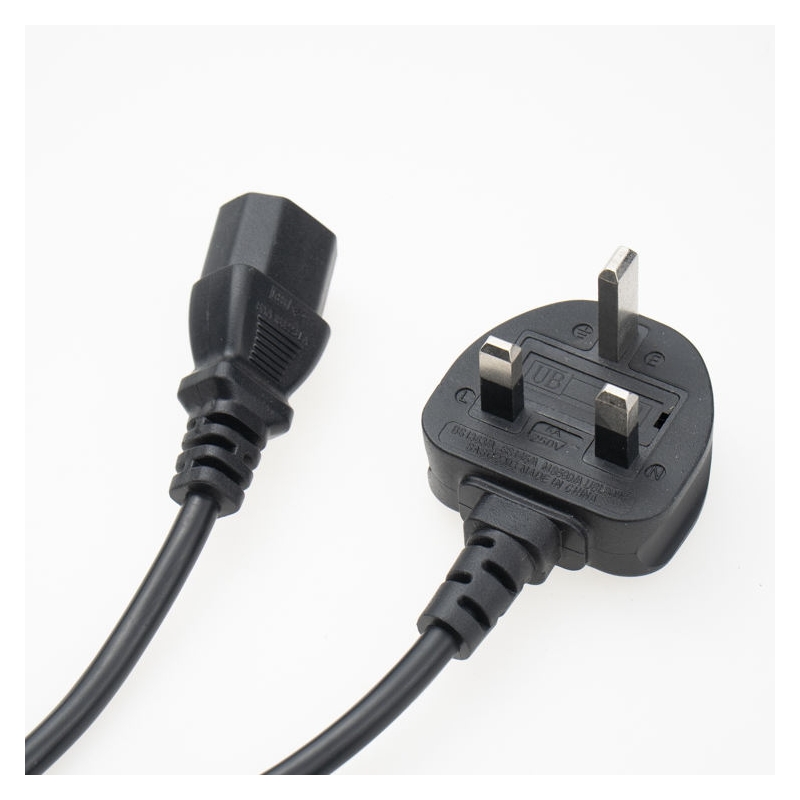
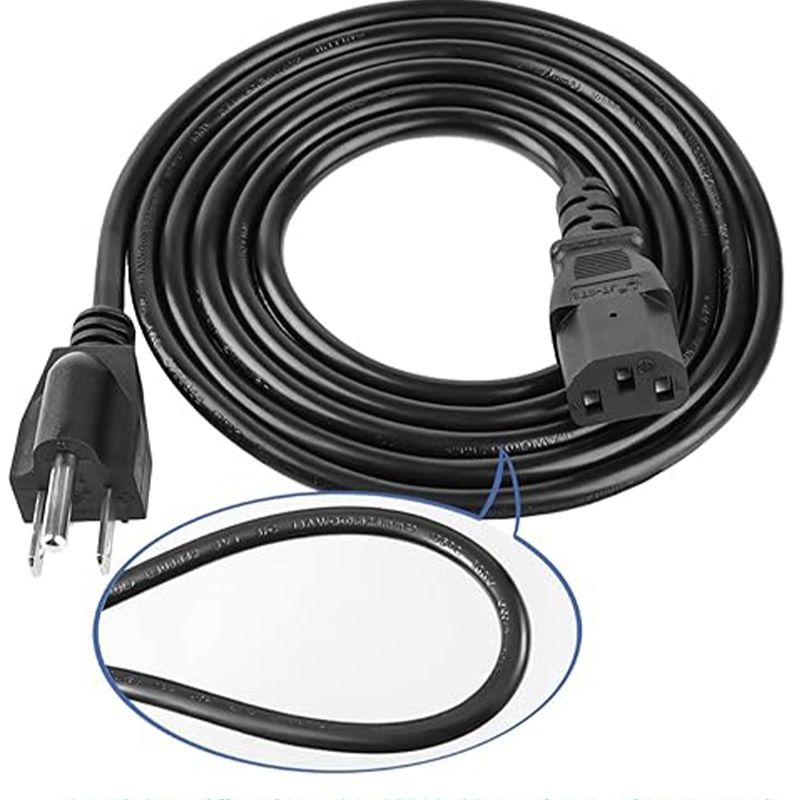
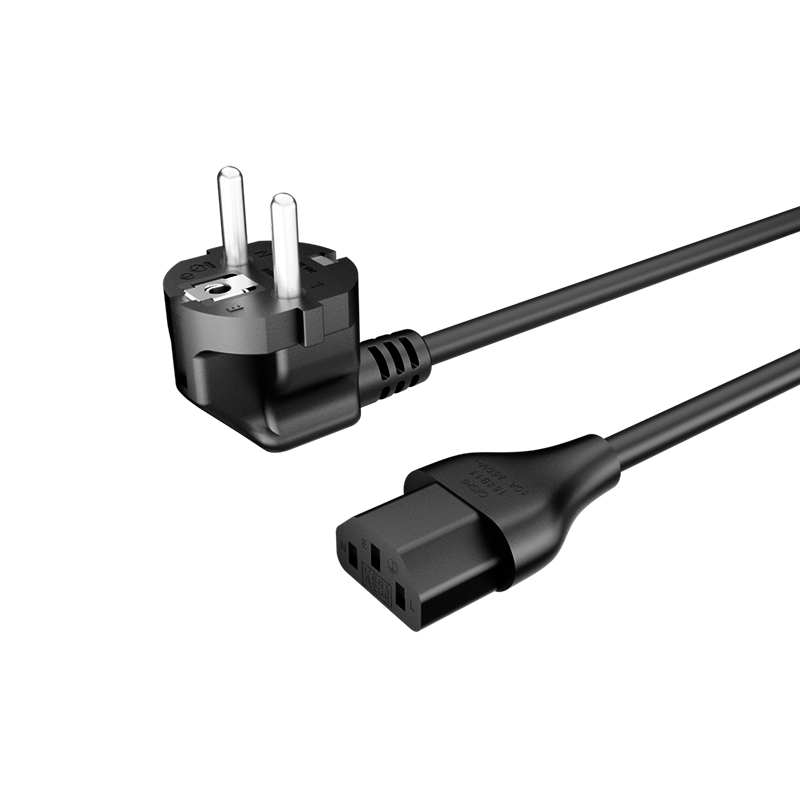
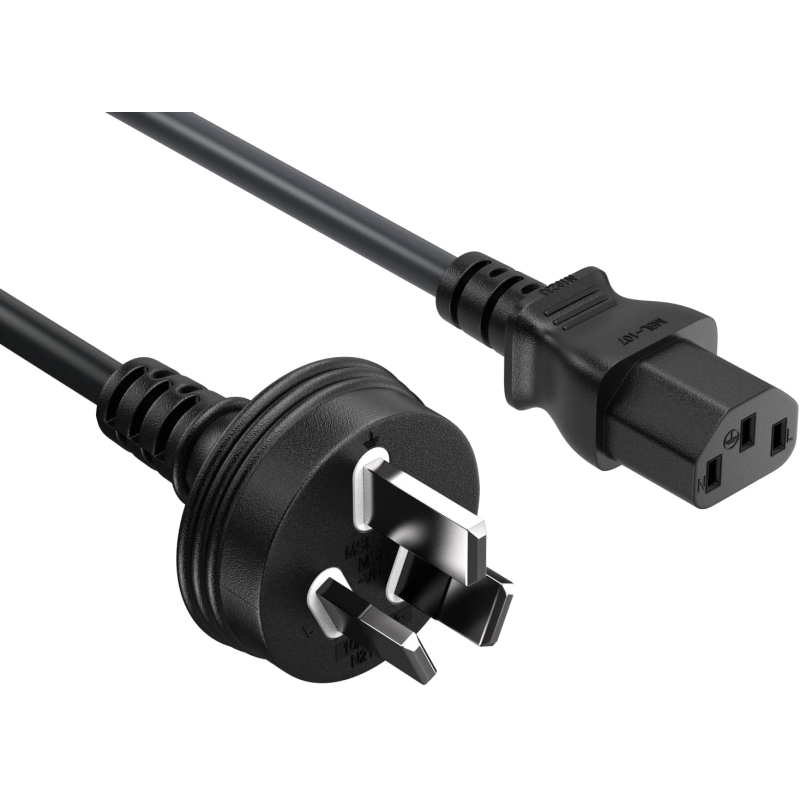
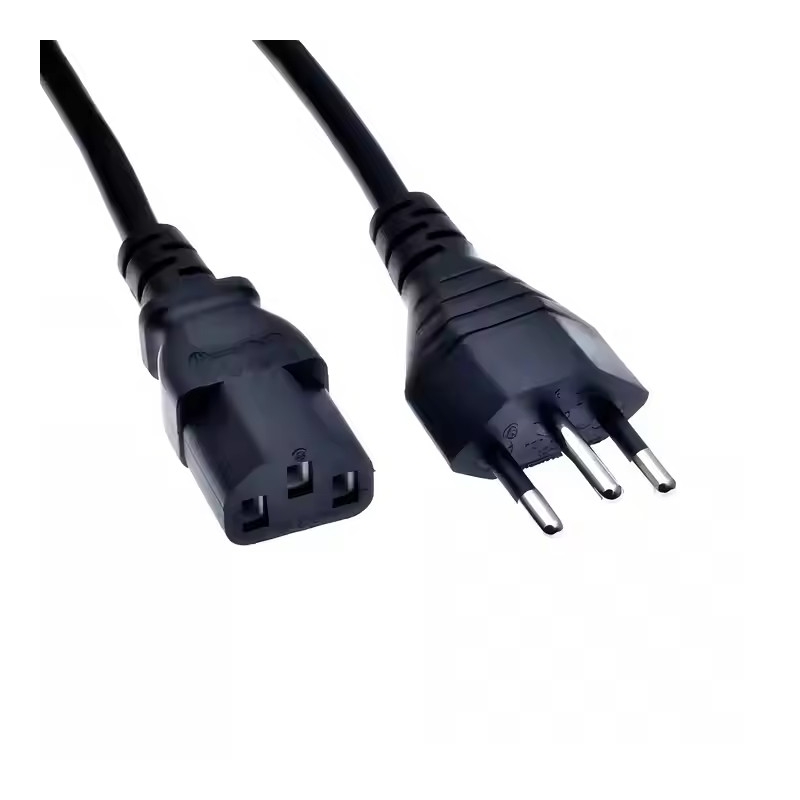
To understand electrical compatibility, we must look at the IEC 60320 standard. Established by the International Electrotechnical Commission, this global standard defines non-locking appliance couplers used to connect power supply cords to electrical equipment up to 250 Volts (V).
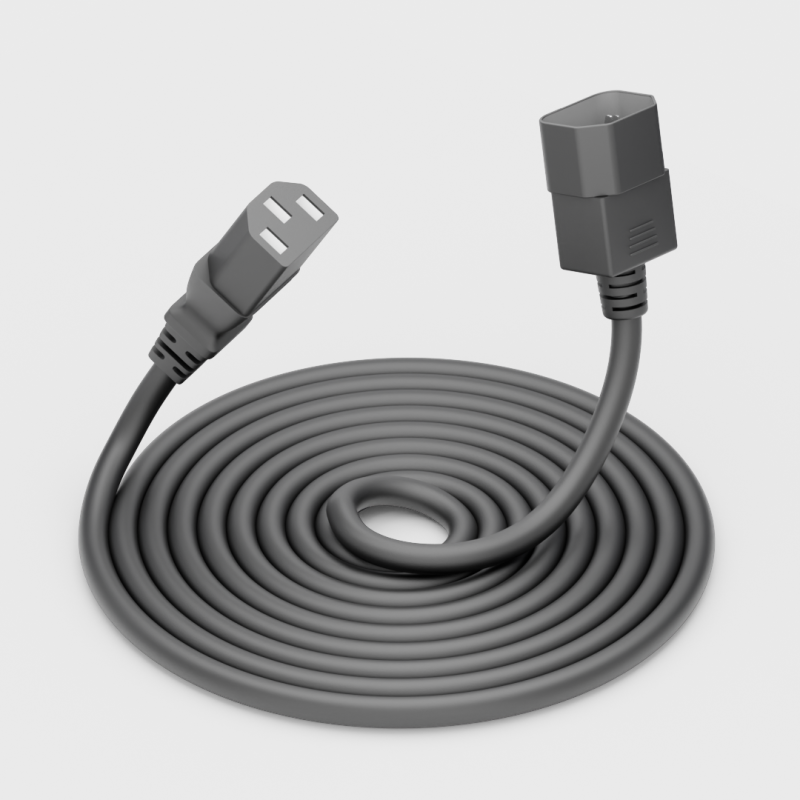
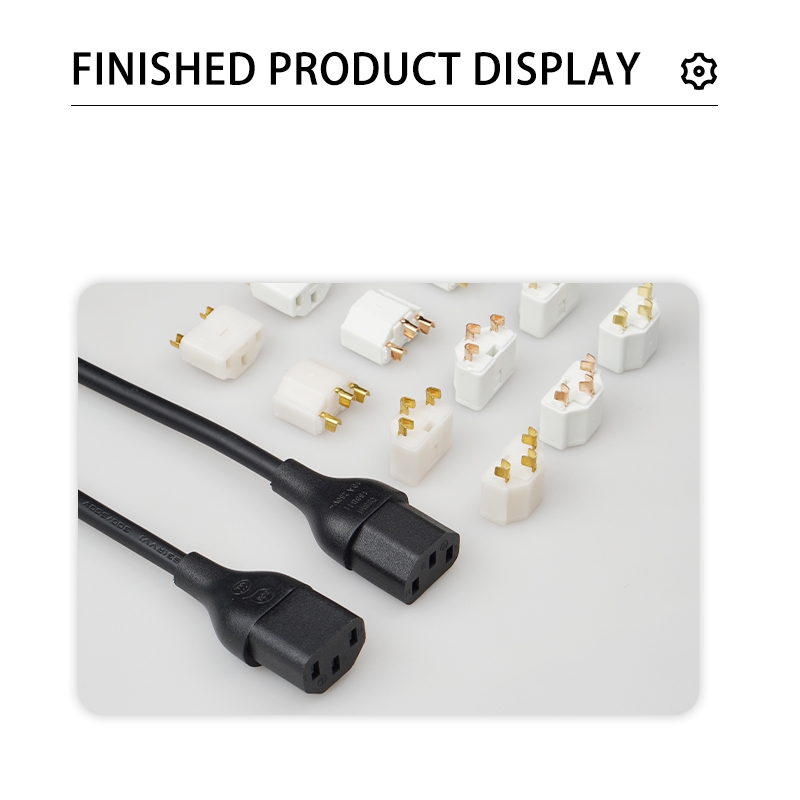
* The IEC C14 Plug: This is the male inlet/plug featuring three shrouded pins. It plugs directly into an output receptacle on a Power Distribution Unit (PDU) or an Uninterruptible Power Supply (UPS).
* The IEC C13 Connector: This is the female component with three recessed slots. It plugs directly into the power inlet of your computer, server, or peripheral device.
In bulk manufacturing, these configurations are precision-molded with integrated strain reliefs to ensure the inner copper wiring remains completely insulated under repetitive physical stress.
Question 2: What Devices Use a C14 to C13 Power Cord?

The C14 to C13 assembly is the universal backbone of enterprise IT environments and commercial workspaces. It bridges the gap between high-density rack infrastructure and downstream hardware.
Data Center & IT Infrastructure
* Enterprise Servers: High-performance blade and rack-mount units (e.g., Dell PowerEdge, HPE ProLiant).
* Rack PDUs: Providing the primary point of connection for an unmanaged or switched c14 to c13 cable for PDU layout.
* Network Switches & Routers: Core enterprise switches (e.g., Cisco Catalyst, Juniper EX Series).
* Storage Area Networks (SAN): High-availability storage arrays.
Commercial & Workspace Environments
* Enterprise Desktop Computers & Workstations: High-draw engineering towers.
* Professional Monitors & Displays: Medical imaging screens and control room panels.
* Commercial Printers & Scanners: Heavy-duty office imaging systems.
* Uninterruptible Power Supplies (UPS): Providing battery backup connections for edge network closets.
Question 3: Is Every C14 to C13 Power Cord the Same?
No. While two cables may look identical on the outside, their internal engineering, material purity, and performance metrics vary drastically. A cheap commodity cord will compromise a multi-million dollar data center.
When auditing a c14 to c13 power cord manufacturer, you must evaluate five primary physical variables:
* Wire Gauge (Conductor Thickness): Measures the cross-sectional area of the copper wire. Thicker conductors drop less voltage over distance and generate significantly less heat.
* Copper Material Quality: High-tier factories use 100% Oxygen-Free Pure Copper. Low-cost alternatives often sneak in Copper-Clad Aluminum (CCA), which exhibits high electrical resistance and dangerous thermal breakdown thresholds.
* Insulation & Jacket Compound: The outer protective layer (typically PVC or Rubber) dictates flexibility, chemical resistance, and flame-retardant properties (such as SJT, SVT, or H05VV-F ratings).
* Temperature Rating: Standard PVC jackets operate safely up to 60°C or 75°C. High-density server deployments require heavy-duty jackets rated for 105°C continuous exposure.
* Safety Certifications: The presence of localized testing marks molded into the plastic housings confirms compliance with regional electrical codes.
Question 4: How Much Power Can a C14 to C13 Cable Handle?
Current-carrying capacity is bound by wire gauge and environmental heat dissipation. In international procurement, American Wire Gauge (AWG) is utilized across North America, while metric cross-sectional area (mm2) is mandated across Europe, Asia, and Oceania.
Technical Performance Breakdown: AWG vs. Metric Standards
| Wire Gauge Standard | Cross-Sectional Area (mm2) | Rated Current Capacity | Target Voltage Range | Common Environmental Application |
| 18 AWG | 0.824 mm2 | 10 Amps | 125V – 250V | Standard Desktop PCs, LED Monitors, Peripherals |
| 16 AWG | 1.31mm2 | 13 Amps | 125V – 250V | Mid-range Servers, Core Switches, Smart PDUs |
| 14 AWG | 2.08 mm2 | 15 Amps | 125V – 250V | High-Density Servers, Storage Arrays, Blade Chasses |
| H05VV-F 3G0.75 | 0.752mm2 | 6 Amps | 220V – 250V | Light-duty International Display Hardware |
| H05VV-F 3G1.0 | 1.0mm2 | 10 Amps | 220V – 250V | Standard European Server & Networking Gear |
| H05VV-F 3G1.5 | 1.5mm2 | 16 Amps | 220V – 250V | Heavy-Duty EU Data Center Environments |
Critical Safety Rule: Never exceed 80% of a power cord maximum rated current capacity for continuous loads (operations running uninterrupted for 3 hours or more), in strict accordance with the National Electrical Code (NEC). For example, an 18 AWG cord rated at 10A should carry a continuous load of no more than 8 Amps.
Question 5: Can a C14 to C13 Power Cord Be Used for Servers?
Yes, a c14 to c13 server power cord is the industry baseline for rack-mounted hardware, but its deployment requires strict engineering oversight.
Real-World Engineering Case Study
A colocation data center provider experienced intermittent power supply failures and structural sagging across their server power cords. Upon factory inspection, we discovered they had procured budget 18 AWG cords for dual-socket enterprise servers drawing a continuous 8.8 Amps at 208V. While technically within the absolute maximum limit of the 10A wire, the ambient temperature inside the hot-aisle containment reached 45°C. The increased ambient heat caused the 18 AWG conductors to degrade, creating a thermal runaway loop that melted the outer PVC jacket.
Upgrading the facility to 14 AWG / 1.5mm² pure copper cords rated for 105°C dropped conductor resistance, stabilized the power factor, and eliminated thermal failures across their server stacks.
When specifying cables for servers, always verify:
1. Total Power Draw: Sum the maximum potential draw of your redundant power supplies (PSUs).
2. Thermal Ambient Conditions: Account for hot-aisle containment zones that stress standard 60°C power cords.
3. Continuous Runtime Profile: Select thicker gauges to handle continuous operational demands without impedance-induced voltage drop.
Question 6: What Is the Difference Between C13 and C15 Connectors?
When upgrading infrastructure, buyers frequently confuse the standard C13 connector with the specialized IEC C15 connector. While they feature a similar footprint, they cannot always be used interchangeably.
Technical Attribute Mapping: C13 vs. C15 Connectors
| Structural & Thermal Feature | IEC 60320 C13 Connector | IEC 60320 C15 Connector |
| Maximum Internal Temperature | 70°C (158°F) | 120°C (248°F) |
| Physical Appearance | Smooth, uniform outer face | Physical notch molded on the bottom face |
| Mating Compatibility | Fits C14 inlets only | Fits both C14 and high-temperature C16 inlets |
| Primary Industry Use Case | Standard computing, switches, routers | High-density blade servers, PoE switches, electric kettles |
The physical notch on the C15 connector acts as a hardware safety override. It prevents a user from accidentally inserting a standard 70°C rated C13 cord into a high-temperature C16 appliance inlet, which would melt the plastic housing and trigger an electrical fire.
Question 7: Which Certifications Should Buyers Look For?
Electrical safety certifications are mandatory legal requirements for industrial imports. A lack of recognized testing marks will invalidate commercial insurance policies and cause customs seizures during importation.
* North American Markets (USA & Canada): Look for UL (Underwriters Laboratories) or ETL (Intertek) compliance marks. These ensure the cable complies with UL 817 safety standards for cord sets and power-supply cords.
* European Union (EU Countries): Look for VDE and ENEC marks, proving compliance with EN 60320 harmonized safety directives and the CE RoHS environmental framework.
* Australian & New Zealand Markets: SAA Certification is legally required. The plug and connector must display an explicit SAA approval number or regulatory compliance mark (RCM).
* Japanese Market: Must carry the PSE (Product Safety Electrical Appliance & Material) diamond mark for imported goods.
* Chinese Market: Requires the standard CCC (China Compulsory Certification) mark stamped clearly on both the cable jacket and the plug bodies.
Question 8: Why Do Similar C14 to C13 Power Cords Have Very Different Prices?
In bulk manufacturing B2B procurement, when a quote looks too good to be true, the manufacturer is extracting cost from hidden material compromises.
Total Manufacturing Cost = Raw Copper Purity + Compound Integrity + Testing Protocols + Regulatory Compliance
The Breakdown of Cost Variations
1. Copper Conductor Purity: Copper represents up to 60-70% of total raw material costs. Ethical manufacturers use 99.9% pure, oxygen-free copper. Sub-tier factories substitute this with recycled scrap copper containing high impurity levels, or worse, illegal Copper-Clad Aluminum (CCA) which increases structural resistance by over 60%.
2. Virgin vs. Recycled Plastic Compounds: High-quality power cords use virgin PVC compounds optimized for tensile strength and flame retardation. Low-cost competitors use cheap, reground plastic scraps that split open when bent or emit toxic gasses when warm.
3. Automated Processing & Quality Overhead: Trustworthy factories invest in multi-stage automated testing lines. Budget operations rely on manual assembly with visual-only quality checks, skipping high-voltage insulation tests.
4. Certification Licensing Audits: Maintaining valid UL, VDE, and SAA certifications requires quarterly factory inspections and ongoing lab compliance fees. Uncertified operations bypass these overhead costs entirely, leaving the importer legally liable.
Question 9: How to Choose a Reliable C14 to C13 Power Cord Manufacturer?
Protect your supply chain by verifying your supplier has the proper industrial capabilities before placing bulk orders.
1. Request an Active Quality Management Audit
Verify the factory holds an authentic ISO 9001:2015 certification. This ensures every step of production, from raw material receipt to final packaging, is tracked and controlled.
2. Verify On-Site Testing Equipment
A professional c14 to c13 power cord manufacturer should run a dedicated testing lab containing:
* Automated Continuity & Polarity Testers: To verify zero internal wiring crosses.
* Hipot (High-Potential) Testing Stations: Subjecting cables to over 2000V AC to check insulation stability.
* Flexing & Bending Test Machinery: Validating strain relief durability over thousands of cycles.
* RoHS Spectrometers: Ensuring compliance with hazardous substance limits.
3. Evaluate In-House Copper Processing
Factories that handle their own wire drawing and PVC compounding maintain complete control over raw material tolerances and offer shorter manufacturing lead times.
Question 10: What Customization Options Are Available?
Partnering with an OEM/ODM supplier allows engineering teams to tailor product specifications for targeted efficiency gains.
* Custom Cable Lengths: Match exact rack runs (e.g., 1ft, 2ft, 3ft, or custom metric lengths) to eliminate slack, improve airflow, and clean up cable management inside the server cabinet.
* Color-Coded Jackets: Specify red, blue, green, or yellow cables to visually isolate redundant power paths (e.g., A-feed vs. B-feed) for data center technicians.
* Locking Connector Upgrades: Request specialized locking mechanisms (such as dual-sided locking hooks or inner-sleeve locks) to prevent accidental disconnects caused by human error or machine vibration.
* Tailored Branding & Retail Packaging: Take advantage of custom laser-engraved logos, custom outer printing matrices on the jacket, bundled barcode packaging, or sustainable retail boxes for immediate distribution.
Common Problems Buyers Encounter
Why Does My Power Cord Get Hot to the Touch?
This happens because the internal conductor gauge is too thin for the attached current load, or the wire is made of high-resistance CCA. If resistance is high, power drops across the line and is released as heat ($P = I^2R$). Immediately swap the cable for a thicker, pure copper alternative.
Why Doesn't the Connector Fit Securely?
This is typically caused by poor dimensional control during injection molding. If a factory's mold tolerances shift by even fractions of a millimeter, the C13 connector will fit loosely inside the device's C14 inlet. This loose fit causes localized electrical arcing, micro-disconnections, and pitting on the contact pins.
Why Did My Product Fail a Customs Certification Inspection?
This occurs when an overseas supplier applies fake or expired UL/VDE safety marks to the cable housing. Always demand active, verifiable safety certificate registry numbers linked directly to the manufacturer's corporate legal name before importing.
Industry Expert Recommendations
As a factory technical lead, here are my direct engineering recommendations for bulk power cord selection:
* For Office Workstations & Displays: Standard 18 AWG / 0.75mm² pure copper cords provide excellent efficiency and flexibility at a balanced price point.
* For Standard Rack Servers & Core Switches: Upgrade to 16 AWG / 1.0mm² cords rated for 105°C to handle continuous loads safely in enclosed hot environments.
* For High-Density Blade Servers & High-Wattage PDUs: Standardize on heavy-duty 14 AWG / 1.5mm² cords to minimize line loss and maintain a cool thermal profile.
* For High-Heat PoE Switching Gear: Transition completely away from C13 configurations and deploy specialized, high-temperature C15 connectors rated for 120°C.
Why Global Equipment Manufacturers Choose TISDLIP

At TISDLIP, we bring over 20 years of technical expertise directly to your global logistics pipeline. By managing the complete manufacturing lifecycle—from internal copper wire drawing to automated final injection molding—we ensure structural consistency across every bulk delivery.
Our fully automated production facility utilizes continuous high-voltage testing lines to ensure zero defects, helping you protect your infrastructure and clear compliance hurdles smoothly. We provide comprehensive OEM/ODM customization services, flexible packaging options, and globally validated certifications (including UL, VDE, SAA, and CCC) tailored for international enterprise distribution.
Frequently Asked Questions (FAQ)
1. Is an IEC C13 connector fully compatible with an IEC C14 plug?
Yes, the IEC C13 female connector is designed to mate with the IEC C14 male plug. This pair represents the global standard for connecting IT equipment to Power Distribution Units (PDUs).
2. Can I use a high-temperature C15 power cord inside a standard C14 server inlet?
Yes. The C15 connector features an open notch that allows it to plug into standard C14 inlets. However, a standard C13 connector cannot plug into a high-temperature C16 inlet because it lacks this notch.
3. What is the maximum voltage rating for a standard C14 to C13 power cord?
Under the global IEC 60320 framework, standard C14 to C13 power cords are rated for a maximum operating potential of 250 Volts AC. This makes them suitable for both 110V/120V residential setups and 208V/240V industrial or data center power grids.
4. How does copper wire purity impact overall data center energy efficiency?
Using 100% pure oxygen-free copper minimizes internal resistance compared to recycled copper or CCA alternatives. Lower resistance minimizes heat loss along the cable run, which drops cooling costs and helps facilities optimize their Power Usage Effectiveness (PUE).
5. What is the standard manufacturing lead time for custom OEM color-coded power cords?
Standard factory production cycles for custom configurations run between 15 to 25 days. This timeline accounts for custom PVC compounding, automated wire drawing, precision injection molding, and mandatory batch safety testing.
References
* International Electrotechnical Commission: [IEC 60320 Appliance Couplers Standard]
* Underwriters Laboratories: [UL 817 Standard for Cord Sets and Power-Supply Cords]
* European Committee for Electrotechnical Standardization: [EN 60320 Product Safety Harmonization]
* National Fire Protection Association: [NFPA 70 National Electrical Code (NEC)]
Article Metrics Summary
Sourcing IEC C14 to C13 power cords for servers or PDUs? Learn critical differences in wire gauge, amp ratings (10A vs 15A), and regional certifications (UL, VDE, SAA) from a 20-year factory expert. Avoid dangerous counterfeits and optimize your data center infrastructure with our technical procurement guide.



 Email
Email