


Content Menu
>> Polarized vs. Non-Polarized: Why Is One Blade Wider?
● Why Are 2 Pin Power Cords Safe? Understanding Class II Double Insulation
>> What Does the Double Insulation Symbol Mean?
>> When Is a Ground Wire Required?
● Common Types of 2 Pin Power Cords
>> NEMA 1-15P: The Two-Flat-Blade Power Plug
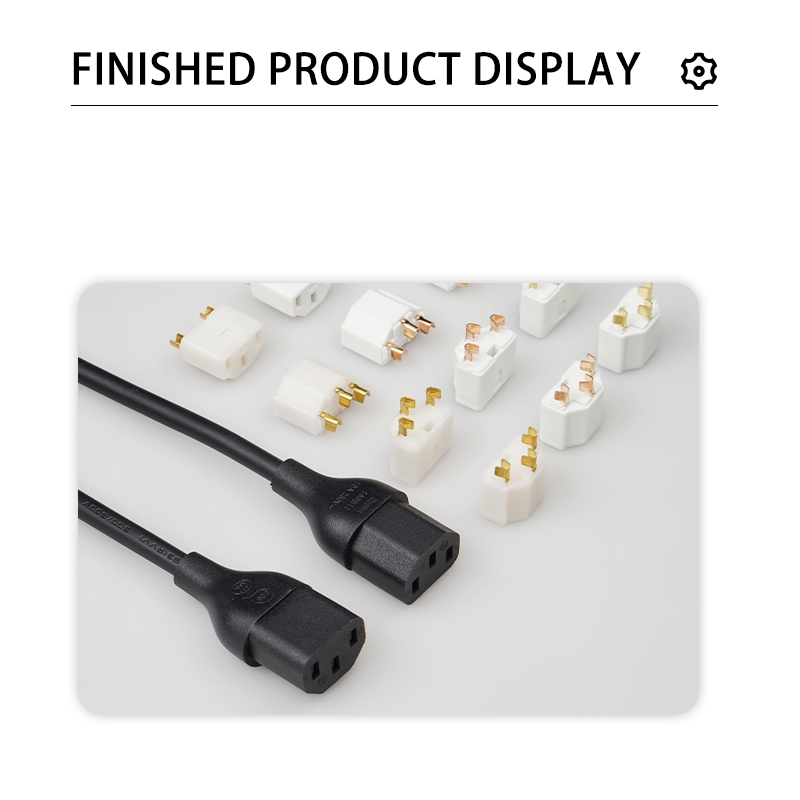
>> IEC C7: The Figure-8 Power Cord
>> Polarized vs. Non-Polarized IEC C7 Connectors
>> Don't Confuse C7 with C5 and C13
● Can You Replace a 2 Pin Power Cord with a 3 Pin Power Cord?
● Living With Two-Prong Outlets
● How to Choose the Right 2 Pin Power Cord: 5 Specifications to Match
>> 1. Check the Plug and Appliance Connector
>> 3. Verify the Voltage and Current Rating
>> 4. Choose the Correct Wire Gauge and Insulation
>> 5. Check Safety Certifications and Cable Length
● How to Source 2 Pin Power Cords for OEM and Wholesale Projects
● Common 2 Pin Power Cord Problems and Solutions
● Frequently Asked Questions About 2 Pin Power Cords
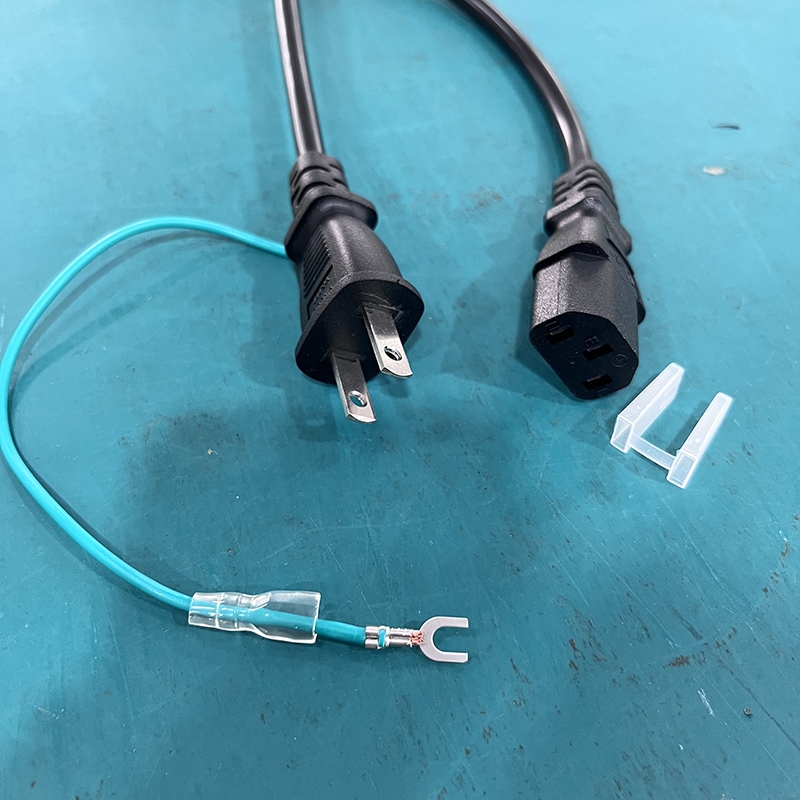
A 2 pin power cord is an ungrounded AC power cable with two electrical contacts instead of three. Common examples include the figure-8 cable used with televisions and radios, as well as the flat two-prong plug found on lamps and small household appliances.
The absence of a third pin is not necessarily a safety compromise. Two-pin power cords are commonly designed for Class II (double-insulated) electrical appliances, which use basic and supplementary insulation or reinforced insulation to provide protection against electric shock without relying on a protective earth connection.
However, not every two-pin power cord is suitable for every appliance. When selecting a replacement or sourcing power cords for a commercial project, buyers should consider the plug standard, appliance connector, polarization, rated voltage, current capacity, conductor specifications, and applicable safety certifications.
This guide explains the main types of 2 pin power cords, how they work, when they are safe to use, and what to check before purchasing replacement or wholesale products.
What Is a 2 Pin Power Cord?
A 2 pin power cord is an AC power cable with two current-carrying conductors and no protective earth conductor. Depending on the regional plug standard and appliance design, it may have flat blades, round pins, or an appliance-side connector such as an IEC C7 figure-8 connector.
The two conductors generally carry line (live) and neutral connections. However, their polarity may not be fixed in some plug designs, so the correct connection depends on the applicable electrical system and appliance construction.
You can commonly find two-pin power cords on:
- Televisions, monitors, radios, and small speakers using figure-8 appliance inlets.
- Laptop and printer power adapters designed for two-pin AC connections.
- Lamps, clocks, and small household appliances with molded two-prong plugs.
- Shavers, toothbrush chargers, and other appliances designed for two-pin power connections.
The electrical principle is straightforward: protective grounding provides a path for fault current when an electrical fault energizes an exposed conductive enclosure. Class II appliances use a different protection method, relying on double or reinforced insulation to reduce the risk of electric shock.
The suitability of a two-pin power cord therefore depends on the appliance's electrical protection design and the manufacturer's specified power connection.

Polarized vs. Non-Polarized: Why Is One Blade Wider?
Some US-style 2 prong power cords have one wider blade and one narrower blade. This is known as a polarized plug.
The wider blade is intended to connect to neutral, while the narrower blade connects to line (hot). In compatible appliances, polarization helps maintain the intended electrical connections, including the correct placement of switches and other components.
This arrangement can reduce the risk of accessible electrical parts becoming energized when an appliance is switched off.
A non-polarized plug has two blades of equal width and can generally be inserted in either orientation into a compatible receptacle.
When purchasing a replacement 2 prong power cord, check whether the original plug and appliance are polarized. Do not file, modify, or remove a wider blade to force a plug into an incompatible outlet.

Why Are 2 Pin Power Cords Safe? Understanding Class II Double Insulation
One important marking to recognize is the square-in-square symbol printed on an electrical appliance's rating label.
This symbol identifies Class II equipment, which uses double insulation or reinforced insulation as its protection against electric shock. Unlike Class I equipment, it does not rely on a protective earth conductor.
A Class II appliance typically incorporates:
- Basic insulation between live electrical parts and accessible components.
- Supplementary insulation or reinforced insulation providing additional protection.
- An enclosure and internal construction designed to maintain the required electrical separation.
The relevant appliance safety standard determines the specific insulation and testing requirements.
What Does the Double Insulation Symbol Mean?
The double-square symbol indicates that an appliance is designed to meet Class II protection requirements.
For manufacturers and buyers, this distinction matters because the electrical protection class determines whether a protective earth connection is required.
Practical considerations include:
- A two-pin power cord is an appropriate connection for equipment specifically designed for two-wire operation.
- Adding a ground conductor does not automatically improve the protection of a properly designed Class II appliance.
- Class I appliances require an appropriate protective earth connection and must not be operated with a replacement cord that removes this protection.
One important point: double insulation protects the appliance, not the power cord itself. A damaged two-prong power cable with exposed conductors, cracked insulation, or loose connections can still cause electric shock, overheating, or fire.
When Is a Ground Wire Required?
Whether a power cord needs a ground conductor depends on the appliance's protection class and design.
| Equipment type | Protection method | Typical power cord |
|---|---|---|
| Class I appliance | Basic insulation and protective earthing | Three-conductor grounded cord |
| Class II appliance | Double or reinforced insulation | Two-conductor ungrounded cord |
| Class III appliance | Extra-low-voltage supply from an appropriate source | Depends on the power supply arrangement |
A two-pin power cord should only be used where the appliance manufacturer specifies a two-wire connection.
For electrical safety, never remove the ground pin from a three-pin plug or substitute a two-wire cable for a cord required to provide protective earthing.
Common Types of 2 Pin Power Cords
Two-pin power cords are available in different configurations depending on the destination market, appliance inlet, and application.
Two common configurations are NEMA 1-15P plugs and IEC C7 figure-8 connectors.
| Type | Appearance | Common applications | Typical rating or specification |
|---|---|---|---|
| NEMA 1-15P | Two flat parallel blades, polarized or non-polarized versions | Lamps, clocks, and small appliances | Plug rating commonly 15A, 125V |
| IEC C7 | Two-pin figure-8 connector | TVs, radios, printers, and audio equipment | 2.5A, 250V AC |
| IEC C5 (reference) | Three-pin Mickey Mouse connector | Compatible laptop power adapters | Commonly 2.5A, 250V AC |
| IEC C13 (reference) | Three rectangular contacts | Desktop computers and compatible monitors | Commonly 10A, 250V AC under IEC ratings |
These are typical connector or plug ratings, not guaranteed ratings for every complete power cord assembly. The final rating depends on the cable, plug, connector, construction, and applicable certification.
NEMA 1-15P: The Two-Flat-Blade Power Plug
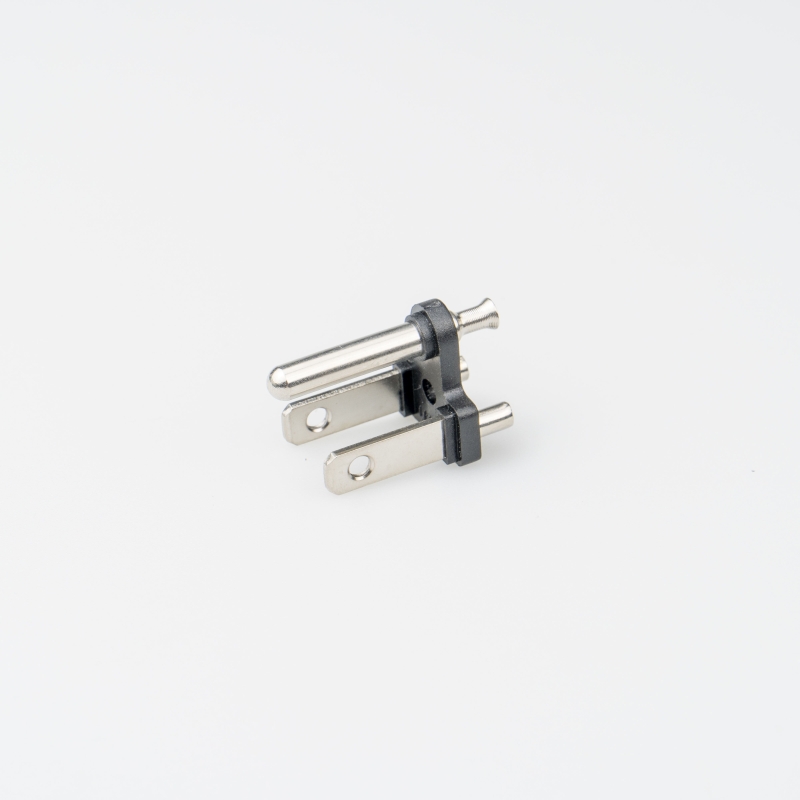
NEMA 1-15P is a common North American two-prong plug configuration.
It features two flat blades and is available in polarized and non-polarized versions. Polarized versions have one wider blade to help maintain the intended line and neutral connections.
These plugs are commonly used on:
- Table lamps and floor lamps.
- Clocks and radios.
- Small household electrical appliances.
- Other compatible low-power electrical products.
NEMA 1-15P plugs are commonly rated at 15A, 125V. However, this does not mean that every complete power cord assembly can safely carry 15A.
The actual allowable current depends on the conductor gauge, insulation, plug and connector ratings, product construction, and certification requirements.
For replacement lamp cords and appliance wiring, buyers should also check the original cable designation, such as SPT-1 or SPT-2, and the manufacturer's electrical specifications.
IEC C7: The Figure-8 Power Cord
The IEC C7 connector is a widely used two-pin appliance connector with a distinctive figure-8 shape.
It is commonly found on televisions, radios, audio equipment, printers, and compatible external power adapters.
The C7 connector mates with an IEC C8 appliance inlet.
Typical IEC C7 connector specifications include:
| Specification | Typical value |
|---|---|
| Connector type | IEC 60320 C7 |
| Mating appliance inlet | IEC 60320 C8 |
| Number of contacts | 2 |
| Typical rated current | 2.5A |
| Typical rated voltage | 250V AC |
| Connector shape | Figure-8 |
| Ground connection | None |
The actual rating and approval must be verified against the specific connector and complete power cord assembly.
Some C7 connectors are non-polarized, while others use a polarized design. The two versions are not necessarily interchangeable.
When selecting a replacement, check the appliance inlet rather than relying only on the general figure-8 appearance.
Polarized vs. Non-Polarized IEC C7 Connectors
IEC C7 connectors are available in different configurations.
A standard non-polarized C7 connector has a symmetrical figure-8 profile. A polarized C7 version has an asymmetrical profile, typically with one side squared off, to match the corresponding polarized C8 inlet.
Before purchasing, confirm:
- Whether the appliance inlet is polarized.
- Whether the connector shape matches the original.
- Whether the electrical rating meets the appliance requirements.
- Whether the cable length and regional plug configuration are suitable.
A connector that looks similar may still fail to fit correctly if its polarization or dimensions differ.
Don't Confuse C7 with C5 and C13
IEC C7, C5, and C13 connectors are sometimes confused because they are all commonly used for electronic equipment.
However, their physical structures and electrical configurations are different.
| Connector | Number of contacts | Appearance | Typical application |
|---|---|---|---|
| IEC C7 | 2 | Figure-8 | TVs, radios, and small electronics |
| IEC C5 | 3 | Mickey Mouse shape | Compatible laptop power adapters |
| IEC C13 | 3 | Rectangular connector | Desktop computers and monitors |
The C5 connector is a three-contact connector with an earth connection, while C13 is a larger three-contact appliance connector.
Always identify the appliance inlet before ordering a replacement power cable. Never substitute a two-conductor cord for a device that requires protective earthing.
Can You Replace a 2 Pin Power Cord with a 3 Pin Power Cord?
The answer depends on the appliance's electrical design and connector configuration.
A two-pin appliance inlet, such as IEC C8, is physically different from a three-contact inlet such as IEC C6 or C14. A cord with the wrong appliance-side connector will not provide the intended connection.
There are several important considerations:
- Check the appliance inlet: C8, C6, and C14 inlets have different configurations and require compatible connectors.
- Follow the manufacturer's specifications: Class II appliances are designed around a specified insulation and power connection arrangement.
- Maintain protective earthing: Class I equipment must retain its protective earth connection through a suitable grounded power cord.
- Avoid unauthorized adapters: Do not modify plugs, remove earth pins, or force incompatible connectors together.
A three-pin cord must not be used as a reason to alter an appliance's original electrical protection arrangement. Likewise, a two-pin cord must never replace a grounded cord when the equipment requires protective earth.
If the original power cord is damaged, obtain a replacement that matches the manufacturer's specified configuration and electrical ratings.
Living With Two-Prong Outlets
Older buildings in some markets may have ungrounded two-slot electrical receptacles.
For users in the United States, several solutions may be available depending on local electrical codes and the existing wiring condition.
Common considerations include:
1. Rewiring with a protective ground: A qualified electrician can assess whether a proper equipment grounding conductor can be installed.
2. GFCI protection: A GFCI receptacle or suitable upstream protection may provide additional protection against electric shock. However, GFCI protection does not create an equipment grounding conductor.
3. Correctly designed double-insulated appliances: Class II equipment with compatible two-pin power cords can be used where the electrical installation and manufacturer's instructions permit.
Where GFCI-protected replacements are permitted without an equipment grounding conductor, the receptacle must be appropriately identified according to applicable electrical codes.
Never cut off the ground pin from a three-prong power cord to make it fit a two-slot outlet. This removes an important safety feature from equipment designed to rely on protective earthing.
How to Choose the Right 2 Pin Power Cord: 5 Specifications to Match
Selecting a replacement 2 pin power cord requires more than checking whether the plug fits.
For both individual replacement purchases and wholesale sourcing projects, the following five specifications should be confirmed.
| No. | Specification | What to confirm |
|---|---|---|
| 1 | Plug and connector type | Regional wall plug, such as NEMA 1-15P, and appliance connector, such as IEC C7 |
| 2 | Polarization | Polarized or non-polarized plug and appliance inlet compatibility |
| 3 | Voltage and current rating | The complete power cord assembly must meet or exceed the appliance requirements within its approved rating |
| 4 | Wire gauge and jacket | Conductor size, insulation material, cable construction, and applicable cord designation |
| 5 | Certification and cable length | Required regional approvals, product documentation, and suitable cable length |
1. Check the Plug and Appliance Connector
First, identify both ends of the power cord.
The wall plug may be a NEMA 1-15P or another regional two-pin plug, while the appliance end may use an IEC C7 connector or a molded connection.
Do not assume that all two-pin power cords are interchangeable.
2. Confirm Polarization
Check whether the original power cord and appliance connection are polarized.
For NEMA-style plugs, this usually means checking whether one blade is wider than the other.
For IEC C7 connectors, examine the figure-8 profile and confirm whether the appliance inlet requires a polarized or non-polarized version.
3. Verify the Voltage and Current Rating
The voltage and current rating of the replacement cord must be suitable for the appliance and the intended electrical supply.
For example:
- IEC C7 connectors are commonly rated at 2.5A, 250V AC.
- NEMA 1-15P plugs are commonly rated at 15A, 125V.
- The rating of the complete power cord may be lower than the rating of an individual plug or connector.
Always check the appliance nameplate and the complete cord assembly's approved specifications.
4. Choose the Correct Wire Gauge and Insulation
The conductor gauge and insulation construction influence the power cord's allowable current, temperature performance, flexibility, and intended application.
Common cable considerations include:
- Conductor material and cross-sectional area.
- Number of conductors and cable construction.
- PVC, rubber, or other approved insulation and jacket materials.
- Temperature and voltage ratings.
- Applicable cable designations, such as SPT-1 and SPT-2 for certain parallel lamp cord applications.
SPT-1 and SPT-2 have different insulation constructions and thicknesses. Their allowable current is not determined by the designation alone.
For example, the rating of an 18/2 lamp cord must be verified using the actual manufacturer's specifications and applicable product listing. Do not assume a universal current rating based only on the SPT designation.
When replacing an existing cable, follow the original equipment manufacturer's requirements and use a cable with appropriate ratings for the application.
5. Check Safety Certifications and Cable Length
Certification requirements depend on the target market and the complete power cord configuration.
Examples of certification and compliance considerations include:
- UL or ETL requirements for applicable North American products.
- VDE requirements for applicable European products.
- Other national and regional safety approvals depending on the destination market.
A certification mark on an individual plug or connector does not automatically mean that the entire power cord assembly is certified.
Cable length should also be selected according to the installation environment. Common consumer lengths may range from approximately 1 to 6 feet, while commercial projects may require different lengths.
An incorrectly specified cord can create compatibility problems, inadequate electrical capacity, or unnecessary installation difficulties.
How to Source 2 Pin Power Cords for OEM and Wholesale Projects
For electrical product distributors, wholesalers, importers, and appliance manufacturers, sourcing a 2 pin power cord involves more than matching a connector shape.
The complete cable assembly must meet the electrical, mechanical, and regulatory requirements of the finished product and its destination market.
When evaluating a 2 pin power cord manufacturer or wholesale supplier, consider the following factors.
1. Plug and Connector Configuration
Clearly specify the regional plug standard and appliance-side connector.
For example, an OEM project may require:
- NEMA 1-15P to IEC C7.
- A polarized or non-polarized C7 connector.
- A specific regional two-pin wall plug.
- Different connector orientations or molded plug configurations.
Drawings, samples, and connector specifications help avoid compatibility problems during production.
2. Conductor and Insulation Specifications
Specify the cable construction according to the intended application.
Important details include:
- Copper conductor material and wire gauge.
- Number of conductors.
- PVC, rubber, or other approved insulation materials.
- Cable outer diameter and jacket construction.
- Temperature and voltage ratings.
These details should be confirmed against the required electrical standards and product certification.
3. Electrical Ratings and Regional Compliance
Different markets have different plug standards, electrical requirements, and certification systems.
Before placing an order, confirm:
- Rated voltage and current.
- Applicable plug and connector standards.
- Required product approvals for the destination market.
- Relevant test documentation.
- Whether certification applies to the complete power cord assembly.
An experienced supplier should be able to help coordinate the required specifications and supporting product documentation.
4. Cable Length and Product Customization
OEM and private-label projects may require different product configurations.
Depending on manufacturing capabilities, customization may include:
- Cable length and color.
- Plug and connector combinations.
- Cable jacket materials.
- Printing and product identification.
- Packaging and private-label requirements.
Confirm all specifications before approving the production sample.
5. Sample Evaluation and Quality Control
Before proceeding with a wholesale order, buyers should evaluate the sample against the approved product specifications.
Important inspection points include:
- Plug and connector dimensions.
- Contact material and terminal construction.
- Conductor specifications.
- Insulation and jacket quality.
- Connector retention and mechanical fit.
- Electrical continuity and applicable safety tests.
- Product labeling and certification documentation.
A consistent quality control process helps reduce product variation and compatibility problems during mass production.
Choosing a Reliable 2 Pin Power Cord Manufacturer
When comparing power cord manufacturers, buyers should look beyond the quoted unit price.
Consider the supplier's manufacturing experience, production capabilities, quality management system, product range, technical support, and ability to provide relevant compliance documentation.
For OEM and wholesale projects, clear communication about specifications, sample approval, production lead time, and inspection requirements is essential.
Working with a manufacturer that understands both connector configurations and complete cable assembly requirements can make the sourcing process more efficient.
Common 2 Pin Power Cord Problems and Solutions
Even when a replacement power cord appears similar to the original, differences in connector dimensions, polarization, or electrical specifications can cause problems.
Here are some common examples.
"The plug fits but keeps falling out."
A loose connection may be caused by a worn appliance inlet, damaged contacts, or an incorrectly manufactured connector. Replace the damaged component or use a correctly specified, compliant power cord rather than bending connector contacts.
"The connector does not go in all the way."
The replacement may have the wrong connector configuration. For example, a polarized C7 connector may not fit a non-polarized inlet, or vice versa. Check the appliance inlet and connector dimensions before ordering.
"My laptop power adapter has a middle opening."
You may be looking at an IEC C6 appliance inlet, which requires an IEC C5 three-contact connector. It is not compatible with an IEC C7 figure-8 cable.
"The TV is mounted close to the wall."
A straight connector may take up too much space behind a wall-mounted television. A compatible right-angle C7 power cord may help reduce the required clearance.
"The cord is permanently attached to the appliance."
Some lamps and small appliances use hardwired power cables rather than detachable appliance connectors. Replacing these cables involves electrical repair and should be performed by a qualified person using components that meet the original equipment requirements.
Frequently Asked Questions About 2 Pin Power Cords
What is a 2 pin power cord?
A 2 pin power cord is an AC power cable with two current-carrying conductors and no protective earth conductor. Common configurations include NEMA 1-15P plugs and IEC C7 figure-8 connectors. These cords are commonly used with compatible Class II appliances, such as televisions, radios, and lamps.
Are 2 prong power cords safe?
Yes, when they are used with appliances designed for two-wire operation. Class II appliances use double or reinforced insulation to provide protection against electric shock without requiring a protective earth connection.
However, a damaged or incorrectly rated power cord can still be dangerous. Always use a replacement that matches the appliance manufacturer's specifications.
Can I use a 3 prong cord on a 2 prong device?
Only if the appliance manufacturer specifically specifies a compatible cord configuration. The appliance-side connector must match the inlet, and the electrical configuration must remain consistent with the equipment's safety design.
Never modify a cord or appliance to force an incompatible connection.
What is the figure-8 power cord called?
The figure-8 power cord commonly uses an IEC 60320 C7 connector, which mates with a C8 appliance inlet.
It is commonly used for televisions, radios, audio equipment, and compatible electronic devices. Typical C7 connector ratings are 2.5A, 250V AC, subject to the specific product specifications and approvals.
How many amps can a 2 pin power cord handle?
The allowable current depends on the plug, connector, conductor size, insulation, and complete assembly rating.
For example, IEC C7 connectors are commonly rated at 2.5A, 250V AC, while NEMA 1-15P plugs are commonly rated at 15A, 125V.
These ratings should not be confused with the rating of the entire cable assembly. Always verify the manufacturer's specifications.
Why is one blade on my power cord wider?
A wider blade generally indicates a polarized NEMA-style plug. It is designed to maintain the intended line and neutral connections when inserted into a compatible receptacle.
Do not file or modify the wider blade to make it fit an incompatible outlet.
What is the difference between a polarized and non-polarized 2 pin power cord?
A polarized power cord has a defined orientation, usually indicated by different blade widths or an asymmetrical connector profile.
A non-polarized power cord has symmetrical contacts and can be connected in either orientation where the receptacle and appliance design permit it.
Always match the replacement cord to the original appliance connection.
Can I use a 2 pin power cord for a laptop?
Some laptop power adapters use two-pin IEC C7 power connections, while others use three-pin IEC C5 or other grounded configurations.
Check the AC inlet on the power adapter before purchasing a replacement cable.
What certifications should a 2 pin power cord have?
Certification requirements depend on the destination market, plug configuration, cable construction, and applicable product standards.
For example, some North American applications require UL or ETL approvals, while certain European applications may require relevant VDE approvals.
Always verify the approval status of the complete power cord assembly rather than relying solely on the certification of an individual component.
Conclusion
A 2 pin power cord is not simply a lower-cost alternative to a three-pin power cord. It is a specified electrical connection designed for appliances that do not require a protective earth conductor, particularly Class II double-insulated equipment.
Before purchasing a replacement or sourcing power cords for a commercial project, identify the connector type, check polarization, verify the voltage and current ratings, and confirm the cable construction and applicable safety approvals.
For distributors, wholesalers, and appliance manufacturers, working with an experienced power cord supplier can help ensure that plug configurations, cable specifications, and compliance requirements are correctly matched to the intended application.
Whether you need a standard two-pin power cord or an OEM configuration, accurate specifications and proper sample evaluation are essential for a reliable finished product.
Looking for a 2 pin power cord supplier for your next project? Contact TISDLIP to discuss your plug configuration, cable specifications, product requirements, and wholesale or OEM sourcing needs.
References
The technical information in this article is based on recognized electrical safety principles, international standards, and manufacturer product specifications.
1. IEC 61140 – Protection Against Electric Shock: Common Aspects for Installation and Equipment.
2. IEC 60320 – Appliance Couplers for Household and Similar General Purposes.
3. UL 498 – Attachment Plugs and Receptacles.
4. Eaton – Straight Blade Plugs and Connectors: https://www.eaton.com/content/dam/eaton/products/wiring-devices-and-connectivity/wiring-devices/buyers-guide/pdfs/section-a-straight-blade-devices.pdf
5. Volex – Power Cord and Connector Product Specifications.
Note: Electrical ratings and certification requirements vary by product construction, target market, and applicable standards. Always refer to the manufacturer's technical documentation and relevant product certification before selecting or replacing a power cord.



 Email
