
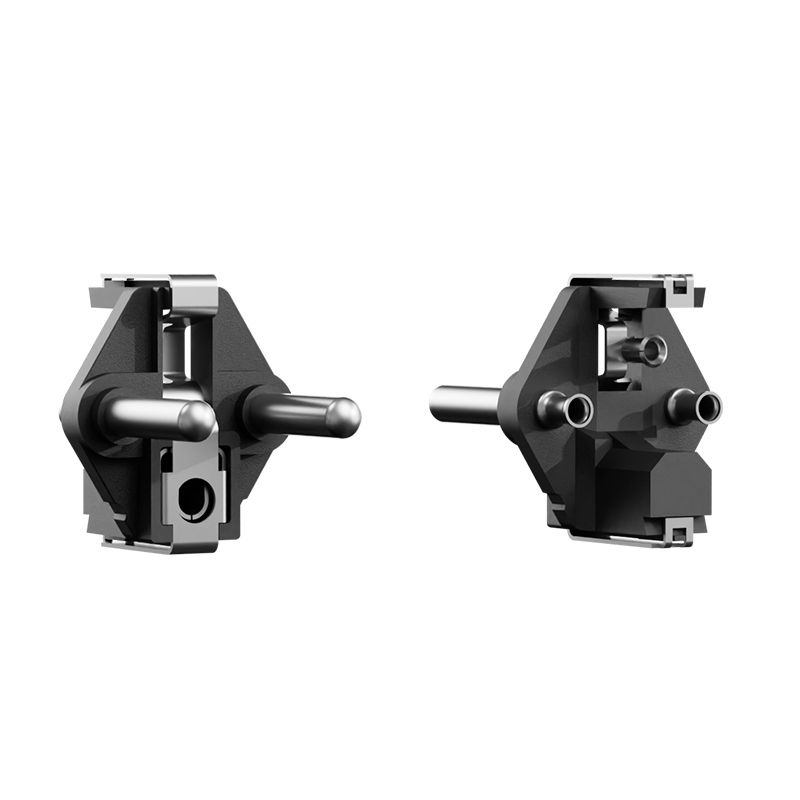
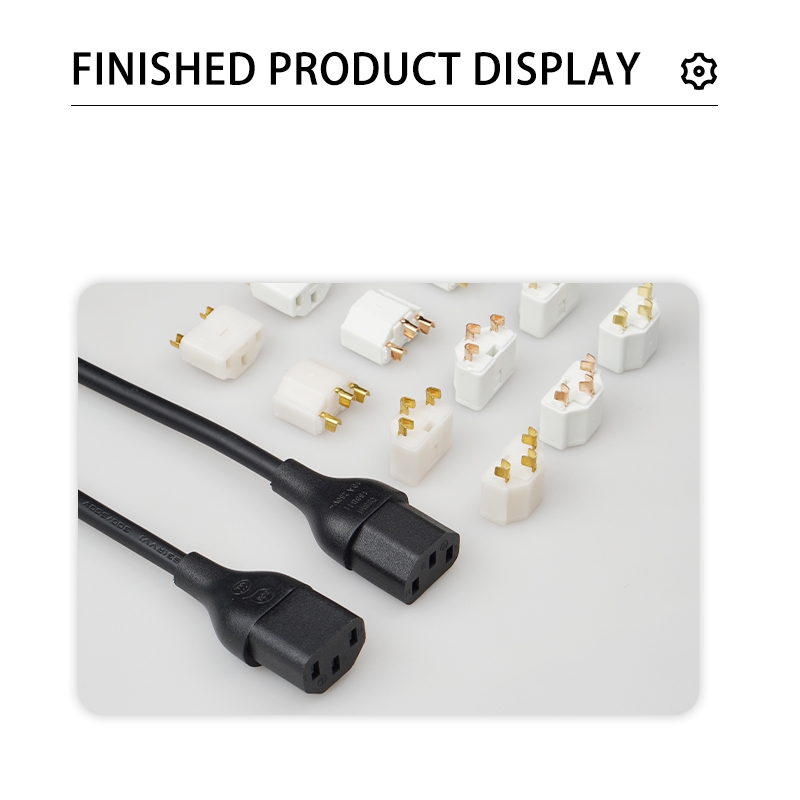
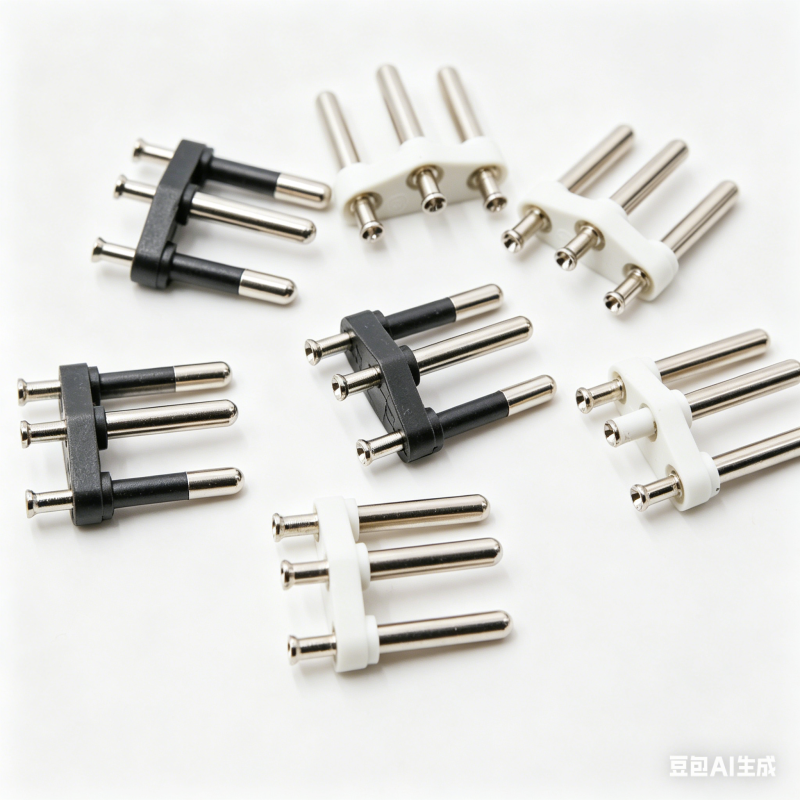

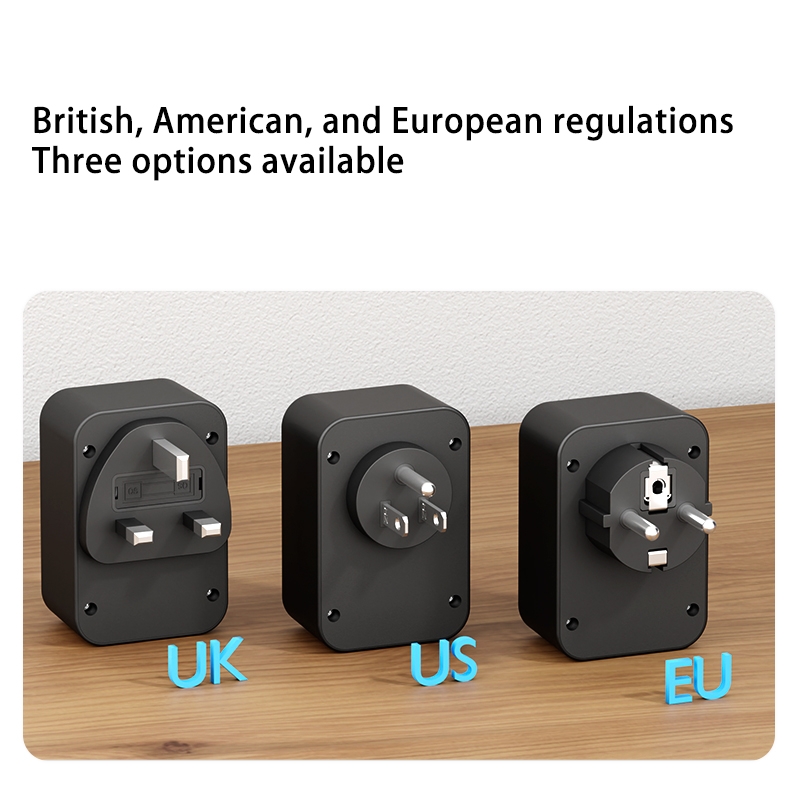
How to Choose a BS 1363 UK Plug Insert
Content Menu
● 1. The Strict Engineering Prerequisites of BS 1363-1 Compliance
>> 1.1 Electrical Clearance and Creepage Distances
>> 1.2 Fuse Clip Mechanical Fatigue & Temperature Rise ($ Delta T $)
>> 1.3 Material Traceability and Environmental Directives
● 2. Structural Mechanics: Why Insert Geometry Dictates Assembly Line Yield
>> 2.1 The Terminal Evolution: U-Shaped (Open-Slot) vs. Traditional Round-Hole
>> 2.2 Dimensional Poka-Yoke (Mistake-Proofing) in Automated Assembly
● 3. Metallurgy and Polymer Science: Material Selection Matrix
>> 3.1 Pin Metallurgy: Finding the Optimal Brass Grade
>> 3.2 Carrier Base Polymer: Polybutylene Terephthalate (PBT) vs. Polypropylene (PP)
● 4. B2B Vendor Audit Blueprint: Evaluating a UK Plug Insert Manufacturer
>> 4.1 Required Supplier Engineering Competencies
● 5. Conclusion: Protecting Your Production Margin at the Source
>> Streamline Your Assembly Line Efficiency Today
● FAQ:
>> Q1. Why do UK plugs sometimes fail the insulation or high-voltage test after PVC overmolding?
>> Q2. Why is H62 brass preferred over H59 brass for premium plug pins?
>> Q3. How does the fuse clip affect BS1363 and ASTA compliance?
>> Q4. Is PP suitable for automated production lines?
>> Q5. What compliance documents should buyers request from a plug insert supplier?

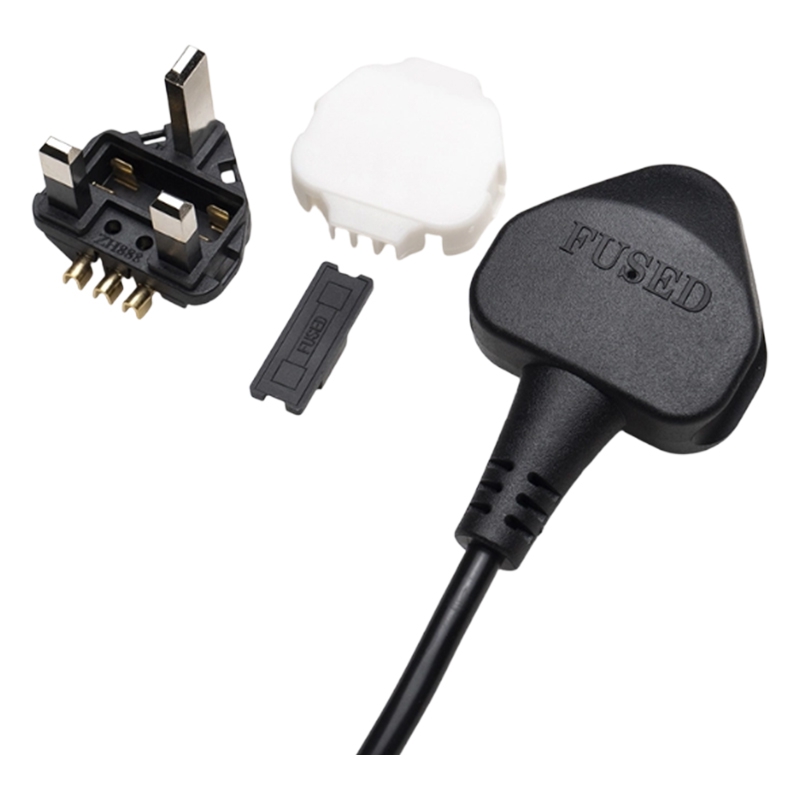
Executive Summary: In the high-volume manufacturing of UK AC power cords and consumer electronics, a BS 1363 UK plug insert (inner frame) is often misclassified as a low-risk commodity. However, for B2B procurement managers, technical directors, and OEM/ODM factories catering to the UK and Commonwealth markets, this single component heavily dictates production line efficiency, automated assembly yields, and international compliance. This deep-dive technical guide explores the hidden architectural nuances of British Plug Insert and explains how premium material selection and advanced component geometry can eliminate up to 20% of assembly-line defects.
1. The Strict Engineering Prerequisites of BS 1363-1 Compliance
Exporting electrical products to the United Kingdom, Hong Kong, Singapore, and Saudi Arabia demands unconditional adherence to the BS 1363-1 standard (Plugs, socket-outlets, adaptors, and connection units). For an OEM factory, compliance is not just about passing a third-party laboratory audit by Intertek, ASTA, or SGS—it is about managing long-term field reliability.
1.1 Electrical Clearance and Creepage Distances
BS 1363-1 explicitly defines the spatial parameters required between live (L), neutral (N), andearth (E) internal components. In subpar inner frames, tight spacing and improper terminalpositioning lead to arc-over failures during standard high-pot testing (typically executed at2,000V AC).
An engineered plug insert utilizes specific phase-segregation barriers built directly into the plastic carrier. This guarantees that even during high-pressure PVC overmolding—where internal wire shifting frequently occurs—the minimum clearance and creepage distances are rigidly maintained, preventing dielectric breakdown and field shorts.
1.2 Fuse Clip Mechanical Fatigue & Temperature Rise
The integrated fuse is a defining mechanism of the British plug system. A frequent failure point in budget inserts is the use of cheap brass alloy stamped fuse clips. Under continuous load (13A at 250V ), these inferior alloys experience thermal relaxation.
As contact force degrades over time due to operational heat, contact resistance climbs exponentially, resulting in localized thermal failure. Premium BS 1363 inserts utilize high-elasticity Phosphor Bronze (QSn6.5-0.1) for the fuse clips, maintaining a constant retention force capable of keeping temperature rise well below the 35K limit stipulated by BS 1363 clauses.
1.3 Material Traceability and Environmental Directives
Compliance for the UK and European markets extends beyond electrical safety to chemical regulations. Every batch of inner frames must align with:
RoHS Directive (2011/65/EU and amendment 2015/863/EU): Restriction of hazardous substances.
REACH Regulation (EC No 1907/2006): Controlling Substances of Very High Concern (SVHC) like specific phthalates used in plasticizers.
Engineering Best Practice: A reliable component partner must provide a complete Declaration of Conformity (DoC) backed by traceable, batch-specific SGS or Intertek laboratory reports. Without this documentation, bulk shipments risk immediate customs seizure at UK ports.
2. Structural Mechanics: Why Insert Geometry Dictates Assembly Line Yield
For a high-capacity power cord overmolding facility, profit margins are won or lost on the factory floor. A 20% drop in assembly line yield is rarely caused by large-scale machine malfunctions; it is typically the result of minor micro-dimensional failures within the plug insert itself.

2.1 The Terminal Evolution: U-Shaped (Open-Slot) vs. Traditional Round-Hole
The mechanism by which copper conductors are secured to the plug pins inside the frame represents a critical operational pivot point:
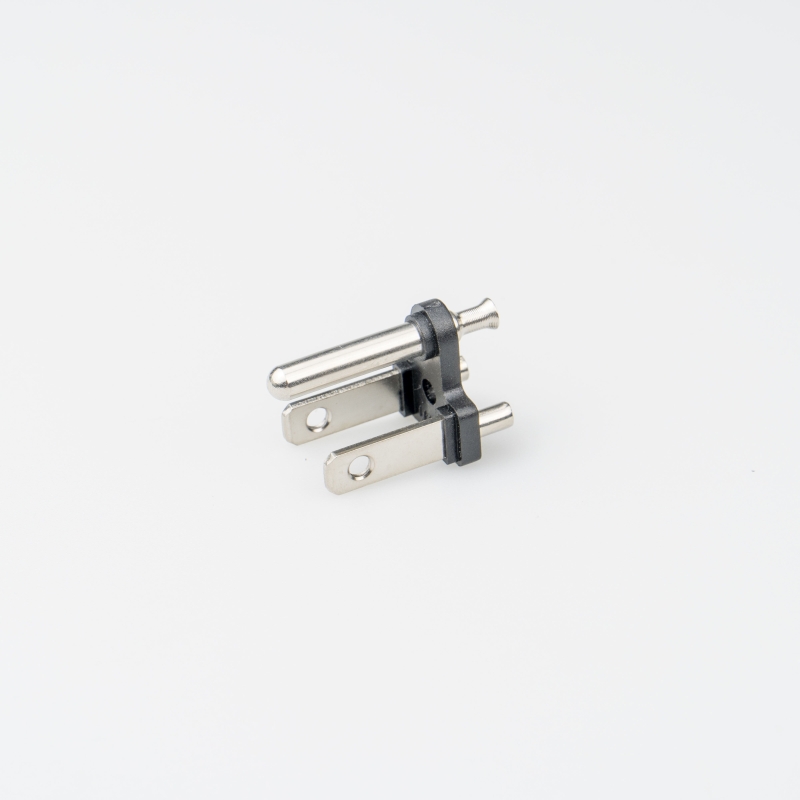
* Traditional Round-Hole Terminals: These require the operator or an automated stripping-and-inserting machine to feed fine-stranded copper wire through a small concentric aperture. If even a single copper strand (0.16mmto 0.20mm) splay out during insertion, it creates a stray wire defect. During subsequent high-pressure PVC injection molding, this strand can be pushed to the plug exterior, causing catastrophic insulation failures, safety rejects, or short circuits.
* Next-Generation Open-Slot (U-Shaped) Terminals: This layout allows for direct top-down drop-in placement of the wire core. The conductor is crimped uniformly along a broader surface area.
| Feature / Metric | Traditional Round-Hole Terminals | Advanced Open-Slot (U-Shaped) Terminals |
| Copper Wire Insertion Speed | Slow (requires precise axial alignment) | Fast (radial drop-in deployment) |
| Risk of Stray Copper Strands | High (frequent cause of post-molding shorts) | Extremely Low (captured via parallel crimping) |
| Contact Resistance R_contact | Variable based on crimp pin depth | Uniformly Low due to continuous face contact |
| Automated Sorting/Crimping Yield | 94.5% | 99.8% |
2.2 Dimensional Poka-Yoke (Mistake-Proofing) in Automated Assembly
Automated multi-station plug assembly machines operate on precise robotic indexing wheels. If a plug insert exhibits a dimensional variance as small as 0.05mm across its external alignment pins or plug blade positioning, the consequences amplify down the line:
* Misalignment in automated screw driving stations, leading to stripped threads or incomplete torquing.
* Eccentric displacement inside the injection molding cavity, causing uneven wall thickness of the outer PVC shell, visual sink marks, or flash over the brass pins.
Engineered UK plug inserts incorporate mechanical Poka-Yoke features—asymmetrical guide steps and rigid molded keyways—that prevent incorrect positioning inside assembly fixtures.
3. Metallurgy and Polymer Science: Material Selection Matrix
Material composition dictates the boundaries of mechanical longevity and thermal threshold capacity.
3.1 Pin Metallurgy: Finding the Optimal Brass Grade
The three solid pins (Earth, Live, Neutral) must withstand high insertion forces while retaining low resistance.
* H62 Brass (Cu ~62%, Zn ~38%): Offers superior electrical conductivity (28% IACS) and exceptional ductility. Excellent for heavy-duty applications or high-current 13A premium cords.
* H59 Brass (Cu ~59%, Zn ~41%): Features increased structural hardness and lower raw material costs. It stands as the mainstream industry benchmark for standard 3A and 5A appliances, strike-balancing cost with mechanical endurance.
* Recycled/Low-Grade Zinc-Aluminum Alloys: Often found in bottom-tier, unbranded components. These suffer from high brittle failure rates under stress, poor thread tapping reliability for terminal screws, and high risk of overheating.
3.2 Carrier Base Polymer: Polybutylene Terephthalate (PBT) vs. Polypropylene (PP)
The thermoplastic frame holds the metal components in exact spatial coordinates under extreme mechanical stress.
* Glass-Filled PBT (Polybutylene Terephthalate): The gold standard for automated assembly. PBT features a high Heat Deflection Temperature (HDT) up to 200 enabling it to withstand the thermal shock of molten PVC overmolding without shifting or warping. Its high dimensional stability keeps pins perfectly parallel during high-speed extraction from production dies.
* PP (Polypropylene): A low-cost alternative. While flexible and easy to process, PP has low thermal resistance and a high shrinkage coefficient. Under high-speed molding pressures, PP frames can warp slightly, leading to misaligned pins that fail the BS 1363 mechanical gauge test.
4. B2B Vendor Audit Blueprint: Evaluating a UK Plug Insert Manufacturer
When auditing a prospective power component partner for high-volume B2B sourcing, price per unit should be evaluated alongside engineering competence and quality control infrastructure.
4.1 Required Supplier Engineering Competencies
1. In-House Precision Tooling and Die Development: A vendor must possess the capability to maintain and modify progressive stamping dies and multi-cavity injection molds in-house to correct dimensional drift quickly.
2. Advanced Metrology and Inspection Equipment: The facility should utilize Optical Measuring Machines (OMM) capable of non-contact dimensional checks accurate to the micron level, rather than relying solely on manual calipers.
3. Comprehensive Stress Validation Laboratories: The supplier QA lab must feature integrated test rigs for continuous temperature rise testing, glow-wire flame testing (per IEC 60695-2-11), and automated plug mechanical lifespan cycle testing.
5. Conclusion: Protecting Your Production Margin at the Source
In B2B power cord manufacturing, selecting a component based purely on a fraction of a cent difference in unit cost often introduces significant hidden liabilities. A poorly engineered British Plug Inner Frame can lower assembly line yields by 20%, generating elevated scrap costs, frequent rework cycles, and potential field recalls. Real operational efficiency comes from robust component geometry, verified metallurgy, and strict dimensional tolerances.
As an established manufacturer specializing in AC power cords and precision insert components, TISDLIP (manufactured by Dongguan Zhenghao Electric Co., Ltd.) designs and produces high-precision BS 1363 plug inserts tailored for high-yield automated production lines. We utilize premium glass-filled PBT carriers and high-purity brass alloys to help global OEM/ODM factories achieve zero-defect performance.
Streamline Your Assembly Line Efficiency Today
Are hidden dimensional defects slowing down your production lines? Contact our engineering consultancy team at Dongguan Zhenghao Electric Co., Ltd. to request complimentary technical samples, 2D/3D CAD models, and comprehensive RoHS/REACH compliance documentation. Let us help you optimize your product yield from the core outward.
FAQ:
Q1. Why do UK plugs sometimes fail the insulation or high-voltage test after PVC overmolding?
Answer:
The most common causes are wire displacement and insert deformation during PVC injection molding. Traditional round-hole terminals may leave stray copper strands exposed, reducing creepage distance and causing dielectric failure. A glass-filled PBT insert with U-shaped crimp terminals provides better conductor retention, maintains insulation spacing, and improves overmolding stability.
Q2. Why is H62 brass preferred over H59 brass for premium plug pins?
Answer:
H62 brass contains more copper, offering better electrical conductivity, ductility, and corrosion resistance than H59 brass. It is less likely to crack during riveting or crimping and generates lower temperature rise under continuous 13A loads, making it ideal for high-quality BS1363 plug inserts.
Q3. How does the fuse clip affect BS1363 and ASTA compliance?
Answer:
The fuse clip must maintain stable contact pressure to minimize electrical resistance and temperature rise. High-quality inserts typically use 0.5 mm phosphor bronze fuse clips, which retain their spring force even after repeated heating cycles, helping products meet BS1363 temperature-rise requirements and ASTA certification.
Q4. Is PP suitable for automated production lines?
Answer:
Generally, no. PP (Polypropylene) has higher shrinkage and lower heat resistance than PBT, making it more prone to dimensional variation and deformation during injection molding. For automated assembly and high-yield production, PBT offers superior dimensional stability and process consistency.
Q5. What compliance documents should buyers request from a plug insert supplier?
Answer:
Ask for updated RoHS, REACH, and Declaration of Conformity (DoC) documents, together with third-party test reports from laboratories such as SGS, Intertek, or TÜV. These reports should verify restricted substances and provide traceability for raw materials used in production.
References
1. BSI Group. *BS 1363-1: Plugs, socket-outlets, adaptors and connection units - Specification for rewirable and non-rewirable 13 A fused plugs*. London: British Standards Institution. Source: [BSI Knowledge Base]
2. Intertek Group plc. *Electrical Product Safety Testing and Certification Services for UK Compliance*. London: Intertek. Source: [Intertek Electrical Testing]
3. European Chemicals Agency (ECHA). *Understanding REACH - Registration, Evaluation, Authorisation and Restriction of Chemicals*. Helsinki: ECHA. Source: [ECHA REACH Regulations]
4. International Electrotechnical Commission. *IEC 60695-2-11: Fire hazard testing - Part 2-11: Glowing/hot-wire based test methods - Glow-wire flammability test method for end-products (GWEPT)*. Geneva: IEC. Source: [IEC Webstore]



 Email
Email