

What is an IEC C5 Plug Insert? Complete Procurement Guide for Cloverleaf / Mickey Mouse Connector Inserts
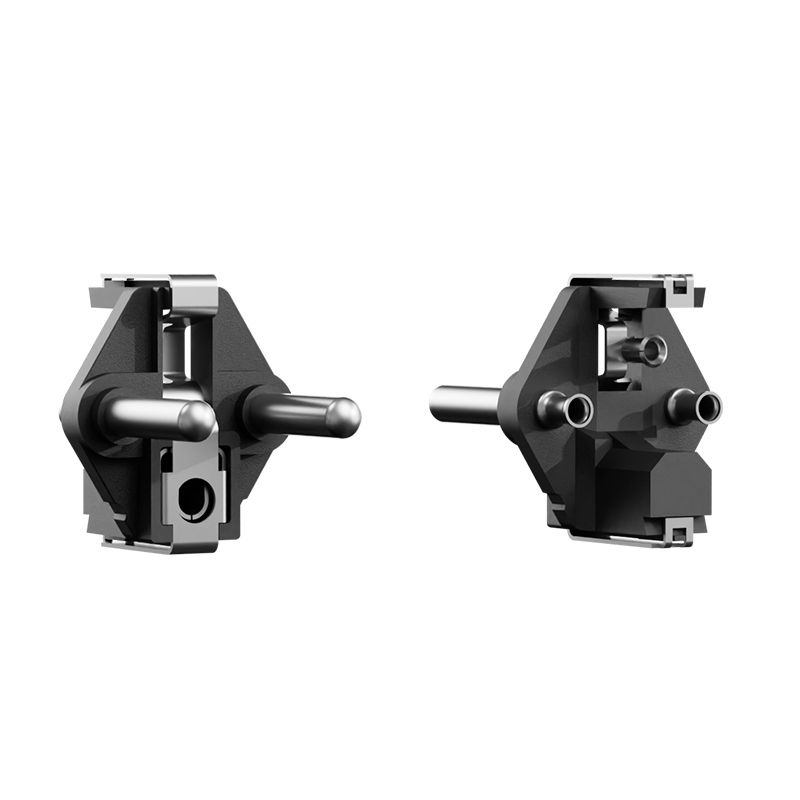
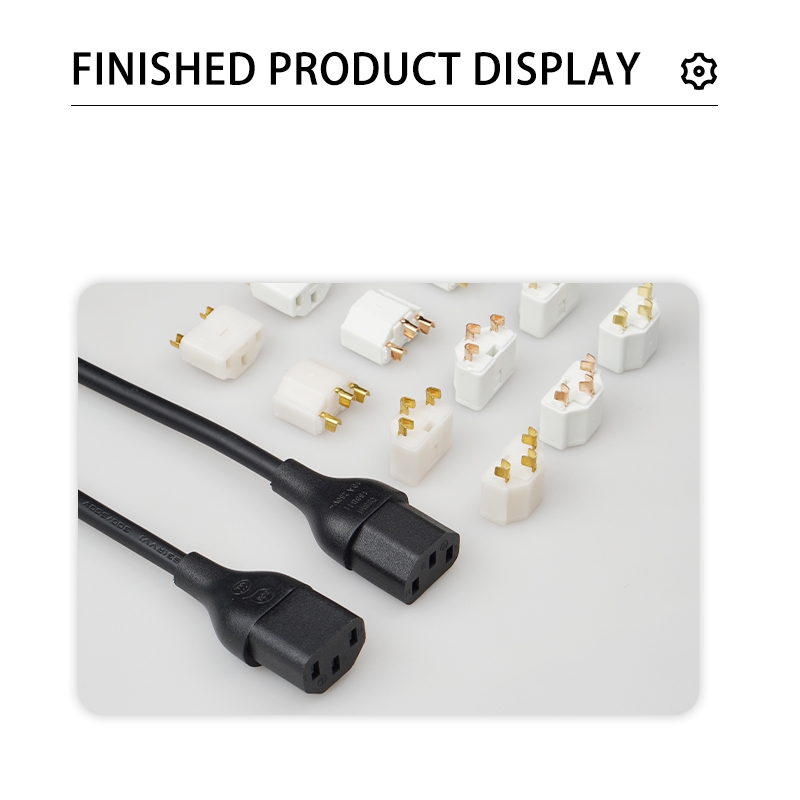
In laptop power cords, scanners, printers, audio equipment, and various small electronic devices, the IEC 60320 C5 connector is commonly used. Its distinctive three-leaf shape has earned it the industry nicknames "cloverleaf" or "Mickey Mouse" connector. The core structural component of this connector — the IEC C5 plug insert (also known as cloverleaf insert or Mickey Mouse insert) — directly determines the power cord's electrical conductivity, contact reliability, temperature resistance, and long-term service life.
For power cord manufacturers and professional buyers, the two primary concerns when sourcing IEC C5 plug inserts are quality and price. Quality affects finished-product yield rates, regulatory compliance, and after-sales risk. Price directly impacts cost control and market competitiveness. True professional procurement does not simply chase the lowest unit price; it seeks the optimal total cost of ownership based on verifiable insert quality. This guide systematically covers material selection, manufacturing processes, assembly matching, and decision-making logic for IEC C5 plug inserts.
Definition, Common Names, and Origin of the IEC C5 Plug Insert (Cloverleaf / Mickey Mouse Insert)
Common Names Used in Procurement and Search Queries
Industry search and purchasing terms include:IEC C5 plug insert / IEC C5 insert/ Cloverleaf plug insert / Cloverleaf connector insert/C5 power cord insert/Mickey Mouse insert / Mickey Mouse connector insert
All of these refer to the internal frame structure of the IEC 60320-1 C5 connector.
Why Is the IEC C5 Called a "Cloverleaf" or "Mickey Mouse" Insert?
The IEC C5 plug features a three-hole cloverleaf configuration: a central circular hole flanked by two smaller circular holes, creating a silhouette that resembles a cloverleaf or the head of Mickey Mouse. This compact, polarized design is particularly suitable for portable devices that require limited installation space and detachable AC power connections.

Key Differences Between IEC C5, C7, and C13 Connectors
| Type | Common Name | Structure | Typical Current Rating | Primary Applications |
|---|---|---|---|---|
| IEC C5 | Cloverleaf / Mickey Mouse | Three-leaf three-pin | 2.5 A | Laptop adapters, compact devices |
| IEC C7 | Figure-8 | Figure-8 two-pin | 2.5 A | Small AV equipment, household devices |
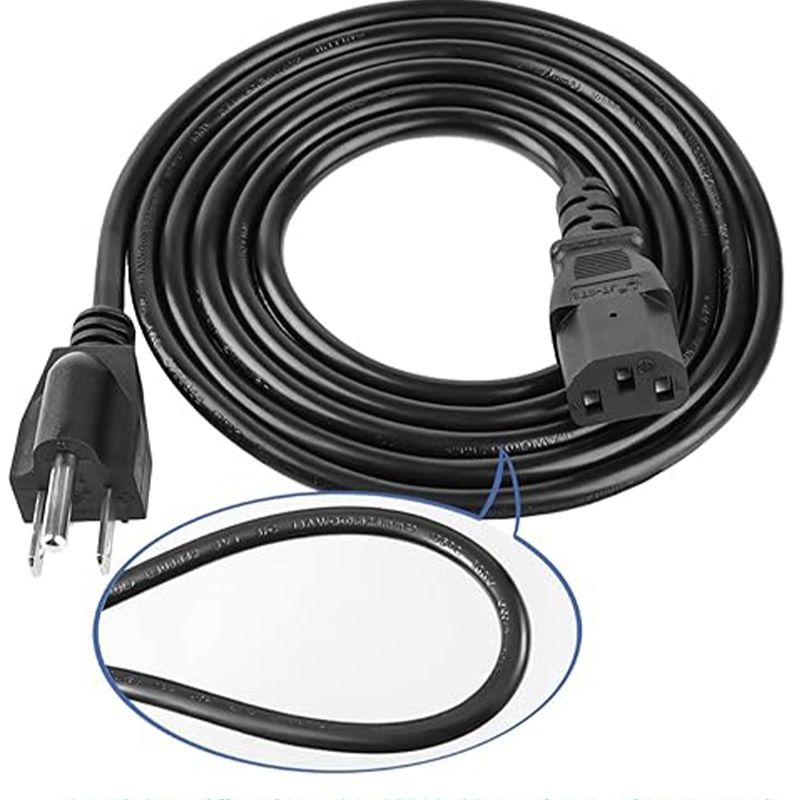
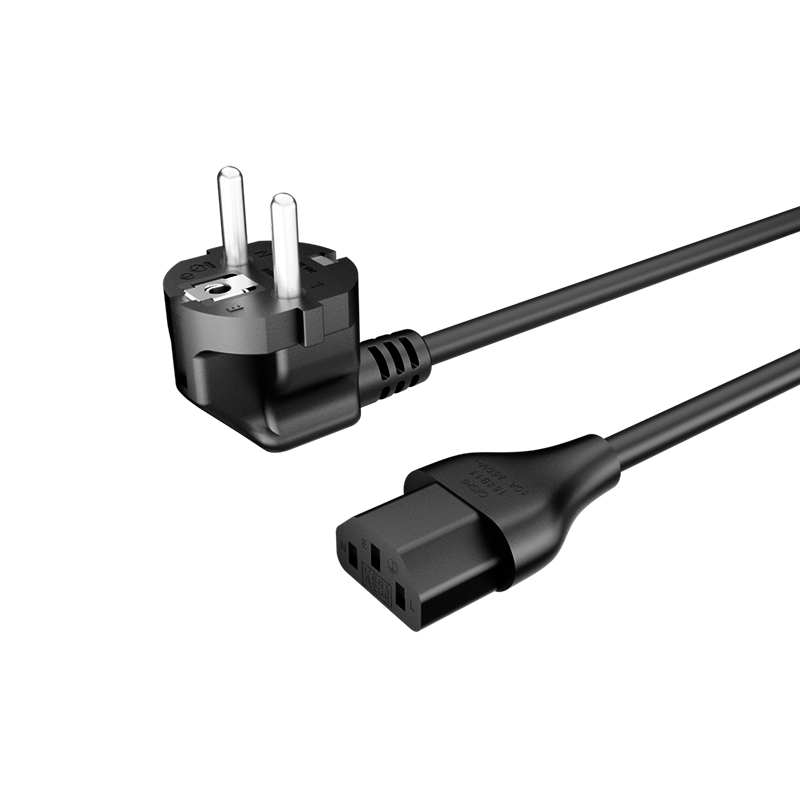
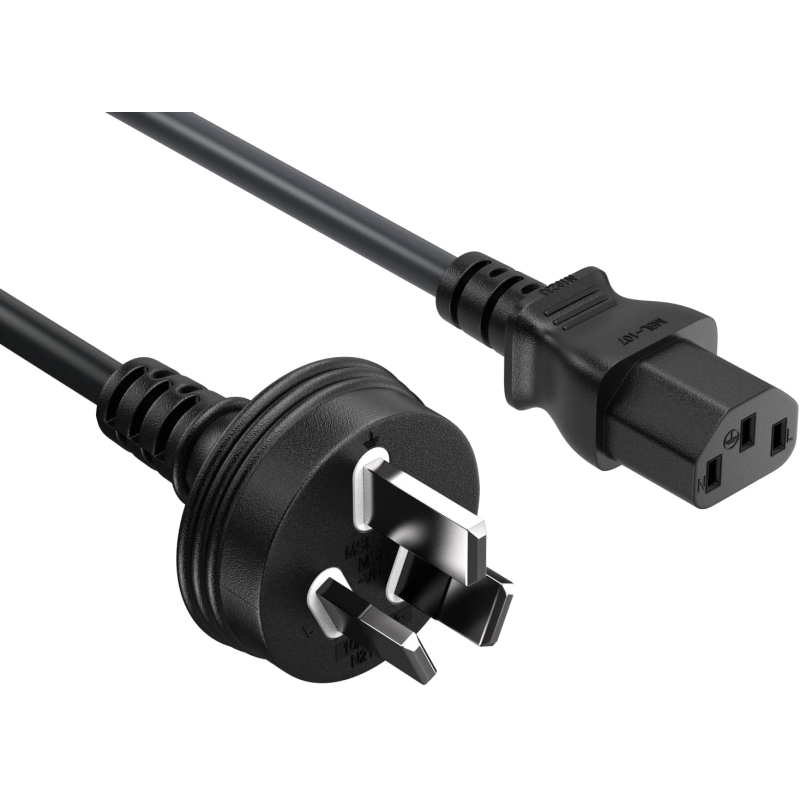
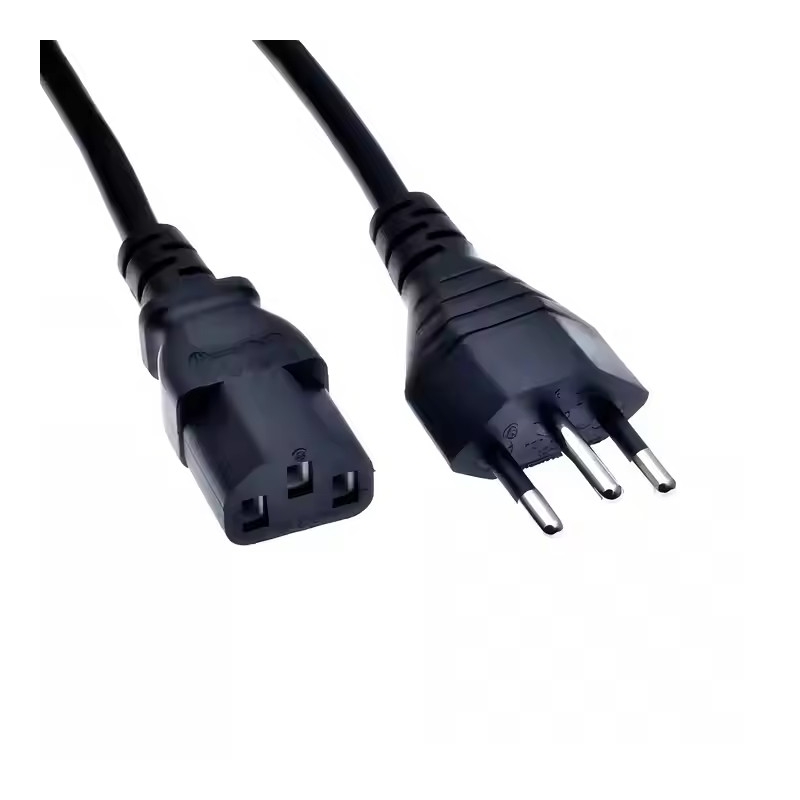
| IEC C13 | Kettle / IEC connector | Three-pin rectangular | 10 A / 15 A | Desktop PCs, monitors, servers, standard IT |
The IEC C5 (cloverleaf) insert stands out for its small size and compact structure, making it the preferred choice for space-constrained equipment. The C13 is designed for higher current carrying capacity and broader compatibility.
Primary Application Scenarios for IEC C5 Plug Inserts
Laptop Power Cords – The Core Application
This is the primary use case for IEC C5 plug inserts. Common related product terms include Laptop power cord, Notebook AC power cord, and Laptop power cable. Laptop adapters widely adopt the C5 interface to enable detachable design and global regulatory compliance.
Scanners, Printers, and Office Equipment
Most scanners, printers, and multifunction devices use the cloverleaf structure for secure connections combined with easy mobility and maintenance.
Audio and Audiovisual Equipment
Professional audio systems, projectors, and certain AV devices leverage the compact size and stable contact performance of the IEC C5 insert to meet portability and serviceability requirements.
Other Compact Electronic Devices
Any small electronic device that requires a detachable AC power connection, high space efficiency, and regulatory compliance commonly employs the IEC C5 plug insert.

Five Core Quality Evaluation Criteria for a High-Quality IEC C5 Plug Insert
Professional buyers should focus on the following five technical indicators, which directly determine the quality and long-term reliability of the IEC C5 plug insert:
Housing Material: Advantages of Flame-Retardant PBT plug insert in Temperature Resistance and Mechanical Strength
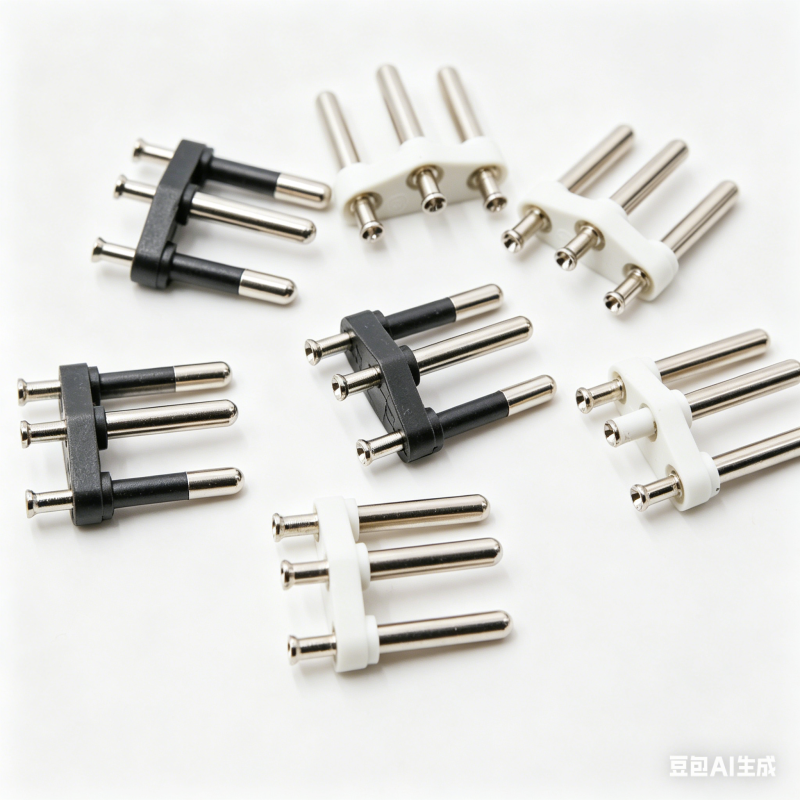
High-quality IEC C5 inserts typically use flame-retardant PBT (polybutylene terephthalate). PBT offers excellent heat resistance, dimensional stability, creep resistance, and mechanical strength, remaining resistant to deformation or brittleness under prolonged temperature rise caused by continuous current. The flame-retardant rating is normally required to meet UL94 V-0 to satisfy power-cord safety standards. Material selection is the primary factor distinguishing premium inserts from low-cost alternatives and determines long-term reliability under high-temperature, high-humidity, and aging conditions.

Terminal Material and Process: Impact on Conductivity and Contact Reliability
Terminal material governs contact resistance, current-carrying capacity, and corrosion resistance. High-purity phosphor bronze or bronze is recommended. Key parameters to evaluate include:
- Copper purity and alloy composition
- Terminal thickness and hardness
- Surface treatment (tin plating, nickel plating, etc.)
- Contact pressure and mating cycle life
Premium terminals effectively reduce contact resistance and localized heating risk, improving overall cord stability. Low-cost inserts frequently compromise on these points, leading to poor contact and excessive temperature rise.
One-Piece Precision Stamped Terminal Process for Dimensional Consistency
The one-piece stamping process delivers high dimensional consistency, smooth surfaces free of burrs, and stable structural strength. Precision tooling and process control maintain consistent contact pressure during mating cycles, preventing looseness or intermittent contact. This is a critical guarantee of batch-to-batch consistency and quality stability.
Assembly Matching Between Insert and Power Cord: Wire Gauge, Jacket, and Overmolding Precision
The insert must match varying wire gauges, jacket materials, conductor specifications, and cord constructions. Terminal position accuracy, overmold thickness, and demolding design during injection molding directly affect subsequent outer-housing overmold yield and finished appearance. Poor matching increases scrap rates and rework costs.
Flame Retardancy and Temperature Resistance Logic Chain: From Current Load to Long-Term Reliability
Operating current generates Joule heating in the conductors; contact resistance at the terminals produces additional localized temperature rise. The insert material must therefore provide adequate temperature rating and flame-retardant performance to prevent long-term thermal aging, deformation, cracking, or insulation failure. The evaluation path is: current load → conductor and terminal temperature rise → insert material heat-deflection temperature and flame rating → long-term reliability. Neglecting this chain directly threatens regulatory compliance and product safety, resulting in high after-sales and recall risks.
Standard C5 Plug Insert Manufacturing Process Flow and Quality Control
A professional production process typically includes the following key stages:
Raw Material Selection and Incoming Inspection
Select compliant flame-retardant PBT resin and high-purity copper alloy (phosphor bronze or bronze), followed by incoming quality inspection.
Precision Copper Stamping
High-precision stamping equipment and tooling form the terminals, ensuring dimensional tolerance, surface quality, and structural strength.
Injection Molding for Integrated Assembly
Precision injection molding combines the copper terminals with PBT material, controlling overmold thickness, terminal position accuracy, and appearance.
Dimensional and Visual Full Inspection
Key checks include burrs, cracks, deformation, terminal position deviation, and visual consistency.
Final Inspection and Shipment
Dimensional sampling, visual inspection, functional matching, and necessary reliability verification.
Every process step from raw material to finished goods directly determines batch stability and reliability — and constitutes the main cost difference between premium and low-cost inserts.

How to Professionally Evaluate IEC C5 Insert Quality and Correctly Understand Price vs. Total Cost
| Inspection Item | Key Evaluation Points | Relationship to Price / Quality |
|---|---|---|
| Appearance | No burrs, cracks, deformation, or color variation | Low-cost inserts frequently show appearance defects |
| Copper Terminals | Dimensional consistency, contact pressure, plating | Copper material and process are core variables of cost and quality |
| Housing Material | Flame rating (UL94 V-0), temperature resistance | Material grade creates the largest gap in price and reliability |
| Assembly Matching | Fit accuracy with wire and outer housing | Poor matching raises overall production costs |
| Electrical Performance | Contact resistance, temperature-rise performance | Determines long-term reliability and after-sales risk |
| Batch Consistency | Process capability and lot-to-lot stability | Stable supply is key to reducing hidden costs |
Essential Difference Between Low-Cost and Stable IEC C5 Inserts (Price–Quality Trade-off)
Low-cost inserts typically compromise on material grade, stamping precision, molding process window, and inspection standards. While the unit price appears attractive, they commonly result in poor contact and excessive temperature rise, housing deformation or cracking, large dimensional variation, reduced production yields, and elevated repair, return, and brand risks. These hidden costs frequently exceed the initial unit-price savings.
A stable IEC C5 insert offers verifiable advantages in material purity, process control, dimensional consistency, and long-term reliability. Although the unit price may be slightly higher, it effectively reduces scrap rates, rework costs, after-sales expenses, and supply-chain volatility, delivering the lowest total cost of ownership (TCO). Professional buyers should evaluate total cost of ownership rather than the lowest quoted price alone.
Key Parameters and Documentation Required When Procuring IEC C5 Plug Inserts
When sourcing, request the following supporting documents from the supplier: approval drawings, reliability test reports, dimensional reports, SGS/material certificates, MSDS, declaration of non-use of restricted substances, and UL Yellow Card for the plastic.
Recommended parameter categories for clear communication:
- Basic parameters: Rated voltage, rated current, connector structure compliance
- Material parameters: PBT grade and flame rating, copper alloy designation, terminal thickness, surface treatment
- Appearance parameters: Color (black/white, etc.), surface finish
- Assembly parameters: Compatible wire specifications, outer diameter range, overmolding requirements, terminal position tolerances
- Commercial parameters: MOQ, sample lead time, production lead time, packaging method
Clear specification of these parameters enables accurate price comparison and avoids quality or cost deviations caused by ambiguous requirements.
Stock Supply vs. OEM/ODM Custom Production for IEC C5 Plug Inserts
Direct factory supply with both stock and custom options available.
Advantages and Suitable Scenarios for Standard Stock IEC C5 Inserts
Ideal for regular power-cord production, small-batch rapid replenishment, and sample validation. Short response times help control inventory and working-capital costs.
OEM/ODM Custom Services and Supporting Capabilities for Special Specifications
Suitable for special wire-gauge matching, custom colors, special copper alloys, structural optimization, or new-product development. Support is available from the insert through complete power-cord production, reducing intermediate mark-ups.
Why Source IEC C5 Plug Inserts Directly from the Factory: Balancing Price and Quality
Full Supply-Chain Control from Copper to Finished Power Cord
Control from copper procurement → precision stamping → PBT injection molding → inspection → insert → power-cord assembly eliminates trading-company mark-ups while maintaining quality and optimizing price.
Batch Consistency and Process Control to Reduce Hidden Costs
Precision tooling and process control ensure long-term dimensional stability, minimizing production risk and hidden costs caused by lot variation.
Multi-Specification, Multi-Color Supply and OEM/ODM Technical Support
Meets diverse matching requirements, reduces extra procurement and inventory costs caused by mismatched specifications, and provides structural optimization and custom development to help customers maintain quality while optimizing cost structure.
Complete Power-Cord Solution Capability for Superior Overall Value
The insert is not an isolated component; its matching with wire, terminals, outer housing, and overmolding process directly determines finished-product quality and production cost. A factory with complete supporting capability upgrades from "insert supplier" to "full power-cord solution provider," lowering coordination costs and improving overall quality and delivery efficiency for true cost-performance advantage.
Frequently Asked Questions (FAQ) about IEC C5 Plug Inserts
FAQ 1: What is an IEC C5 plug insert?
It is the internal structural component of the IEC 60320 C5 connector, commonly called a cloverleaf or Mickey Mouse insert, responsible for securing the copper terminals and enabling overmolding with the power cord.
FAQ 2: Why is the IEC C5 also called a cloverleaf or Mickey Mouse connector?
Because its three-leaf shape resembles a cloverleaf or the silhouette of Mickey Mouse's head.
FAQ 3: What power cords primarily use the IEC C5 (cloverleaf) insert?
Laptop power cords, scanners, printers, audio equipment, and various compact electronic devices.
FAQ 4: What materials are typically used for IEC C5 plug inserts?
Housing: flame-retardant PBT (UL94 V-0). Terminals: phosphor bronze or bronze.
FAQ 5: What are the key advantages of a PBT insert?
Excellent heat resistance, dimensional stability, aging resistance, and mechanical strength — essential for long-term powered operation and insert quality.
FAQ 6: How does terminal material affect the quality and price of an IEC C5 insert?
It directly determines contact resistance, temperature rise, corrosion resistance, and mating life. Higher-grade copper and processing increase unit price but significantly reduce long-term quality risk and total cost.
FAQ 7: Can color and specifications be customized?
Yes. Customization of color, wire-gauge matching, copper alloy, and structure is supported.
FAQ 8: Do you offer stock IEC C5 inserts, and how can pricing be more competitive?
Standard specifications are normally available from stock for fast delivery. Direct factory supply eliminates intermediate mark-ups, providing better pricing while maintaining quality.
FAQ 9: Can complete C5 power cords be purchased directly?
Yes. Full supporting production from insert to complete power cord is available, further optimizing overall cost and quality consistency.
FAQ 10: How should buyers balance price and quality?
First verify material, process, and batch consistency, then compare total cost of ownership (including yield, after-sales, and risk) rather than focusing solely on the lowest unit price. Stable-quality inserts typically deliver lower total cost of ownership.
References
1. IEC 60320 – Wikipedia. https://en.wikipedia.org/wiki/IEC_60320
2. MAG Kabel – IEC 60320 appliance plugs – C5, C7, C13, C15, C19. https://www.mag-kabel.de/en/info/cold-and-warm-device-plug-iec-60320.html
3. StayOnline – IEC 60320 (IEC 320) Reference Chart. https://www.stayonline.com/product-resources/reference-iec320.asp
4. Comtex – IEC 60320 Appliance Connectors. https://www.comtex.com.au/articles/iec-320-appliance-connectors/
5. Access Communications – IEC 60320 Connector Guide. https://www.accesscomms.com.au/a-guide-to-iec-connectors-iec-60320/
6. World Cord Sets – IEC 60320 Reference Chart. https://shop.worldcordsets.com/shop/reference-materials/iec-60320-reference-chart
Technical parameters and standard descriptions are based on the publicly available sources listed above. The core structure and procurement-focused viewpoints are expanded from industry practice for power-cord manufacturers and professional buyers.



 Email
Email