

The Definitive B2B Procurement Guide to 16A Schuko Extension Cords (2026 Edition)
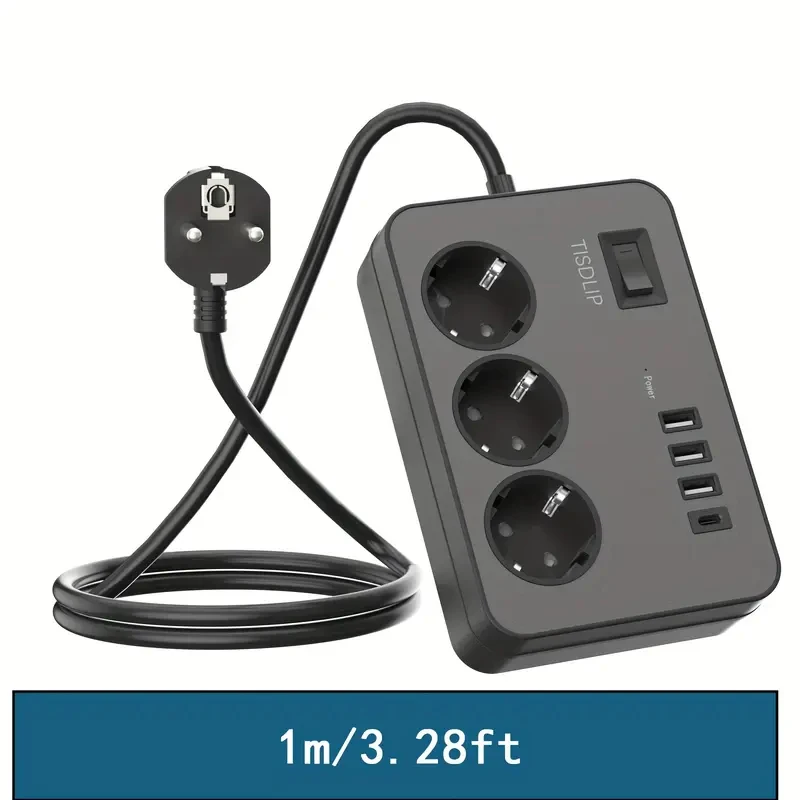
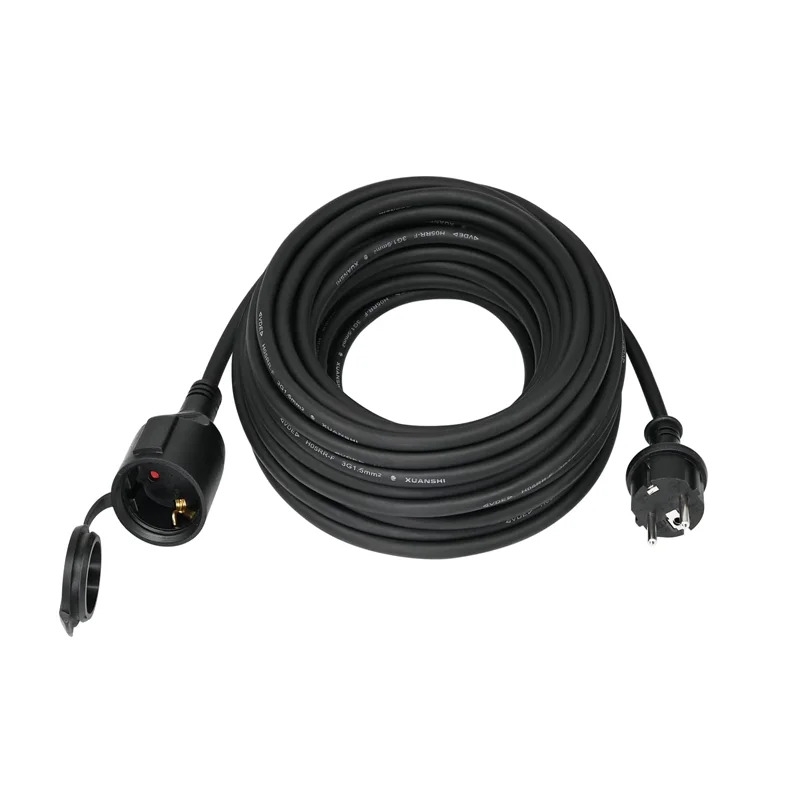
Navigating the European power distribution and accessories market requires an in-depth technical understanding of regional standards, electrical safety compliance, and manufacturing integrity. Among portable electrical distribution devices, the 16A Schuko extension cord (Schuko Extension Cord 16A) stands out as the undisputed backbone of residential, commercial, and light industrial power delivery across continental Europe.
For international buyers, OEM sourcing managers, electrical distributors, and brand owners, procuring extension leads into Europe is far more complex than negotiating unit pricing. Importing low-quality power cords carries severe liabilities—ranging from regulatory customs rejections and heavy compliance fines to product recalls, electrical fires, and brand damage. Understanding the technical architecture, safety mechanisms, and verification protocols of disdlip extension cords is crucial for ensuring product excellence, regulatory adherence, and market profitability.

1. Decoding the Schuko System: CEE 7/4 vs. CEE 7/7 Standards
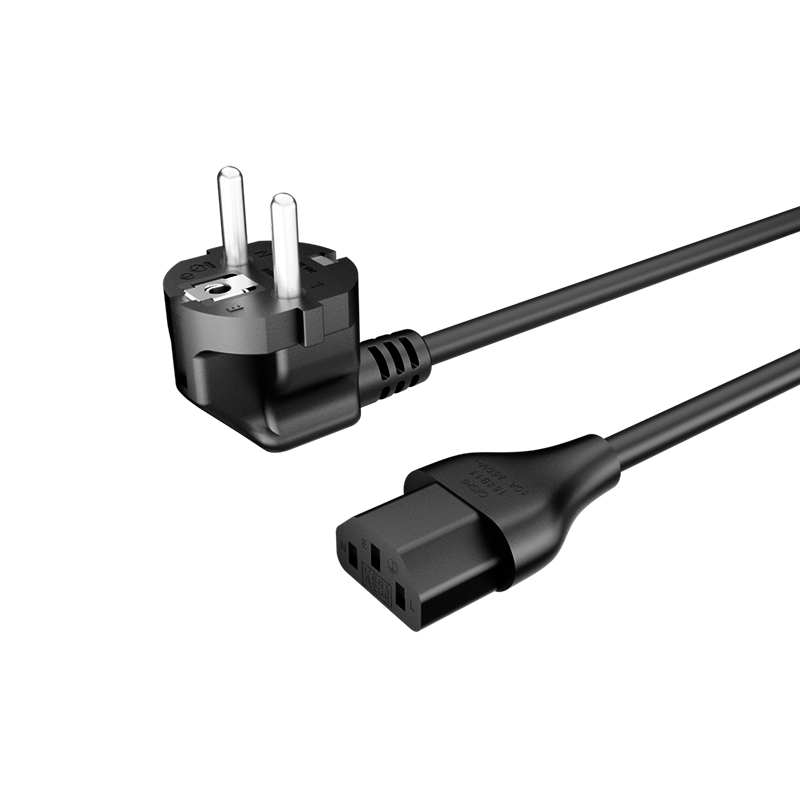
The term "Schuko" is an abbreviation of the German compound word Schutzkontakt, which translates directly to "protective contact." Developed originally in Germany, the Schuko system has evolved into the dominant AC power plug and socket system across continental Europe due to its robust safety architecture and high current capacity.
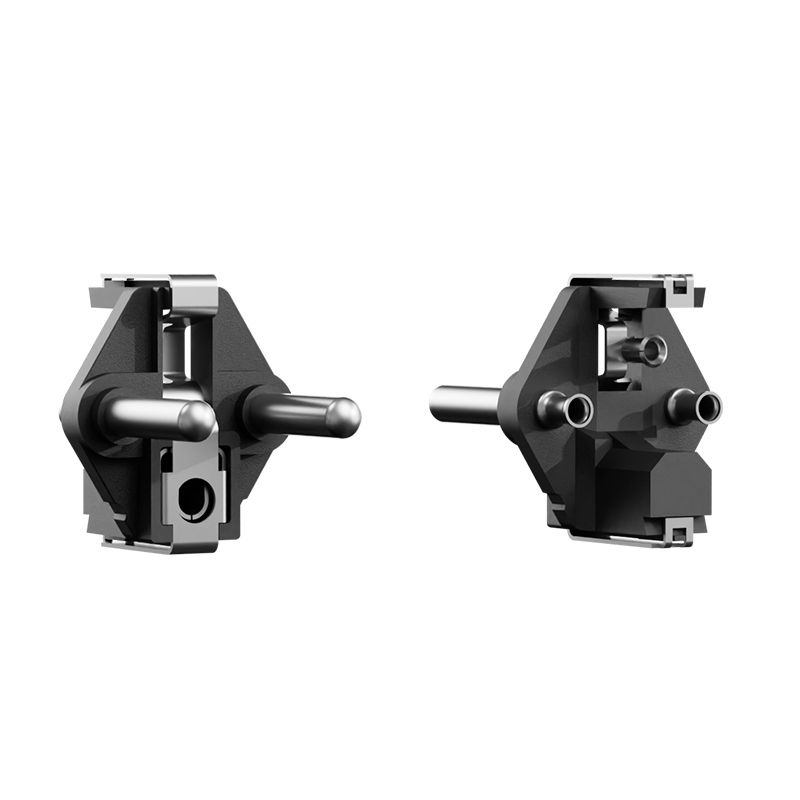
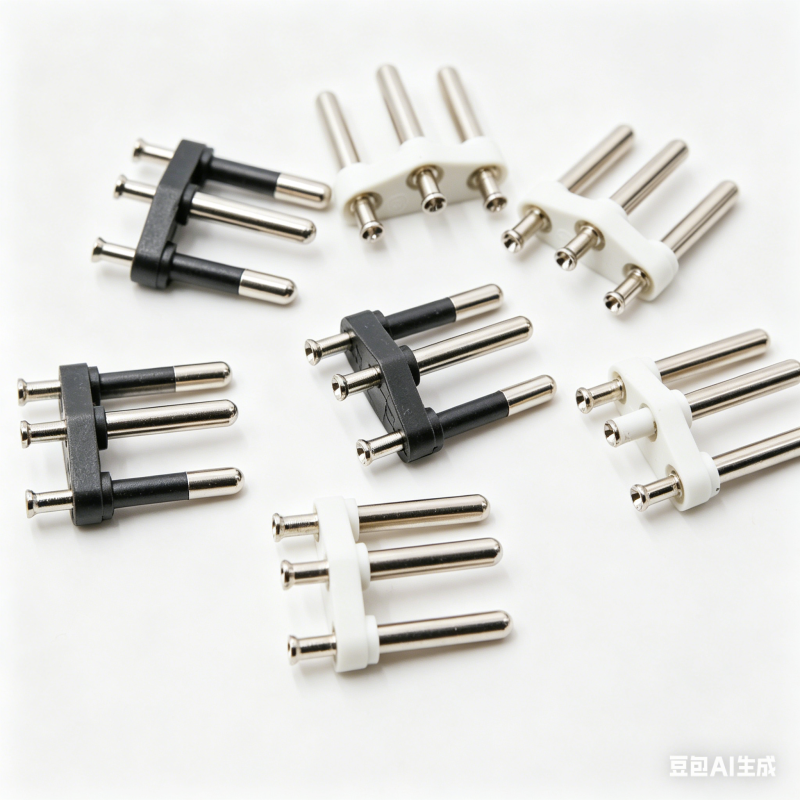
The system relies on two continuous cylindrical power pins measuring exactly 4.8 mm in diameter, spaced 19 mm apart, accompanied by symmetrical top and bottom metallic earth clips. Unlike non-grounded Type C Europlugs or older grounded mechanisms, the key safety feature of the Schuko design is its first-mate, last-break grounding mechanism. When a user inserts a Schuko plug into a socket, the side earth clips establish electrical contact with the grounding system milliseconds before the live and neutral pins connect to mains power. Conversely, upon disconnection, the grounding path remains intact until after live power is completely broken.
| Key Technical Metric | Standard Value | Industry Operational Significance |
| Nominal Voltage (V) | 230V AC (Single Phase) | Standard operating potential across EU electrical grids |
| Rated Current (I) | 16 Amperes (16A) | Maximum continuous current rating for standard circuits |
| Max Continuous Load (P) | 3,680 Watts (3.68 kW) | Upper power threshold for single-phase residential branch circuits |
| Grid Frequency (f) | 50 Hz | European standard frequency tolerance |
The Critical Difference: German CEE 7/4 vs. Universal CEE 7/7 Plugs
A common misconception among overseas buyers is that all Schuko connectors are identical across European countries. While the plug face looks similar, subtle mechanical variations impact cross-border market compatibility:
CEE 7/4 Extension Cable(Standard German Schuko): Features side earthing strips only. It fits standard German, Austrian, Dutch, and Scandinavian sockets but cannot be inserted into French, Belgian, or Polish sockets due to the absence of an earthing pin hole.
CEE 7/7 Extension Cord(Universal Hybrid Schuko/French Plug): Designed specifically to solve European interoperability challenges. A CEE 7/7 plug incorporates both side earthing contacts (for German Schuko sockets) AND a female earthing receptacle (to accept the protruding earth pin of French Type E sockets).
Strategic Procurement Takeaway: Modern 16A Schuko extension cords intended for broad pan-European distribution should exclusively utilize CEE 7/7 molded plugs. This guarantees 100% compatibility across both German-style CEE 7/3 outlets and French-style CEE 7/5 outlets, maximizing SKU efficiency across multiple markets.
2. Electrical Physics: Why 16 Amperes is the European Standard
Standard European residential and commercial electrical infrastructure operates at a single-phase nominal voltage of 230V AC at 50 Hz. Circuit breakers in modern European consumer units (fuse boxes) are standardized to 16-Ampere Type B or Type C miniature circuit breakers (MCBs) for standard wall outlets.
Applying the fundamental single-phase AC electric power equation:
Power(P) = Voltage (V) x Current (I) x Power Factor(coso)
Assuming a purely resistive load (Power Factor = 1.0):
230V x 16A = 3680 Watts(3.68 kW)
This 3680W ceiling represents the maximum continuous power drawing threshold permitted for a single appliance or a combined multi-socket extension lead on a standard household branch circuit. Consequently, a genuine Schuko Extension Cord 16A provides sufficient current capacity to drive high-wattage power tools, heating systems, and heavy home appliances without tripping breakers or overheating wires。
Appliance Load Capacity Compatibility Table
| Appliance / Equipment Type | Typical Power Consumption (Watts) | Operating Amperage at 230V | Recommended Extension Cord Rating |
| High-Capacity Electric Lawn Mower | 1800W – 2200W | 7.8A – 9.5A | 16A H07RN-F (3x1.5mm²) |
| Portable Construction Heat Gun | 2000W – 2400W | 8.7A – 10.4A | 16A H07RN-F (3x1.5mm²) |
| Domestic Electric Space Heater | 1500W – 2500W | 6.5A – 10.8A | 16A H05VV-F or H07RN-F |
| Commercial Pressure Washer | 2500W – 3200W | 10.8A – 13.9A | 16A H07RN-F (3x2.5mm²) |
| Continuous Industrial Welder / Compressor | 3000W – 3680W | 13.0A – 16.0A | 16A Heavy Duty (3x2.5mm²) |
3. Internal Architectural Analysis: Anatomical Quality Breakdown
While extension cords look visually identical from the outside, their interior mechanical construction determines whether a product operates reliably for years or fails catastrophically under heavy electrical load.
Include a thermal side-by-side photograph showing temperature rise under a 16A load between a premium 3x1.5mm² 100% pure copper cable vs. a substandard 3x1.0mm² Copper-Clad Aluminum (CCA) cable.
3.1 Conductor Selection: Pure Oxygen-Free Copper vs. Substandard CCA
The primary electrical conduit in a legitimate 16A European extension lead must consist of Class 5 flexible stranded pure copper wire meeting EN 60228 standards. Premium manufacturers utilize 3-core cables (Live, Neutral, Protective Earth) with a minimum conductor cross-sectional area of 1.5 mm² (3G1.5mm²).
To reduce costs, dishonest suppliers sometimes supply 1.0 mm² conductors disguised as 1.5 mm², or worse, utilize Copper-Clad Aluminum (CCA). CCA wire exhibits roughly 40% higher electrical resistance than pure copper. Under a continuous 16A load, high electrical resistance generates extreme thermal dissipation according to Joule's Law (Ploss = I²R). This causes rapid insulation degradation, severe voltage drop, and significant fire hazards.
3.2 Socket Module Construction: Contact Materials and Spring Tension
The female socket housing on an extension cord undergoes thousands of insertion cycles over its lifespan. Superior female socket modules feature:
High-Purity Phosphor Bronze or Solid Brass Contacts: Delivers high electrical conductivity, superior fatigue resistance, and low contact resistance.
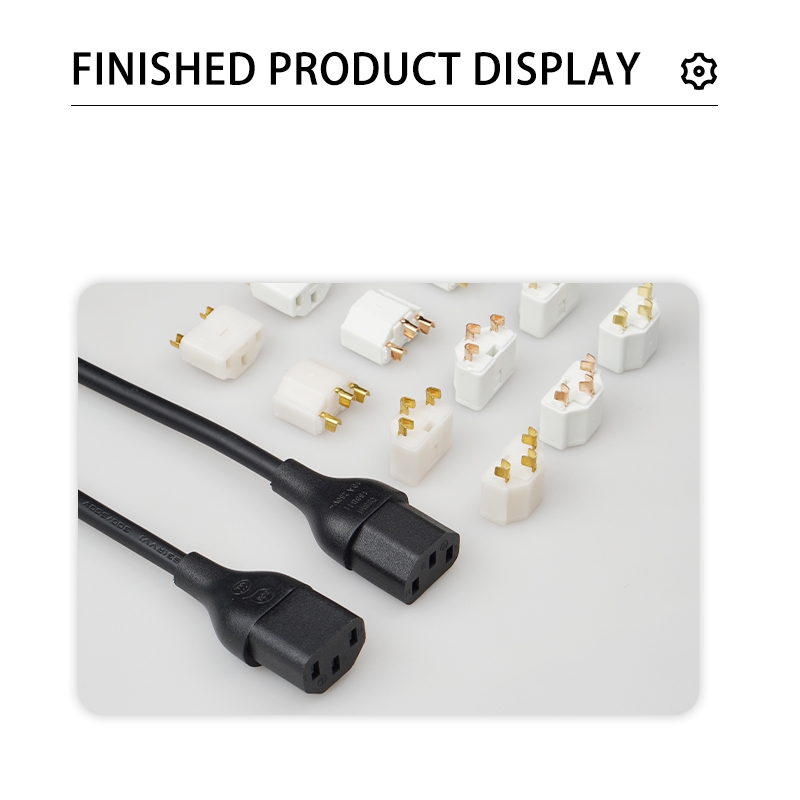
Integrated Child Safety Shutter (Childproof Contacts): Spring-loaded internal plastic shutters block physical access to live electrical contacts unless both pins of a standard plug are inserted simultaneously with equal pressure.
Flame-Retardant Molded Enclosures: Outer socket bodies molded from high-grade Polycarbonate (PC) or ABS plastic capable of passing the 750°C / 850°C Glow Wire Test (IEC 60695-2-11).
4. Cable Jacket Materials & IP Ratings: Matching Cords to Environments
Selecting the correct cable jacket material and ingress protection rating ensures safety and durability in different application settings.
4.1 Decoding Harmonized Cable Codes (EN 50525 System)
European cables use a standardized Harmonized (HAR) designation system that defines their construction characteristics:
H05VV-F (Standard Light-Duty PVC Cable):
H: Harmonized standard compliance.
05: Rated for 300/500V working voltage.
V (1st): PVC conductor insulation.
V (2nd): PVC outer sheath.
-F: Flexible stranded conductor wire (Class 5).
Applications: Indoor residential, office, shop, and light appliance use. Highly flexible and cost-effective, but susceptible to UV degradation, mechanical tearing, and stiffening below 0°C. Protection Rating: IP20.
H07RN-F (Heavy-Duty Synthetic Rubber & Neoprene Cable):
07: Rated for 450/750V working voltage.
R: Natural/synthetic rubber conductor insulation.
N: Weatherproof, flame-retardant Polychloroprene (Neoprene) outer jacket.
Applications: Construction sites, agricultural facilities, outdoor events, workshops, and heavy industry. Excellent resistance to UV rays, ozone, oils, mechanical impacts, and flexible down to -25°C. Protection Rating: IP44 to IP67.
H07BQ-F (Polyurethane / PUR Cable): Features an extremely abrasion-resistant PUR jacket, ideal for heavy industrial environments and abrasive concrete surfaces.

4.2 Ingress Protection (IP) Matrix for Extension Leads
| IP Rating | Dust Protection Level | Water Protection Level | Recommended Operating Environment |
|---|---|---|---|
| IP20 | Protected against solid objects >12.5mm | No water protection | Indoor living rooms, offices, dry commercial spaces |
| IP44 | Protected against tools & wires >1.0mm | Protected against splashing water from any direction | Gardens, residential patios, garages, workshops |
| IP54 / IP55 | Dust protected (limited ingress) | Protected against water jets from any angle | Active construction sites, agricultural facilities |
| IP67 | Dust-tight (complete protection) | Protected against temporary immersion (up to 1m depth) | Extreme industrial sites, heavy rainy conditions |
5. Engineering Analysis: Voltage Drop & Thermal Dissipation in Long Cables
When deploying 16A Schuko extension cords over extended distances (15 to 50 meters), electrical contractors must account for two critical physical phenomena: voltage drop and coil thermal accumulation.
5.1 Calculating Cable Voltage Drop
Electrical resistance increases proportionally with conductor length. Excessive voltage drop reduces equipment operating efficiency, causes motors to overheat, and can prevent power tools from starting.
The single-phase voltage drop formula is:
Vdrop = (2 * L * I ) / A
Where:
L = Cable length in meters
I = Operating current in Amperes (16A)
p= Resistivity of copper (≈0.0178 2.mm2/m at 20°C)
A = Conductor cross-sectional area in mm2;
For a 50-meter extension lead running at 16A load:
With a 1.5 mm² cable: Vdrop = (2* 50 *16 * 0.0178) / 1.5 = 18.98 Volts (Voltage drop of 8.25%, exceeding CENELEC's recommended 5% limit).
With a 2.5 mm² cable: Vdrop = (2 *50 *16 *0.0178) / 2.5 = 11.39 Volts (Voltage drop of 4.95%, within safe operational limits).
Engineering Recommendation: For extension lengths of 25 meters or more intended for heavy continuous 16A loads, buyers should specify 3G2.5mm² conductors to maintain voltage stability and minimize resistive heating losses.
5.2 Thermal Accumulation in Cable Reels (The Coiling Hazard)
When an extension cord is tightly coiled on a drum or reel, magnetic fields cancel out, but heat generated by electrical resistance becomes trapped between overlapping cable layers. If a cable reel rated at 16A fully unspooled is operated at 16A while fully coiled, heat buildup can melt the PVC jacket within minutes, causing a catastrophic short circuit.
Premium cable reels mitigate this risk by integrating a bimetallic thermal cut-out switch calibrated to disconnect power automatically when internal core temperatures exceed 56°C (±5°C).
6. Navigating European Regulatory Compliance & Certifications
To legally market, import, and sell Schuko Extension Cord 16A products within the European Economic Area (EEA), full compliance with European safety Directives is mandatory.
Insert an illustrative infographic demonstrating how to distinguish authentic VDE, GS, NF, and CE logos from counterfeit markings on electrical product packaging.
6.1 Core Regulatory Frameworks
Low Voltage Directive (LVD) 2014/35/EU: Requires electrical equipment operating between 50V and 1000V AC to meet rigorous health and safety requirements under harmonized standard EN 61242 (for cable reels) or DIN VDE 0620-2-1 (for plugs/sockets).
RoHS Directive 2011/65/EU & (EU) 2015/863: Restricts ten hazardous substances, including Lead (Pb), Mercury (Hg), Cadmium (Cd), Hexavalent Chromium (Cr6+), and specific phthalates (DEHP, BBP, DBP, DIBP).
REACH Regulation (EC) No 1907/2006: Regulates Substances of Very High Concern (SVHC) in plasticized PVC and rubber compounds.
6.2 Key European Testing Seals & Certification Bodies
| Certification Mark | Issuing Body & Country | Market Perception & Regional Relevance |
|---|---|---|
| VDE | VDE Testing & Certification Institute (Germany) | Gold standard for electrical safety across Europe; highly respected worldwide. |
| GS Mark ("Geprüfte Sicherheit") | Authorized German bodies (TÜV, VDE, DEKRA) | Independent safety testing mark strongly preferred by German retail chains and consumers. |
| NF | LCIE Bureau Veritas (France) | Essential for widespread market acceptance in France and Belgium. |
| KEMA-KEUR | DEKRA (Netherlands) | Primary electrical safety mark for the Dutch and Benelux markets. |
| CE Mark | Manufacturer Self-Declaration | Mandatory legal entry requirement for the EU; does not replace independent safety testing. |
7. B2B OEM Procurement & Quality Audit Checklist
When sourcing 16A Schuko extension cords from overseas OEM manufacturers, purchasing managers should implement a structured quality control framework:
Conductor Dimensional Verification: Conduct precision micrometer measurements of individual copper strands to calculate total cross-sectional area, avoiding undersized suppliers.
Copper Purity Testing: Verify electrical resistance using a micro-ohmmeter. Standard 1.5mm² copper wire should display resistance lower than 12.1 Ω/km at 20°C.
Temperature Rise Testing (EN 60884-1): Pass a continuous 16A current through the fully assembled product for 4 hours; terminal temperature rise must not exceed 45 Kelvin (K).
High-Voltage Dielectric Strength Test: Subject insulation to 2000V AC for 1 minute to ensure zero breakdown or flashover.
Plug Strain Relief & Pull Force Test: Apply a 110 N pull force 100 times to the cable entry point to ensure conductors cannot detach under physical tension.
Packaging & Environmental Compliance: Ensure all printed instruction manuals, hazard warnings, and packaging materials conform to the EU WEEE Directive (2012/19/EU) and Packaging Waste Regulations.
8. Strategic Conclusion & Industry Action Call
As European safety regulations tighten and consumers demand higher reliability, success in importing Schuko Extension Cord 16A products depends on technical precision, rigorous material selection, and verified compliance. By specifying pure copper 3G1.5mm² or 3G2.5mm² conductors, selecting appropriate HAR cable sheathing (H05VV-F vs. H07RN-F), and securing recognized VDE/GS/NF certifications, distributors and brand owners can minimize quality risks and build lasting market leadership.
Our engineering team specializes in OEM/ODM manufacturing of fully certified CEE 7/7 Schuko extension leads, cable reels, and custom industrial distribution units tailored to European regulatory standards.
Contact our B2B procurement specialists today to request technical product catalogs, factory audit reports, and custom sample evaluations.
References & Regulatory Sources
VDE Testing and Certification Institute: Harmonized European Electrical Standards
European Commission: Low Voltage Directive (2014/35/EU) Guidelines
CENELEC (European Committee for Electrotechnical Standardization): EN 50525 Cable Specifications
European Chemicals Agency (ECHA): REACH and RoHS Chemical Compliance in Electrical Products
ISO/IEC 60884-1: Plugs and socket-outlets for household and similar purposes
Frequently Asked Questions (FAQ)
1. Can a 16A Schuko extension cord continuously run at maximum 3680W load without safety risks?
Yes, provided the extension cord is genuinely rated for 16A/250V, uses 100% pure copper conductors with a minimum cross-sectional area of 1.5 mm² (3G1.5mm²), and is fully uncoiled to allow thermal dissipation. Continuous high-power operation on unverified or coiled cables can cause excessive heat buildup and fire hazards.
2. What is the operational difference between H05VV-F and H07RN-F extension cables?
H05VV-F utilizes light-duty PVC insulation and sheathing, making it flexible, cost-effective, and ideal for indoor residential/office applications (IP20 rating). H07RN-F features heavy-duty synthetic rubber insulation and a weatherproof Neoprene outer jacket, offering resistance to UV rays, oil, moisture, and mechanical impact, making it suitable for outdoor and industrial environments (IP44 to IP67 ratings).
3. Are German Schuko plugs compatible with French wall sockets?
Standard CEE 7/4 plugs fit German sockets but lack the aperture for the French earth pin. However, virtually all modern Schuko extension cords utilize CEE 7/7 hybrid plugs, which feature both side earthing strips and a female earth receptacle, ensuring full compatibility with both German (Type F) and French (Type E) outlets.
4. Why is conductor cross-sectional area (1.5mm² vs 2.5mm²) so important over long distances?
Electrical resistance increases with cable length, leading to voltage drop and heat generation. While 1.5mm² is sufficient for standard 1m–15m household cords, lengths of 25m to 50m operating under heavy 16A loads require 2.5mm² conductors to maintain acceptable voltage levels (less than 5% drop) and prevent overheating.
5. Which certifications are most important when importing extension cords into Germany and France?
For Germany, securing the VDE mark and GS (Geprüfte Sicherheit) mark is critical for consumer trust and retail placement. For France, NF certification issued by LCIE Bureau Veritas is highly recommended. All products entering the European Union must strictly comply with the mandatory CE marking, Low Voltage Directive (LVD), RoHS, and REACH regulations.



 Email
Email