

UK Extension Lead Safety Guide: Prevent Small Hazards from Becoming Major Disasters
Content Menu
● Choosing a Safe Extension Lead: Certification, Ratings and Construction
● Dangerous Habits That Quietly Create Fire Risks
● How to Calculate Load Correctly: Practical Power Reference Table
● Regular Safety Checklist (Recommended Every Three Months)
● Practical Recommendations and Moving from Temporary to Permanent Solutions
● Frequently Asked Questions (FAQ)
Hello everyone. TISDLIP is a professional manufacturer of power cords and extension leads. Over the years, we have produced and exported many extension leads while receiving extensive customer feedback and helping resolve numerous issues. We have witnessed too many cases where improper use of extension leads turned minor problems into serious incidents.
Last year, a customer reported that an end user connected three extension leads in series to power a living-room fan, TV, games console, and electric kettle. The cable overheated and melted due to overload, nearly igniting the carpet. In another case in Bukit Merah, a household used a cheap multi-socket without Safety Mark certification for a kitchen induction hob. Within six months the plug had burnt; fortunately our distributor spotted it during a service visit and prevented a worse outcome.
In the UK and Singapore, extension leads (commonly called trailing sockets or power strips) are essential in almost every home, office, apartment, and rental property where wall sockets are insufficient. Yet many people do not realise that a single poorly used extension lead can become the biggest fire hazard in the house.
This detailed TISDLIP safety guide covers everything from purchasing to daily use, helping you avoid the main risks.
Choosing a Safe Extension Lead: Certification, Ratings and Construction
Many people buy cheap extension leads online or bring them from overseas. This is one of the most dangerous practices.
Always look for proper safety certification
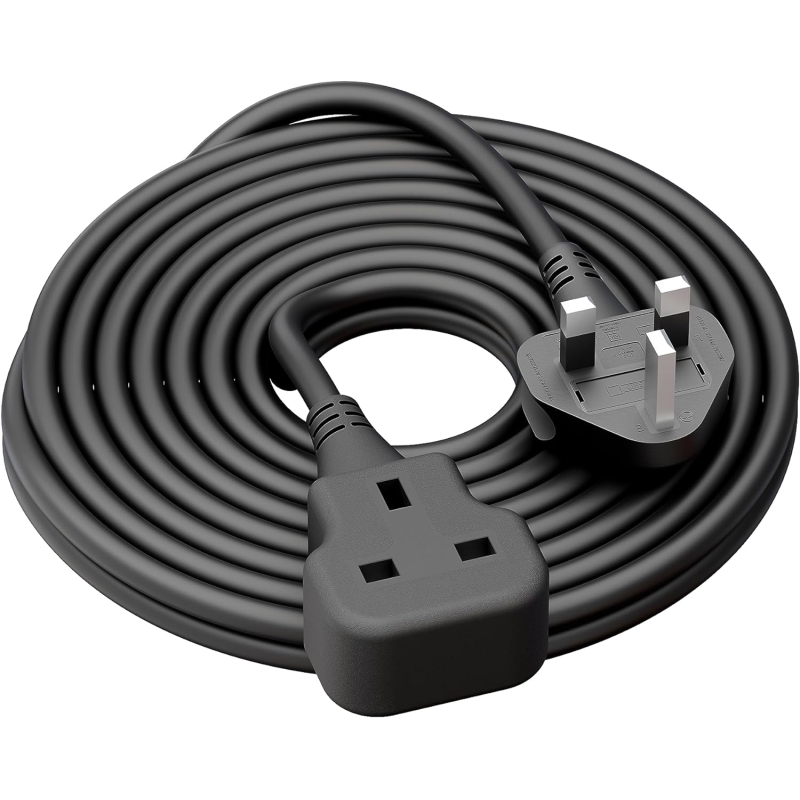
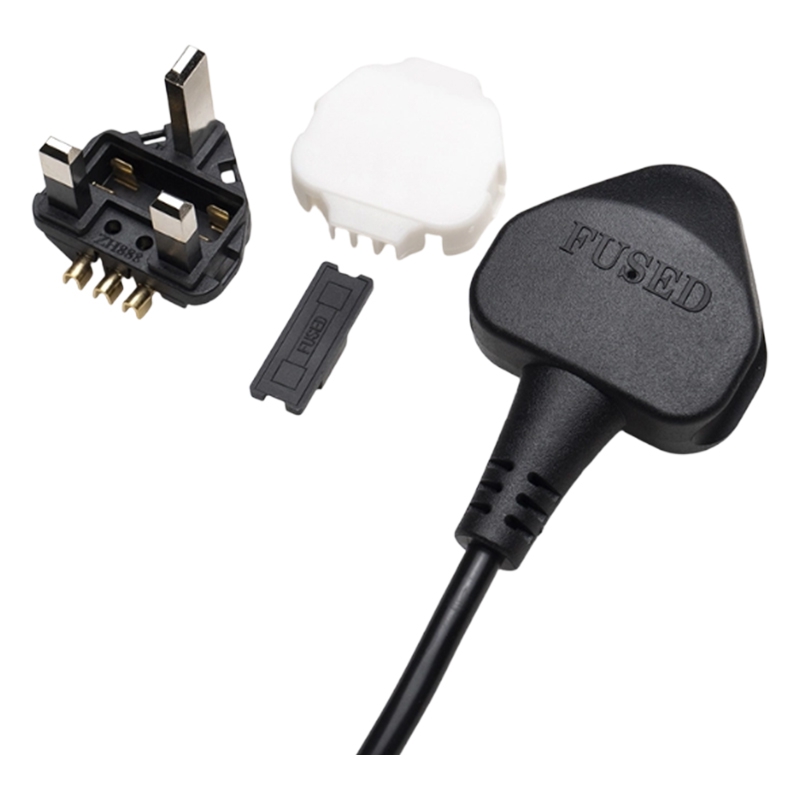
- In the UK, choose products that comply with BS 1363. The plug and sockets should be clearly marked BS 1363, ideally with BSI Kitemark, ASTA or equivalent third-party approval, plus UKCA or CE marking. Uncertified products may have inadequate conductors, insulation or switches.
- In Singapore, the Safety Mark is mandatory. Only products carrying this mark have passed local safety testing for the 230 V / 13 A system. Never buy uncertified items, however cheap or feature-rich they appear.
Check the rated parameters clearly
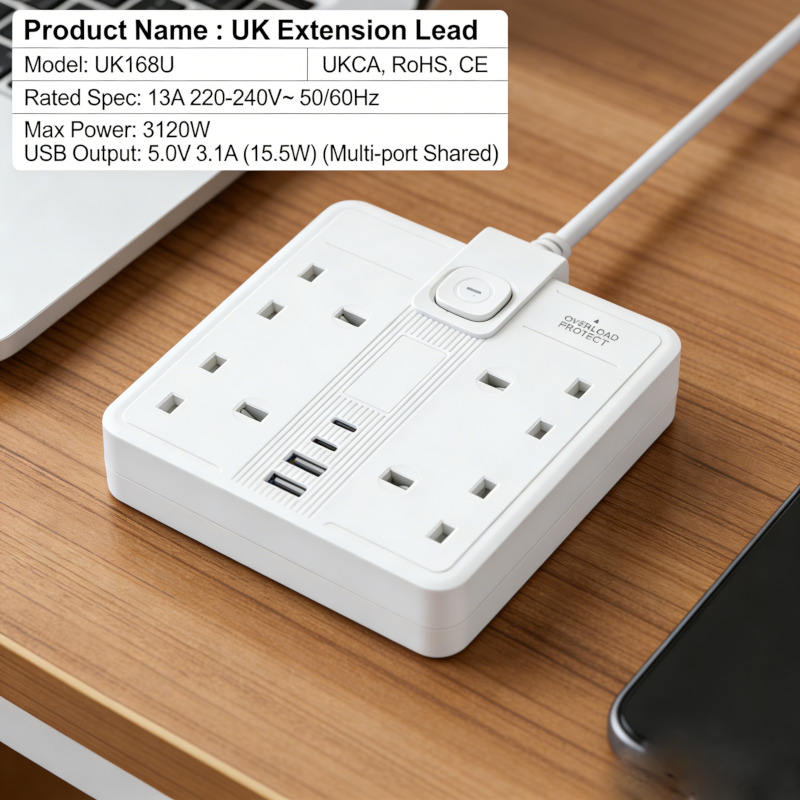
Standard UK and Singapore extension leads are rated 13 A, giving a maximum power of approximately 3,000 W (230 V × 13 A ≈ 2,990 W). Always verify the marking on the packaging and the product itself. Avoid vague "universal" or "multi-function" models with unclear ratings. Some economy leads carry a 13 A plug fuse but use undersized cable (good-quality leads typically use 1.25–1.5 mm² or larger conductors).
Reject "universal" multi-country socket designs
Many multi-national socket leads lack proper local certification and often have poor internal construction. They may not fit local sockets correctly and can damage appliances. Buy from reputable retailers and register the product so you can be notified of any recalls.

Dangerous Habits That Quietly Create Fire Risks
These are the most common misuse patterns we encounter:
1. Daisy-chaining extension leads
Plugging one extension lead into another (or several in a chain) is extremely hazardous. Each additional connection adds resistance and a potential weak point. Voltage drops at the far end while current rises, causing severe heating and accelerated insulation degradation. The original wall socket and the first connection point carry the full combined load. Extension leads must only be plugged directly into a wall socket. Never daisy-chain them. This practice is widely prohibited in workplaces and is a frequent cause of domestic electrical fires.
2. Sharing high-power appliances on one lead
Kettles, induction hobs, hairdryers, ovens, heaters and air-conditioners often draw 1,500–3,000 W each. Connecting two or more high-power devices to the same lead can instantly exceed the 3,000 W limit, causing overheating, melted plugs or fire.
Simple rule: Prefer plugging high-power appliances directly into wall sockets. If an extension lead is unavoidable, use only one high-power appliance on that lead and do not run other devices at the same time. Low-power items (phones, computers, lamps) can share a lead safely.
3. Crushing, bending or hiding the cable
Running leads under sofas, beds, carpets or furniture compresses and bends the cable, risking broken conductors and worn insulation. Covered cables cannot dissipate heat properly, accelerating ageing. Keep leads away from ovens, water heaters and other heat sources. Avoid sharp corners, doorways and high-traffic areas.
4. Repairing damaged cable with tape
Once the outer sheath is damaged by rodents, furniture or wear, ordinary tape cannot restore proper insulation. In humid climates, moisture can enter, leading to leakage, short circuits or electric shock. Any damage, scorching, looseness or discolouration on the cable, plug or switch means the lead must be replaced immediately — never repaired or continued in use.
5. Using leads with wet hands or in damp locations
Kitchens near sinks and bathrooms have high moisture levels. Ordinary extension leads have poor water resistance and can short-circuit. Wet hands greatly increase shock risk. For damp or outdoor use, choose leads with appropriate IP rating (e.g. IP44 or higher).
New in-depth section: Special risks of cable reels
Cable reels are common in homes and workplaces. Using a reel while still wound generates significant heat in the coiled cable and can melt insulation or start a fire within minutes under load. Always fully unwind the reel before use and ensure it has a thermal cut-out. The current rating only applies when the cable is fully extended. This is a repeatedly highlighted hazard by UK electrical safety organisations.
How to Calculate Load Correctly: Practical Power Reference Table
Total power is the sum of the rated wattages of all devices running at the same time. Approximate current (A) = watts ÷ 230. Do not exceed 13 A (≈ 3,000 W).
| Appliance type | Typical power (W) | Approx. current (A) | Recommended use |
|---|---|---|---|
| Electric kettle | 2,000–3,000 | 8.7–13 | Wall socket or dedicated lead |
| Heater / induction hob | 1,500–2,500 | 6.5–11 | Same as above |
| Hairdryer | 1,500–2,000 | 6.5–8.7 | Same as above |
| Microwave | 800–1,500 | 3.5–6.5 | Can share with low-power items |
| TV / games console / laptop | 50–300 | 0.2–1.3 | Safe to share |
| Phone charger | 5–30 | <0.2 | Safe to share |
Always check the actual rating plate on each appliance. When in doubt, reduce the load. Organisations such as Electrical Safety First provide free online socket-overload calculators that are worth using.
Regular Safety Checklist (Recommended Every Three Months)
- Do the cable, plug or sockets feel hot? (Normal temperature should be close to room temperature; noticeable heat indicates overload.)
- Does the plug fit loosely or show poor contact?
- Does the switch spark, stick or cause the indicator light to flicker?
- Is the lead crushed by furniture or repeatedly bent?
- Is the casing discoloured, deformed, scorched or emitting a burning smell?
- Is the outer sheath damaged, exposing internal conductors?
Replace the lead immediately if any of these signs appear. A quality extension lead typically has a service life of 3–5 years. Even without visible damage, internal conductors and insulation degrade over time.

Practical Recommendations and Moving from Temporary to Permanent Solutions
- Extension leads are temporary tools, not substitutes for permanent wiring. If an area regularly lacks sockets, the safest solution is to have additional wall outlets installed by a registered electrician (NICEIC or NAPIT in the UK; Licensed Electrical Worker in Singapore).
- Unplug the main plug of the extension lead when leaving home for long periods or before sleeping. This reduces standby consumption and the risk of appliance faults.
- Zone your leads: use living-room and bedroom leads for low-power devices (phones, computers, lamps); keep high-power kitchen appliances on wall sockets or dedicated short leads.
- Prefer leads with individual switches for convenience. Surge protection is useful for sensitive electronics but does not protect against overload.

New in-depth section: When to call a professional electrician
Frequent reliance on multiple extension leads, repeated circuit-breaker trips, hot sockets or an older property are clear signals to arrange an Electrical Installation Condition Report (EICR). A qualified electrician can assess circuit capacity, add permanent sockets and ensure compliance with local regulations (BS 7671 in the UK, SS 638 in Singapore). This is safer and more cost-effective than continual temporary fixes.
At TISDLIP we firmly believe that electrical safety is never over-caution — it is the most basic responsibility to yourself and your family. Most accidents begin with the attitude of "it will be fine" or "just make do".
If your home circuits or Extension Socket need checking, or you want additional sockets installed and potential hazards identified, contact a qualified electrician. Safe electricity use starts with one small change today. Choose certified products and follow correct practices to keep hazards outside your home.
Frequently Asked Questions (FAQ)
1. Can extension leads be used permanently?
No. They are designed for temporary use. For long-term needs, install permanent wall sockets.
2. Why is daisy-chaining forbidden?
It multiplies resistance and connection points, leading to overload, overheating and arcing — a common cause of fires.
3. How many devices can I plug into a 13 A extension lead?
The total power must stay under approximately 3,000 W. High-power appliances should preferably be used alone.
4. Is it acceptable to repair a slightly damaged cable with tape?
No. Replace the lead immediately. Tape cannot provide reliable insulation or safety.
5. Can I use a cable reel while it is still wound?
No. Always fully unwind it first, otherwise it can overheat and catch fire.
6. What is the difference between UK and Singapore certification?
The UK emphasises BS 1363 compliance plus UKCA/third-party marks. Singapore requires the Safety Mark. Both systems use similar voltage and current ratings, but products must meet the local mandatory requirements.
References
- Electrical Safety First. Extension leads, cable reels and block adaptors. https://www.electricalsafetyfirst.org.uk/guidance/safety-around-the-home/extensions-and-leads
- Electrical Safety First. Key statistics and safety advice. https://www.electricalsafetyfirst.org.uk
- BEAMA. Extension Lead Safety Check List. https://www.beama.org.uk
- Fire Protection Association (FPA) guidance on extension leads and electrical safety.
- Singapore Consumer Product Safety Office (CPSO). SAFETY Mark and Controlled Goods information. https://www.consumerproductsafety.gov.sg
- BS 1363 series (13 A plugs, socket-outlets and related standards).
- UK fire and rescue service data and Home Office dwelling-fire statistics (summarised via Electrical Safety First).
- TISDLIP internal customer case feedback and manufacturing experience.



 Email
Email