



Content Menu
● 1. The Reality of the Copper Surge: Beyond Speculation
● 2. The Demand Engine: Three Pillars of Structural Growth
>> A. AI Data Centers: The New Power Hungry Giant
>> B. EV Scaling and Renewable Infrastructure
>> C. The $4 Trillion Grid Overhaul
● 3. The Supply Crisis: Why the Taps are Running Dry
>> The Smelter's Nightmare: Negative TC/RCs
● 4. Industry Insights: Who Wins in the "Copper Scarcity" Era?
>> The Smelting Hedge: The Role of By-products
● 5. Strategic Management: How We Navigate High Copper Prices
● 6. Potential Risks: The "Inventory Paradox"
● 7. Conclusion: Adapting to the New Normal
● Frequently Asked Questions (FAQ)
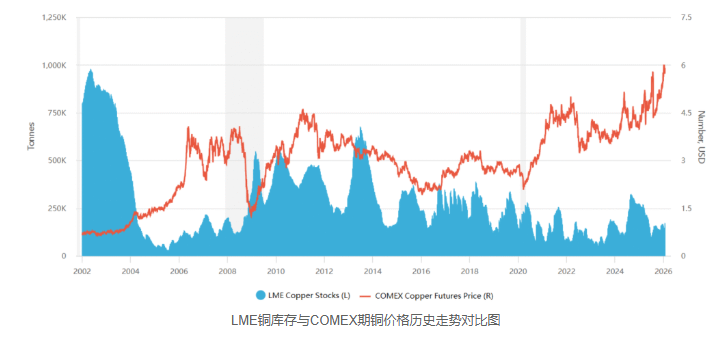
The global commodities market is witnessing a historic upheaval. As a leading manufacturer of power cords, extension leads, and plug inserts, we are at the epicenter of this shift. Recently, copper prices shattered expectations, surging past $14,000 per ton, approaching all-time highs. Even amidst geopolitical headwinds, the market rallied 2.7% to a record closing high, signaling a fundamental shift: Copper is no longer a cyclical commodity; it is a strategic asset
1. The Reality of the Copper Surge: Beyond Speculation
The recent breach of the $14,000/ton mark (approximately ¥36,800/ton in specific localized trading contexts) represents more than just a "price hike." It reflects a market decoupled from traditional geopolitical sentiment.
While news cycles were dominated by trade tensions and rejected ceasefires in volatile regions, copper ignored the "noise." This inverse price action—rising despite bearish geopolitical news—proves that the market is now driven entirely by supply-demand fundamentals. For manufacturers of power connection products, this signifies a long-term elevation in raw material floor prices
2. The Demand Engine: Three Pillars of Structural Growth
Unlike previous spikes driven by general construction, the current "Copper Bull" is fueled by permanent structural shifts in the global economy.
A. AI Data Centers: The New Power Hungry Giant
Artificial Intelligence is not just code; it is copper. The infrastructure required to house massive GPU clusters demands unprecedented electrical conductivity.
* The Projection: By 2026, AI data centers alone are expected to consume 600,000 to 700,000 tons of copper.
* Impact: This high-spec demand competes directly with the high-purity copper needed for premium power cables and industrial extension leads.
B. EV Scaling and Renewable Infrastructure
The transition to Electric Vehicles (EVs) remains a non-negotiable driver. An EV uses roughly four times more copper than an internal combustion engine vehicle. As charging networks expand globally, the demand for heavy-duty power delivery systems has skyrocketed.
C. The $4 Trillion Grid Overhaul
One of the most significant yet overlooked factors is the massive investment in electrical grids.
* China's State Grid: The "15th Five-Year Plan" projects an investment of 4 trillion RMB, a 40% increase over the previous period.
* Expansion: This includes 40,000 kilometers of new transmission lines.
* Global Context: Similar aging-grid replacements in the US and EU are creating a "bottleneck" for copper wire supply.
3. The Supply Crisis: Why the Taps are Running Dry
While demand is accelerating, the ability to pull copper out of the ground is hitting a wall.
The Production Slump
We are entering a "decline cycle." Major projects are facing delays that will ripple through the industry for years:
* Grasberg Mine (Chile/Indonesia): The world's second-largest copper mine has delayed its full production recovery to 2028.
* Downward Revisions: 2026 production forecasts have already been slashed by 90,000 tons.
* The 2026 Cliff: CITIC Securities predicts that 2026 will mark the official start of a global copper mine production decline cycle.
The Smelter's Nightmare: Negative TC/RCs
A critical market signal for experts is the Treatment and Refining Charges (TC/RC).
* Recently, TC fell to -$93 per ton.
* What this means: Smelters are so desperate for raw copper ore that they are essentially paying miners to let them process it. This reflects the absolute bargaining power held by mining companies over the rest of the supply chain.
4. Industry Insights: Who Wins in the "Copper Scarcity" Era?
As a manufacturer, we monitor the "Upstream" players to predict our "Downstream" costs. The power dynamics have shifted toward companies with resource endowment.
The "Resource Kings"
1. Zijin Mining: With 50,000,000 tons of reserves and a 2026 production target of 1.2 million tons, they hold a significant cost advantage.
2. CMOC (Molybdenum): Their synergy between copper and cobalt provides a unique hedge against battery-market fluctuations.
3. Western Mining: The expansion of the Yulong Copper Mine offers high-grade resources that provide a buffer against rising energy costs.
The Smelting Hedge: The Role of By-products
How do smelters survive negative margins? By selling the "waste." Geopolitical conflicts have driven up the price of Sulfuric Acid (a by-product of copper smelting). Companies like Tongling Nonferrous are using high-efficiency by-product management to offset the losses in actual copper refining.
5. Strategic Management: How We Navigate High Copper Prices
For purchasers of power cords and electrical components, understanding our mitigation strategy is key to stable procurement.
| Strategy | Action Plan | Impact on Quality |
| Inventory Buffering | Maintaining 3-month rolling reserves of copper rods. | Price stability for long-term contracts. |
| Technical Optimization | Refining plug insert designs to reduce scrap rate. | Cost reduction without compromising conductivity. |
| Supply Chain Diversification | Direct partnerships with major copper rod processors. | Guaranteed material purity and availability. |
6. Potential Risks: The "Inventory Paradox"
Despite the shortage, global exchange inventories (LME, SHFE, COMEX) have reached 1.1 million tons.
* The Risk: If the global "New Energy" rollout slows down or AI infrastructure hits a regulatory wall, this high inventory could lead to a sharp, temporary price correction.
* Expert View: We view any such correction as a "buying opportunity" rather than a trend reversal, given the multi-year lead times for new mines.
7. Conclusion: Adapting to the New Normal
The era of "cheap copper" is behind us. The convergence of AI infrastructure, grid modernization, and mine depletion has created a hard floor for prices. As your partner in power connection solutions, we remain committed to transparency and technical innovation to navigate these costs together.
Call to Action: Are you planning a large-scale infrastructure project or high-volume product launch for 2026? [Contact our technical sales team today] to discuss forward-pricing contracts and ensure your supply chain remains resilient against the copper supercycle.
References
1. LME (London Metal Exchange): [Historical Copper Price Data]
2. CITIC Securities: [2026 Global Copper Outlook Report]
3. International Copper Study Group (ICSG): [World Copper Mine Production Trends]
4. State Grid Corporation of China: [15th Five-Year Investment Plan Summary]
5. Zijin Mining Group: [2024-2026 Production Targets and Reserve Reports]
Frequently Asked Questions (FAQ)
Q1: Why is the price of power cords increasing so rapidly?
A: Copper typically accounts for 60% to 80% of the material cost of a power cable. When copper surges to $14,000/ton, the raw material cost per meter rises proportionally, forcing manufacturers to adjust prices.
Q2: Will "Aluminum-Clad Copper" (CCA) become a viable alternative?
A: While cheaper, CCA has higher resistance and lower tensile strength. For high-safety products like our UL/VDE certified power cords and extension leads, we continue to use 100% oxygen-free copper to ensure fire safety and conductivity.
Q3: How long will this copper shortage last?
A: Most analysts, including those from CITIC Securities, suggest that because it takes 7-10 years to bring a new copper mine online, the supply gap will likely persist through at least 2028-2030.
Q4: How does AI actually affect copper?
A: AI requires massive data centers. These centers use vast amounts of copper for power distribution units (PDUs), busbars, and high-speed cabling to connect servers.
Q5: Can recycling solve the copper shortage?
A: Recycling is crucial but insufficient. Currently, recycled copper only meets about 30% of global demand. The scale of the "Green Transition" requires more copper than is currently available in the entire recycling loop.



 Email
Email