

The Expert Guide to BS1363 UK Extension Leads: Solving Tripping, Overheating, and Indoor vs. Outdoor Safety Challenges
Content Menu
● 1. Introduction: The Unseen Risks in Your Daily Power Setup
● 2. Why BS1363 British Standard Extension Leads Are Crucial for Electrical Safety
● 3. Technical Parameters of Extension Leads Explained
● 4. Indoor vs. Outdoor Extension Leads: The Critical Boundary
● 5. Solving the Top 10 Most Common User Questions
● 6. Buying Checklist and Comparative Scenario Matrix
● 7. 2025–2026 Industry Safety Insights and Real Case Analysis
● 8. Step-by-Step Maintenance Protocol
● 9. Why Flame-Retardant and Impact-Resistant Engineering Matters
● 10. Conclusion: Creating a Safe Electrical Environment
● 11. FAQ: Frequently Asked Questions
1. Introduction: The Unseen Risks in Your Daily Power Setup
As an electrical safety professional with over a decade of experience inspecting residential and industrial power distribution systems, I have seen how a simple everyday item like an extension lead can become a serious hazard. Extension leads are everywhere — in homes, offices, and workshops — quietly powering our devices. Yet their very familiarity leads to misuse, overloading, and neglect.
Every week, emergency services attend preventable electrical fires caused by degraded cables, counterfeit plugs, and overloaded power strips. Issues like a tripping circuit breaker or a warm socket are not minor annoyances — they are warning signs of underlying stress in your electrical setup.
This comprehensive guide serves as an unbiased, in-depth resource on BS1363 British Standard extension leads. Whether you manage an IT department, organise outdoor events, or simply set up appliances in a new home, understanding these power couplers is essential for safety. The focus remains purely educational: equipping you with the technical knowledge to assess equipment, eliminate risks, and maintain safety in all environments.
2. Why BS1363 British Standard Extension Leads Are Crucial for Electrical Safety
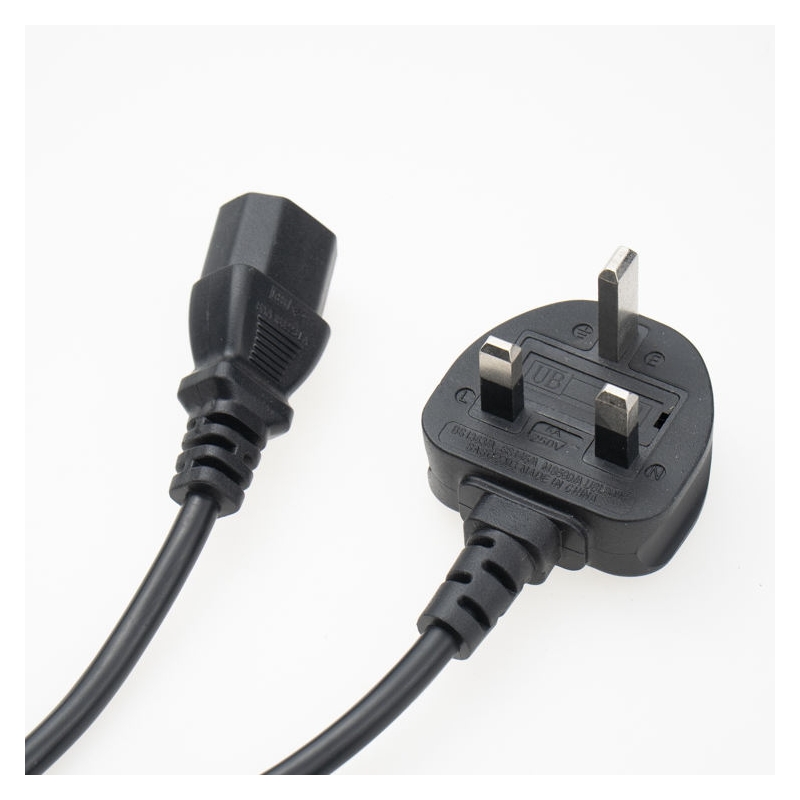
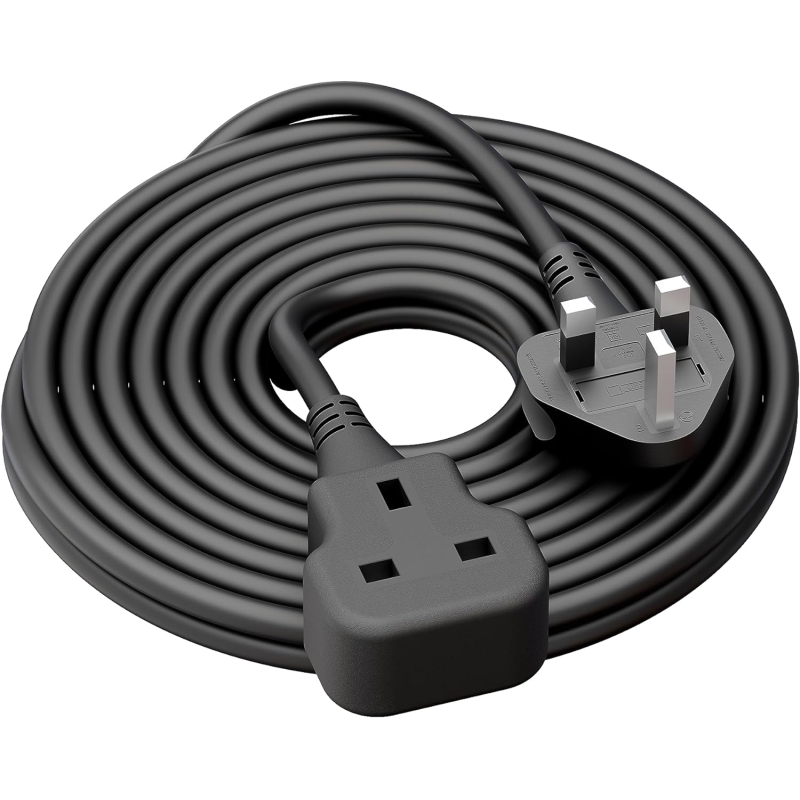
The UK's BS1363 plug and socket system is widely regarded as one of the safest in the world. Introduced in 1947 amid post-war copper shortages and the adoption of ring main circuits, it incorporates multiple layers of user protection.

The Three Core Mechanical Pillars of BS1363:
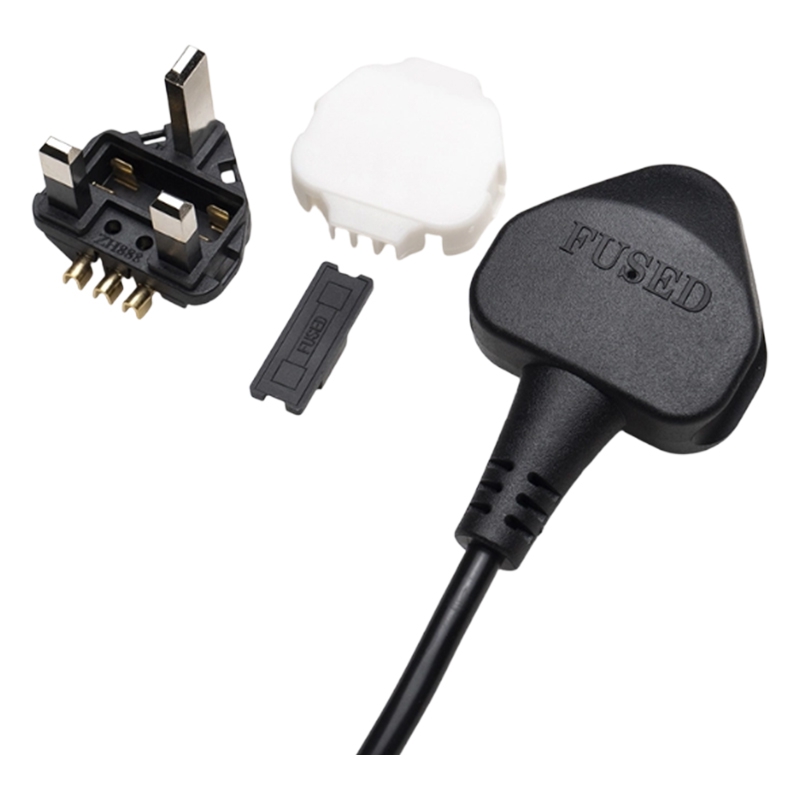
- Integrated Cartridge Fuse (BS1362): Every BS1363 plug contains its own fuse, providing localised protection. This isolates faults at the plug before they can escalate, unlike systems relying solely on distant consumer unit breakers.
- Automatic Interlocking Safety Shutters: Socket apertures are blocked by internal gates that only open when the longer earth pin is inserted first, preventing accidental contact with live terminals.
- Insulated Pin Sleeves: Modern plugs feature insulated sections on live and neutral pins, reducing shock risk even if the plug is partially withdrawn.
Global Context: Electrical distribution faults contribute significantly to fires worldwide. BS1363's plug-level fusing helps mitigate thermal runaway risks common in other standards.
3. Technical Parameters of Extension Leads Explained
Safe use requires understanding the electrical principles behind the cable.

Amperage, Voltage, and Power
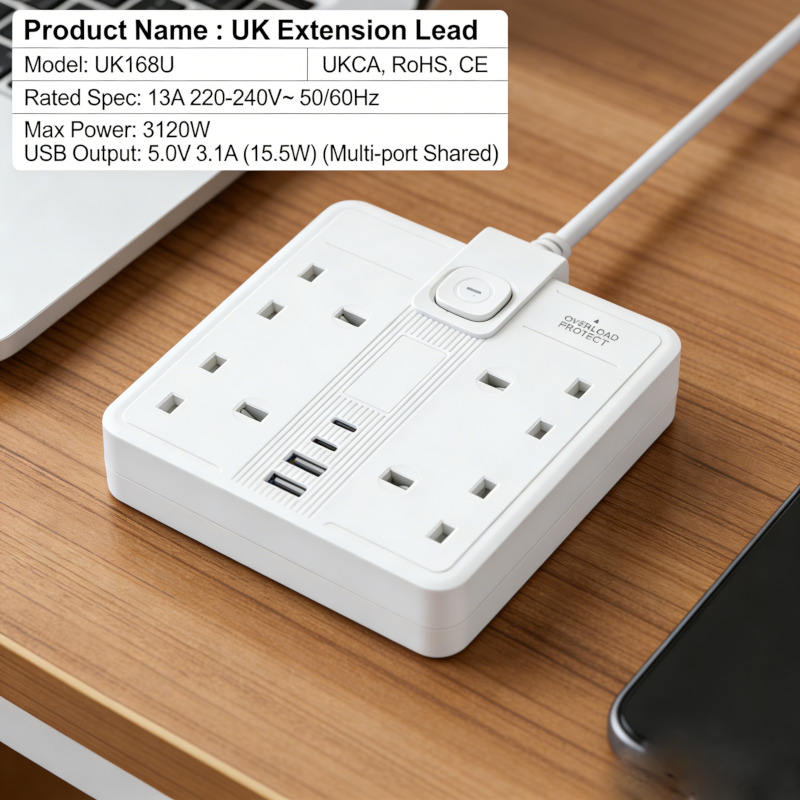
UK nominal voltage is 230V AC (50Hz), with standard sockets rated at 13A.
Maximum load:
230V *13A = 2,990W ≈ 3,000W (3kW)
Exceeding this risks overload.
Conductor Cross-Sectional Area (CSA)
- 1.25mm²: Suitable for light-duty (up to ~10A / 2,300W) — lamps, chargers.
- 1.5mm²: Standard for quality 13A leads; handles full load with low heat.
- 2.5mm²: Ideal for heavy-duty or long runs to minimise voltage drop.
Cable Length and Voltage Drop
Longer cables increase resistance. Heavy loads on inadequate long cables cause voltage drop, leading motors to draw excess current and overheat. Always fully uncoil reels before use.
Premium Features
Look for V-0 flame-retardant housings (UL94), impact-resistant materials, and robust strain relief.
4. Indoor vs. Outdoor Extension Leads: The Critical Boundary
Treating indoor and outdoor leads interchangeably is a common and dangerous mistake.
Key Differences:
| Technical Parameter | Indoor Extension Leads | Outdoor Extension Leads |
|---|---|---|
| Ingress Protection (IP) | Typically IP20 | Minimum IP44 (splash-proof); IP66 preferred |
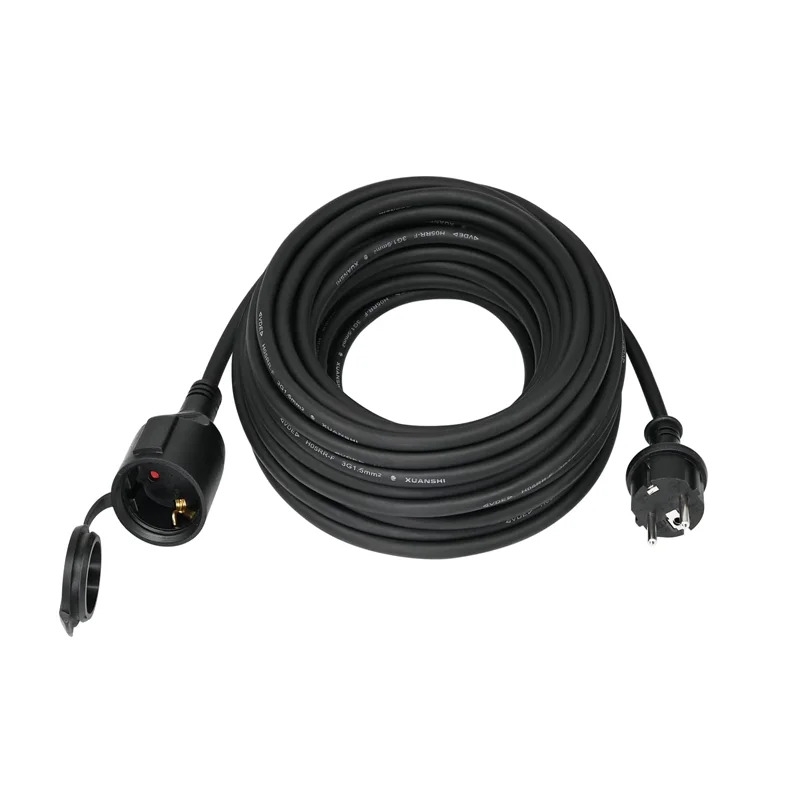
| Outer Sheath Material | Standard PVC | HO7RN-F rubber or UV-stabilised polymers |
| Mechanical Resilience | Light-moderate | High crush-resistance |
| Temperature Range | +5°C to +40°C | -25°C to +60°C |
| Seals & Design | Basic shutters | Waterproof lids, silicone seals, molded boots |
5. Solving the Top 10 Most Common User Questions
1. Why does my extension lead trip the breaker?
Overload (cumulative draw 13A) or earth fault (e.g., water damage).
2. Is warmth normal?
Slight uniform warmth under heavy load is expected. Hot plugs/sockets indicate loose connections — address immediately.
3. Purpose of the BS1362 fuse?
It protects the *cable* from faults, blowing quickly on short circuits
4. High-power appliances on extensions?
Thermal loads (heaters, kettles): Prefer wall sockets or heavy-duty 1.5mm² leads. Electronics: Use surge-protected units.
5. Identifying counterfeits?
Light/stiff cable (CCA wire).
Missing insulated sleeves or incorrect pin dimensions.
Lack of clear BS1363/BS1362 markings and BSI/ASTA/UKCA certifications.
6. Child and pet safety?
Use cable management boxes, wall mounting, and protective sleeves.
7. Long cable reels and performance?
Yes — uncoil fully to avoid heat buildup and voltage drop.
8. Surge protection effectiveness?
Quality MOV-based protection works well but degrades over time; replace every few years.
9. Expected lifespan?
5–10 years domestic (static use); 1–2 years in harsh commercial settings with regular inspections.
10. Outdoor exhibitions or events?
Use IP44+ ruggedised leads with cable ramps. Avoid domestic IP20 strips.
6. Buying Checklist and Comparative Scenario Matrix
Pre-Purchase Checklist:
1. Confirm minimum CSA (1.5mm² recommended for most 13A use).
2. Verify BSI Kitemark, ASTA, or equivalent certifications.
3. Match IP rating to environment.
4. Prioritise V-0 flame-retardant and impact-resistant housings.
5. Ensure correct BS1362 fuse (usually 13A).
Scenario-Based Selection Matrix:
| Deployment Context | Recommended CSA | Minimum IP | Key Features | Priority |
|---|---|---|---|---|
| Home/Office Desk | 1.25–1.5mm² | IP20 | Surge protection, individual switches | Certification > Surge |
| Kitchen (High Load) | 1.5mm² | IP20 | Solid copper bars, V-0 housing | Gauge > Certification |
| Workshop/Garage | 1.5mm² | IP20–IP44 | Impact bumpers, high-visibility | Impact > Gauge |
| Outdoor Exhibition | 1.5–2.5mm² | IP44 | Weather seals, UV jacket | IP Rating > Crush |
| Construction Site | 2.5mm² | IP66 | Integrated RCD, heavy reel | RCD > IP > Strength |
7. 2025–2026 Industry Safety Insights and Real Case Analysis
Recent recalls highlight issues with undersized conductors (e.g., 0.75mm² labelled as 1.5mm²) in cheap imports, leading to overheating.
Case Study (Commercial Exhibition Fire): A tightly coiled 30m reel + daisy-chained indoor strip under load caused heat buildup and ignition near flammable materials. Lessons: Always uncoil reels, avoid daisy-chaining, use appropriate leads, and keep clear of combustibles.
8. Step-by-Step Maintenance Protocol
1. Visual Inspection: Check for cuts, abrasions, or crushing.
2. Thermal Signs: Look for discoloration or melting.
3. Mechanical Check: Ensure strain relief is secure.
4. Fuse Verification: Use correct BS1362 fuses only.
5. Routing: Avoid high-traffic areas; never daisy-chain.
6. PAT Testing: Annual for commercial use.
9. Why Flame-Retardant and Impact-Resistant Engineering Matters
Cheap plastics can fuel fires from internal arcs (400°C). UL94 V-0 materials self-extinguish rapidly. Impact-resistant designs prevent internal shorts from drops or crushing.
10. Conclusion: Creating a Safe Electrical Environment
BS1363 extension leads are critical safety components. Choose quality, match to your environment, maintain regularly, and respect indoor/outdoor boundaries for reliable protection.
Review your setups today using the checklist above. Replace suspect units with certified, properly rated alternatives.
References
- British Standards Institution (BSI): BS 1363-2:2016+A1:2020
- Electrical Safety First (UK Safety Council)
- UK Health and Safety Executive (HSE)
- Underwriters Laboratories (UL): UL 94
- Fire Service UK: Electrical Equipment Fire Statistics
11. FAQ: Frequently Asked Questions
1. What is the practical difference between a 1.5mm² and a 2.5mm² extension lead?
A 1.5mm² core is standard for most 13A domestic and light industrial use (under 15m). A 2.5mm² core is better for very long runs or continuous heavy industrial loads to reduce voltage drop.
2. Are flame-retardant extension leads significantly more expensive?
&No. The price difference is usually small but well worth it for the added fire safety.
3. Can I use an indoor extension lead outdoors if the weather is completely dry?
Absolutely not. Even in dry conditions, moisture from dew or humidity can enter unprotected sockets. Always use IP44+ outdoor leads.
4. How can I definitively determine if my extension lead is overloaded?
Add up the wattage of all connected appliances. If the total exceeds 3,000W (or 13A), the lead is overloaded.
5. How often should I replace an extension lead?
5–10 years in static domestic use with regular checks; 1–2 years in commercial or high-wear environments.



 Email
Email