

Content Menu
● Why BS 1363 to IEC C13 UK Power Cords Demand Specialist Attention
● Step 1: Master the BS 1363 Plug Anatomy and Safety Engineering (Updated 2023 Standards)
● Step 2: Select the Correct BS 1362 Fuse for Optimal Protection
● Step 3: Choose Between IEC C13 and IEC C15 Connectors
●Step 4: Specify Cable Construction Using HAR Standards
● Step 5: Verify Certifications and Regulatory Compliance
● New Section: Data Center-Specific Best Practices and Risk Mitigation (2025–2026 Insights)
● New Section: Common Sourcing Pitfalls and Real-World Case Lessons
● Step 6: Factory Audit and Supplier Evaluation Checklist
● FAQ
● Conclusion and Call to Action
As a procurement specialist and electrical engineering consultant with over 15 years of experience supplying mission-critical power infrastructure to OEMs, data centers, and global distributors, I have seen firsthand how a single incorrect BS 1363 to IEC C13 UK power cord specification can trigger costly delays, compliance failures, or safety incidents. In the UK's unique ring-main electrical system, these cords—often called UK C13 computer cables or kettle leads—are not generic accessories but precision-engineered safety components.
This comprehensive guide equips B2B buyers with the latest technical knowledge, updated standards (including BS 1363-1:2023), practical checklists, and expert insights to source fully compliant, high-reliability BS 1363 to IEC C13 UK power cords while minimizing risks and optimizing total cost of ownership.
Why BS 1363 to IEC C13 UK Power Cords Demand Specialist Attention
The United Kingdom mandates unique safety features embedded in the BS 1363 (Type G) plug, unlike most global markets. Incorrect sourcing leads to customs seizures, equipment damage, fire hazards, or legal liability under the Plugs and Sockets etc. (Safety) Regulations 1994. With surging data center demand and post-Brexit regulatory nuances, precise specification has never been more critical.
Key Risks of Non-Compliant Cords:
- Overheating or fire from mismatched fuses and conductor sizes.
- Socket incompatibility due to improper pin dimensions or missing shutters actuation.
- Regulatory rejection lacking ASTA or UKCA compliance.
- Increased downtime in high-density racks from poor strain relief or excessive cable slack.
Step 1: Master the BS 1363 Plug Anatomy and Safety Engineering (Updated 2023 Standards)
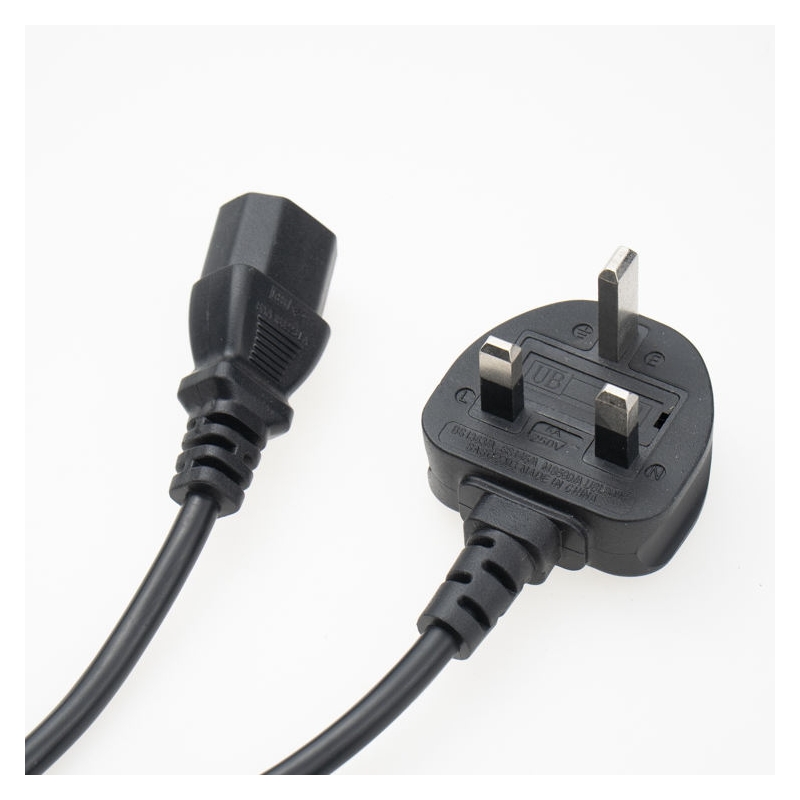
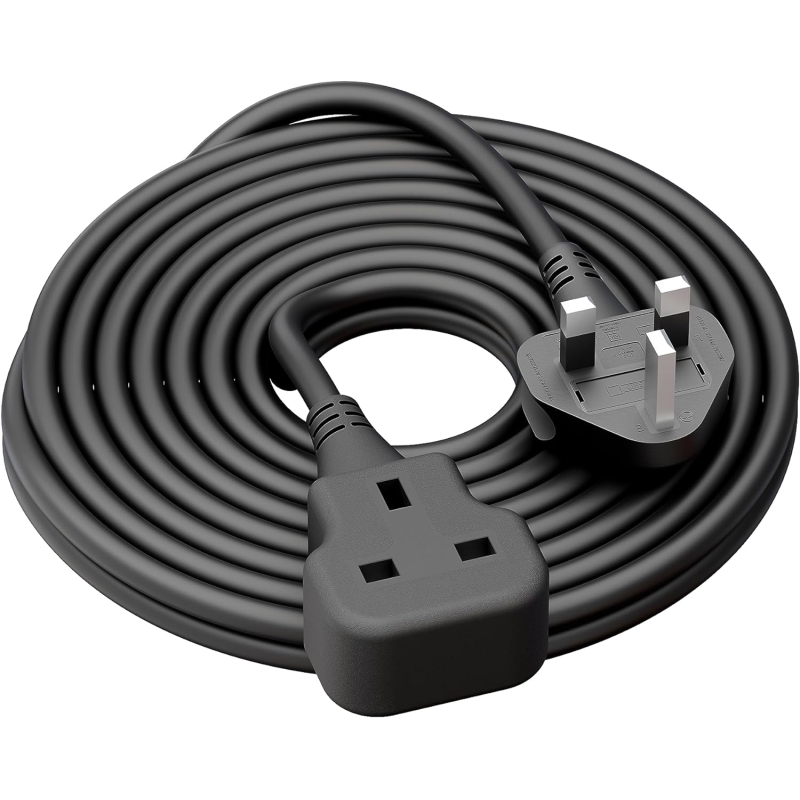
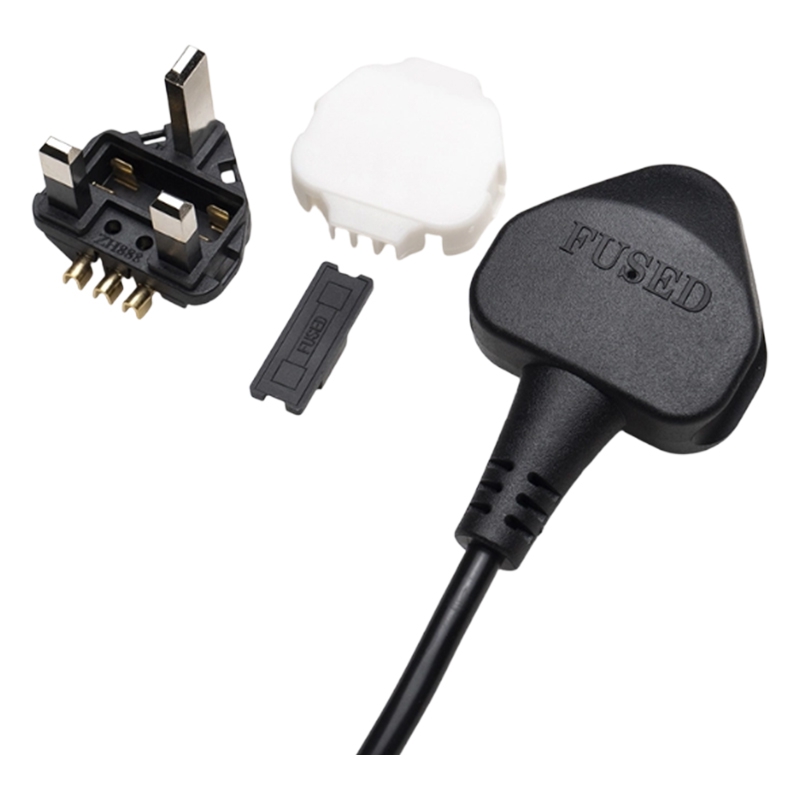
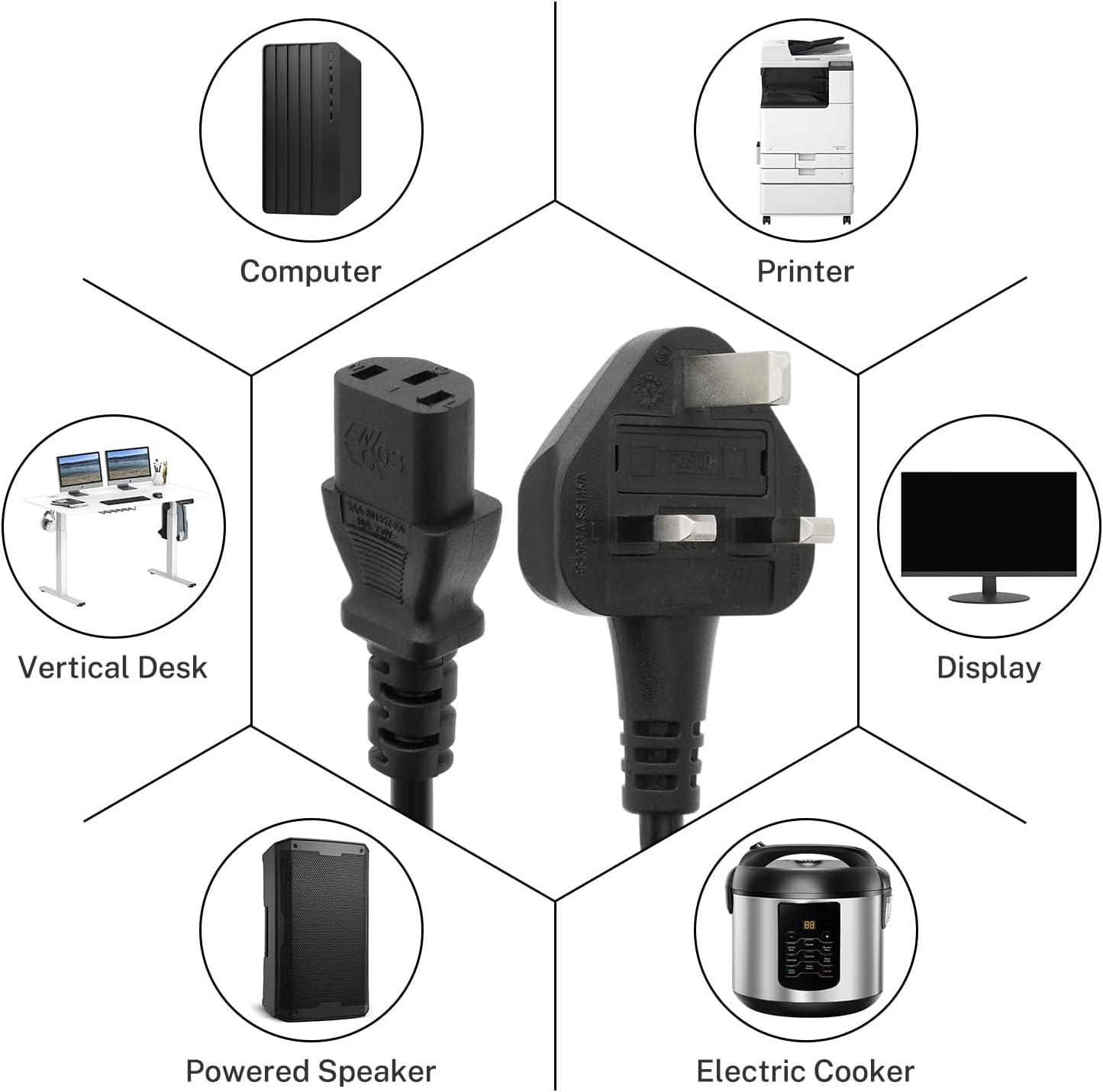
The BS 1363 plug, governed by BS 1363-1:2023, features a robust three-pin rectangular design engineered for the UK's high-amperage ring circuits.
Critical Dimensions (per BS 1363-1):
- Earth pin: 8.0 mm × 4.0 mm cross-section, 22.3 mm long — ensures first-make earthing and actuates safety shutters.
- Live & Neutral pins: 6.4 mm × 4.0 mm, 17.7 mm long, with mandatory insulated sleeving on the base.
- Shutter system: Longer earth pin mechanically unlocks spring-loaded gates in compliant sockets.
Expert Tip: During supplier audits, use digital calipers to verify dimensions. Reject samples with short earth pins or missing insulation—these fail safety tests and pose shock hazards.
Step 2: Select the Correct BS 1362 Fuse for Optimal Protection
Every compliant BS 1363 plug incorporates a user-replaceable BS 1362 cartridge fuse (6.3 mm × 25.4 mm) to protect the flexible cable.
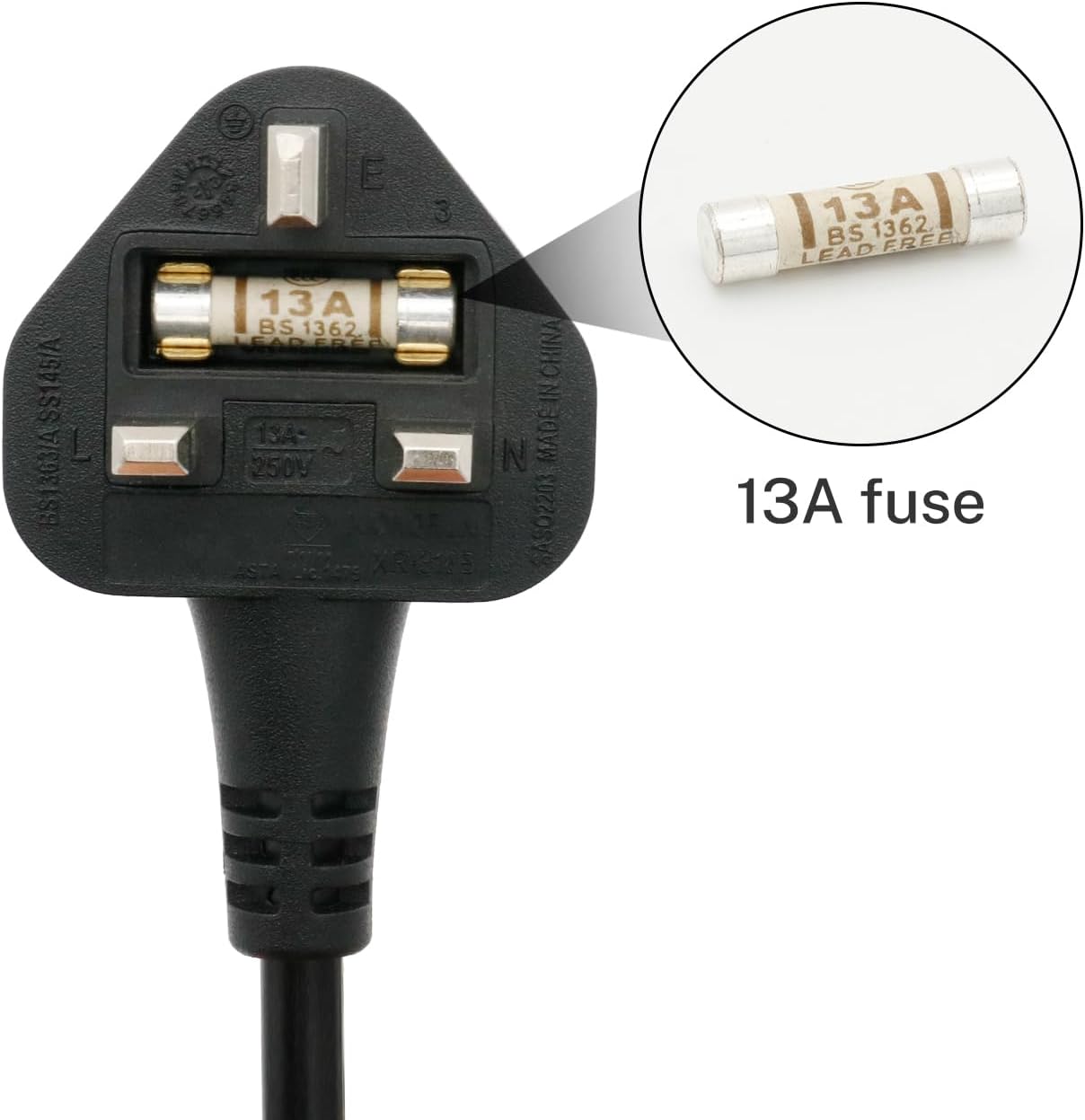
Recommended Fuse Ratings (match to load and cable):
| Appliance Power (230–240V) | Recommended Fuse | Typical Applications | Color |
|---|---|---|---|
| ≤ 700W | 3A | Monitors, routers, POS systems | Red |
| 700W – 3000W | 13A | Servers, PDUs, printers, heavy loads | Brown |
Critical Engineering Principle: The fuse protects the *cord*, not just the appliance. A 13A fuse on a 0.75 mm² cable can allow dangerous overheating before tripping. For typical office desktops (150–350W), a 3A or 5A fuse often delivers faster fault response.
2023 Update Note: BS 1363-1:2023 strengthened overload testing requirements.
Step 3: Choose Between IEC C13 and IEC C15 Connectors
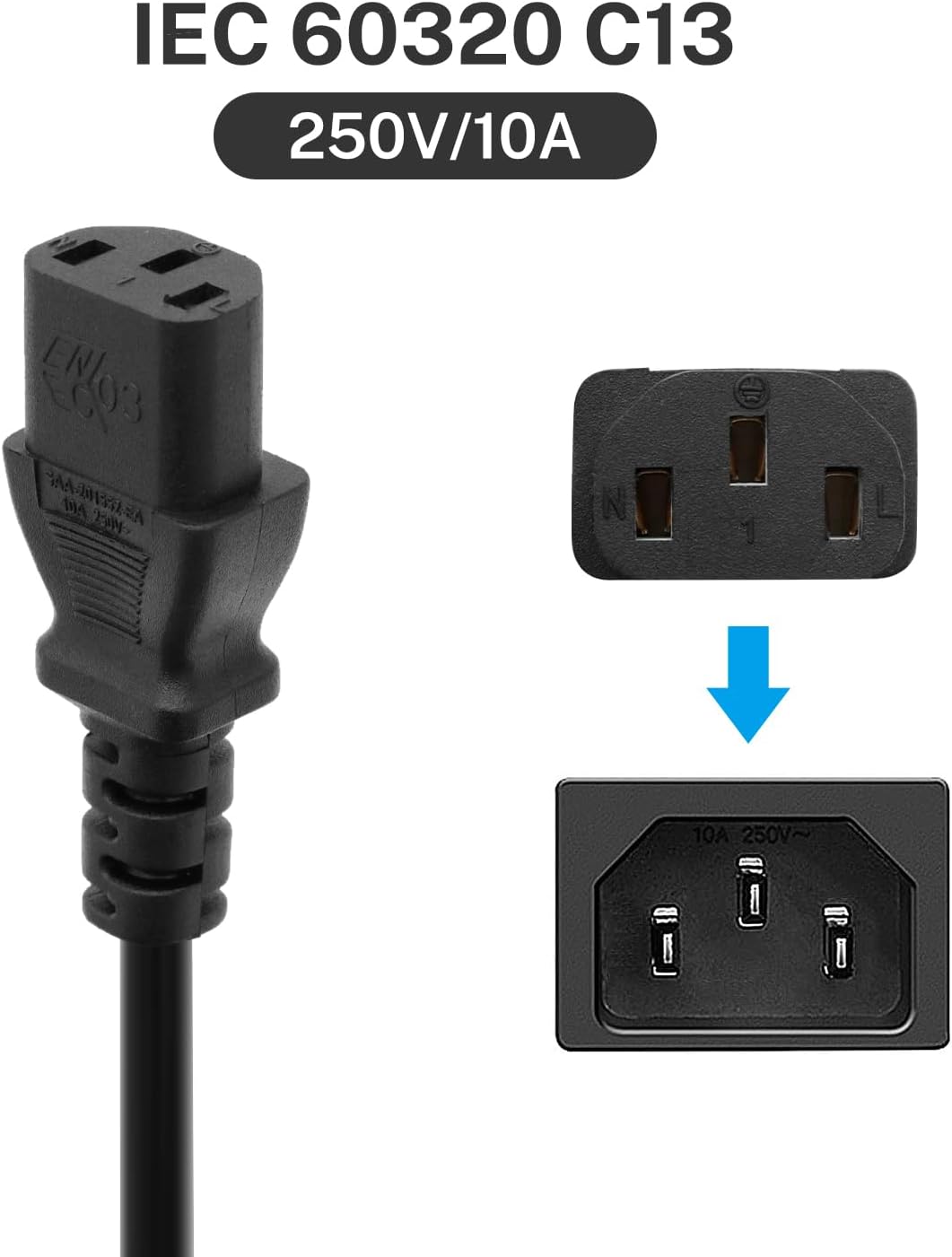
IEC C13 (Standard):
- 10A / 250V, 70°C max.
- Smooth face — ideal for most IT hardware and servers.
IEC C15 (High-Temperature):
- 10A / 250V, 120°C max.
- Notched base below earth pin — required for hot appliances.
The notch prevents unsafe mating of a C13 into a high-heat C16 inlet, eliminating meltdown risk. Always verify equipment inlet specifications.
Step 4: Specify Cable Construction Using HAR Standards
Demand CENELEC harmonized cables for regulatory acceptance.
H03VV-F vs H05VV-F:
- H03VV-F: Lighter duty, 300/300V — suitable for low-power, highly flexible office use.
- H05VV-F: 300/500V, thicker jacket — preferred for data centers and industrial applications.
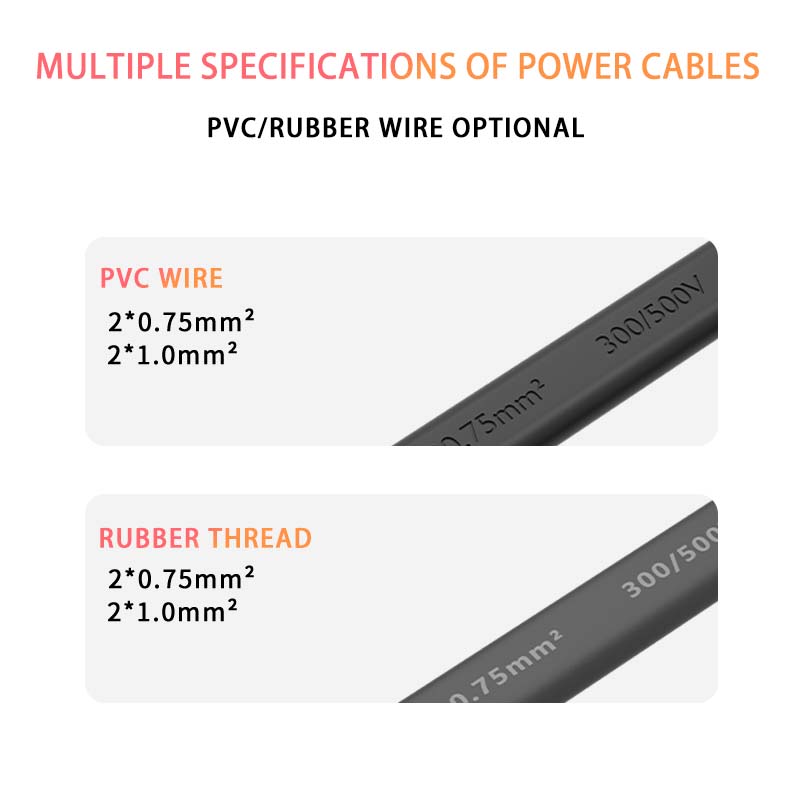
Conductor Sizes (oxygen-free copper, Class 5 stranded):
- 0.75 mm²: Up to ~6A (standard desktops).
- 1.0 mm²: Up to 10A (enterprise baseline).
- 1.5 mm²: Higher capacity (plug-limited to 13A).
LSZH Jacketing: Essential for data centers — Low Smoke Zero Halogen reduces toxic fumes and equipment corrosion during fires.
Step 5: Verify Certifications and Regulatory Compliance
Core Requirements:
- ASTA Diamond Mark (Intertek): Gold standard for BS 1363 compliance. Verify via Intertek's registry or direct certificate.
- UKCA Marking: Required for Great Britain; CE accepted in many cases but dual marking preferred.
- RoHS & REACH: Hazardous substance compliance.
Expert Procurement Practice: Request full test reports and batch traceability. Major buyers routinely reject non-ASTA components.
New Section: Data Center-Specific Best Practices and Risk Mitigation (2025–2026 Insights)
In high-density environments, power cords impact airflow, cooling costs, and uptime. Key lessons from recent deployments:
- Optimize lengths (1.0–2.5m typical) to reduce clutter and improve PUE.
- Use locking IEC connectors in vibration-prone or high-traffic areas.
- Implement color-coding for A/B redundant feeds.
- Conduct incoming Hi-Pot, continuity, and pull tests on sample batches.
Industry data shows that on-site power distribution issues remain a leading cause of outages. Proper cord selection and management directly enhance resilience.
New Section: Common Sourcing Pitfalls and Real-World Case Lessons
- CCA vs Pure Copper: Copper-clad aluminum offers poor conductivity and fire risk under load — always demand 100% copper with mill certificates.
- Weak Strain Relief: Over-molded boots are non-negotiable for repeated handling.
- Counterfeit ASTA Marks: Always cross-verify with Intertek.
One European distributor I advised avoided a major recall by switching to verified ASTA suppliers after initial samples failed pin sleeving tests.
Step 6: Factory Audit and Supplier Evaluation Checklist
Use this numbered checklist during qualification:
1. Confirm ASTA license and valid certificate number.
2. Verify 100% pure copper conductors.
3. Inspect over-molded strain reliefs.
4. Review LSZH option availability.
5. Request 100% electrical testing data.
6. Confirm lead times and MOQ for custom lengths/fuses.
FAQ
Q1: Can BS 1363 to IEC C13 cords be used in continental Europe?
No. The Type G plug is incompatible with Schuko or other European outlets. It is standard in the UK, Ireland, Hong Kong, Singapore, Malaysia, and several GCC countries.
Q2: Why not always use a 13A fuse?
It may fail to protect lighter cables during faults. Matching fuse to load and conductor size ensures optimal safety.
Q3: How do I verify genuine ASTA certification?
Check the molded mark on the plug and validate the certificate number directly through Intertek's services or registry.
Q4: What is the difference between C13 and C15 in practice?
C15 handles higher temperatures (120°C) and features a mechanical notch for safety in hot applications.
Q5: Are there recent standard changes buyers should know?
BS 1363-1:2023 includes strengthened overload testing, material requirements (brass ≥58% copper), and 50–60 Hz coverage.
Q6: Should data centers prefer LSZH cords?
Yes — especially in enclosed racks, for reduced smoke and corrosion risk during incidents.
Conclusion and Call to Action
Selecting compliant BS 1363 to IEC C13 UK power cords is a technical decision that directly affects safety, uptime, and regulatory standing. Prioritize verified suppliers, precise specifications, and ongoing quality assurance.
Ready to secure reliable UK power cords for your next project? Contact a certified manufacturer or compliance expert today for samples, custom quotations, and technical support. Investing in the right cord today prevents expensive failures tomorrow.
Article Meta Description / Introduction (approx. 280 characters):
Discover expert guidance on sourcing compliant BS 1363 to IEC C13 UK power cords. This in-depth B2B procurement guide covers specifications, BS 1363-1:2023 updates, fuse selection, C13 vs C15, certifications (ASTA/UKCA), and data center best practices to ensure safety, compliance, and reliability in 2026.
References
- British Standards Institution. BS 1363-1:2023 – 13 A plugs, socket-outlets, adaptors and connection units. https://www.bsigroup.com/
- Wikipedia / Official Specs: BS 1363 dimensions and requirements. https://en.wikipedia.org/wiki/BS_1363
- Intertek ASTA Certification: https://www.intertek.com/product-certification-marks/asta/
- UK Government: UKCA Marking Guidance. https://www.gov.uk/guidance/placing-ukca-or-ce-marked-products-on-the-market-in-great-britain
- IEC 60320 Standards and C13/C15 comparisons: Industry resources (e.g., SFCable, FS.com).
- BEAMA Technical Bulletin on BS 1363-1:2023 revisions. https://www.beama.org.uk/
- Uptime Institute Global Data Center Survey insights on power reliability.



 Email
Email