

Why Do Power Strip Prices Vary Drastically for Identical Designs? A Teardown Analysis by Power Accessories Manufacturers
When sourcing B2B electrical accessories—such as extension sockets, indoor/outdoor extension cords, power strips, and UK BS1363 plug assemblies—procurement managers and OEM brand owners frequently encounter a puzzling phenomenon: two power strips that appear 100% identical on the outside often carry price quotes that differ by 30% to 100% or more.
To an untrained eye, purchasing a lower-cost option seems like an easy margin boost. However, as an established OEM/ODM factory with over 20 years of manufacturing experience, Dongguan Zhenghao Electric Co., LTD (brand TISDLIP) regularly performs forensic teardowns on competitor samples sent by global importers. In this comprehensive technical guide, we open up the internal casing to expose where cost-cutting manufacturers shave pennies—and how those hidden compromises lead to catastrophic electrical failures, massive product recalls, and brand reputation ruin.
Real-World B2B Client Case Study
A European power tool distributor recently approached Dongguan Zhenghao Electric with a pressing dilemma. They received a quote for a 4-way UK extension socket from an ultra-low-cost vendor at $1.45/unit, whereas our TISDLIP engineered quote stood at $2.20/unit. Instead of issuing a verbal explanation, we initiated a sample swap program: we requested their sample for laboratory benchmarking while sending our ASTA-compliant engineering sample. Below is the exact forensic breakdown of what we discovered inside the cheaper unit.
1. Enclosure Materials: Virgin PC Polymer vs. Secondary Recycled PP Material
The external housing of a power strip is your first line of defense against electrical fires and physical damage. Yet, plastic resin selection is one of the most common areas where low-cost manufacturers compromise product safety.

The Hidden Cost-Cutting Technique
Low-cost suppliers frequently mold bottom cover plates using secondary recycled polypropylene (PP) runner/sprue regrind. Recycled PP costs up to 60% less than virgin resin, but the mechanical and thermal degradation during repeated melting cycles severely impairs its structural integrity.
The Engineering Risks & Commercial Repercussions
Extreme Heat Vulnerability: Secondary recycled PP lacks thermal resistance and flame retardancy. Under sustained electrical loads or contact overheating, the housing distorts and ignites rapidly.
Low Impact Resistance & Cracking: Recycled PP exhibits severe embrittlement. Minor drops during shipping or everyday floor impacts cause the cover board to fracture, exposing live 230V internal conductors.
RoHS & REACH Compliance Failures: Recycled plastics frequently contain hazardous flame retardants (such as PBDEs or heavy metals) that violate EU RoHS and REACH regulations, leading to customs seizures and mandatory market recalls.
The TISDLIP UK power strip Manufacturing Standard
At Dongguan Zhenghao Electric Co., LTD, we mandate 100% virgin flame-retardant Polycarbonate (PC) or PC/ABS alloy for all outer enclosures. PC offers an UL94 V-0 flame-retardant rating (self-extinguishing within 10 seconds) and withstands glow-wire testing up to 750°C/850°C as required by international safety standards.
2. Internal Busbars & Earth Conductors: Premium Phosphor Bronze vs. Substandard Iron Sheets
If the plastic casing is the armor of a power strip, the internal busbars represent its cardiovascular system. Conductivity and elasticity determine whether an extension cord operates safely for a decade or fails within weeks.

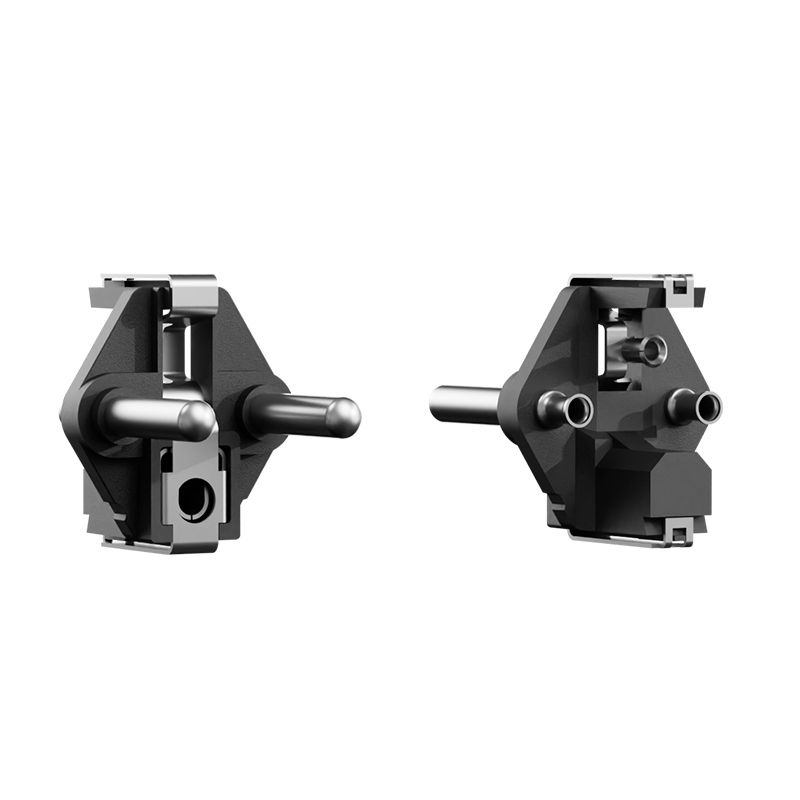
Visual Evidence: Internal teardown revealing a sub-standard iron metal strip used for the Grounding (E) line alongside thin brass contact terminals.
The Danger of Iron Metal Busbars
During our teardown of the competitor sample, our engineers discovered that the Earth (E) grounding line was fabricated from galvanized iron sheet metal rather than copper alloy. Iron is exponentially cheaper than copper, but its physical properties render it dangerously unfit for electrical conduction:
| Material Property | Standard Copper / Phosphor Bronze | Galvanized Iron Sheet (Substandard) | Operational Impact |
|---|---|---|---|
| Electrical Resistivity (Ω·m) | ~1.68 × 10⁻⁸ | ~9.71 × 10⁻⁸ (~6x Higher) | Iron generates massive Joule heating ($P = I^2R$), melting internal plastic supports. |
| Thermal Expansion & Fatigue | Stable under thermal cycles | Rapid annealing & elastic loss | Iron loses clamping spring force, causing loose connections and severe arcing. |
| Corrosion Susceptibility | Highly oxidation resistant | Rusts rapidly in humid environments | Rust layer drastically increases contact resistance, creating a runaway fire hazard. |
| Voltage Drop Performance | Minimal (< 1%) | Severe (> 5%) | Prevents high-power equipment/appliances from receiving rated operating voltage. |
When a short circuit or ground fault occurs, an iron Earth bar fails to carry high fault currents efficiently, tripping breaker systems late or not at all—creating an imminent electrocution hazard for end users.
3. Plug Construction: Overmolded Integrated Plugs vs. Rewireable Screwed Assemblies
The connection point between the power cable and the wall outlet is another primary area where manufacturing costs diverge dramatically.


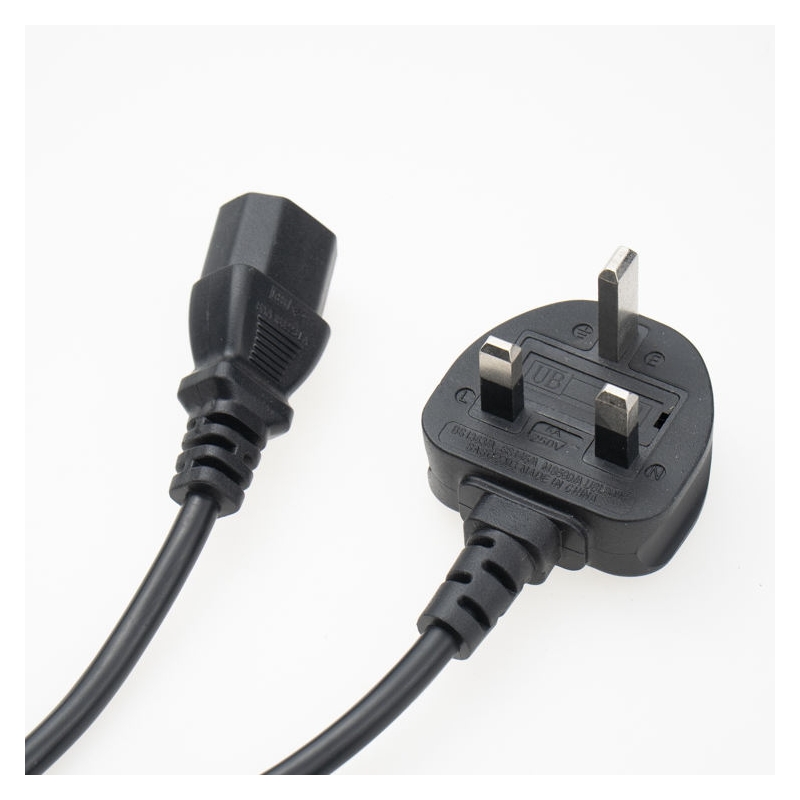
Rewireable Screwed Plug Risks
Many low-end suppliers supply power strips fitted with hand-assembled or cheap rewireable plugs to bypass automated injection molding costs. Under commercial conditions, these present major field failure modes:
Screw Loose-Contact Arcing: Vibration during transport or regular cable pulling loosens internal terminal screws. High resistance at the screw junction generates intense localized heat, melting the plug body.
Terminal Pin Oxidation: Low-cost brass alloys without nickel plating undergo fast oxidation when exposed to moisture, resulting in surface discoloration, high insertion resistance, and pin overheating.
The TISDLIP Integrated Injection Solution
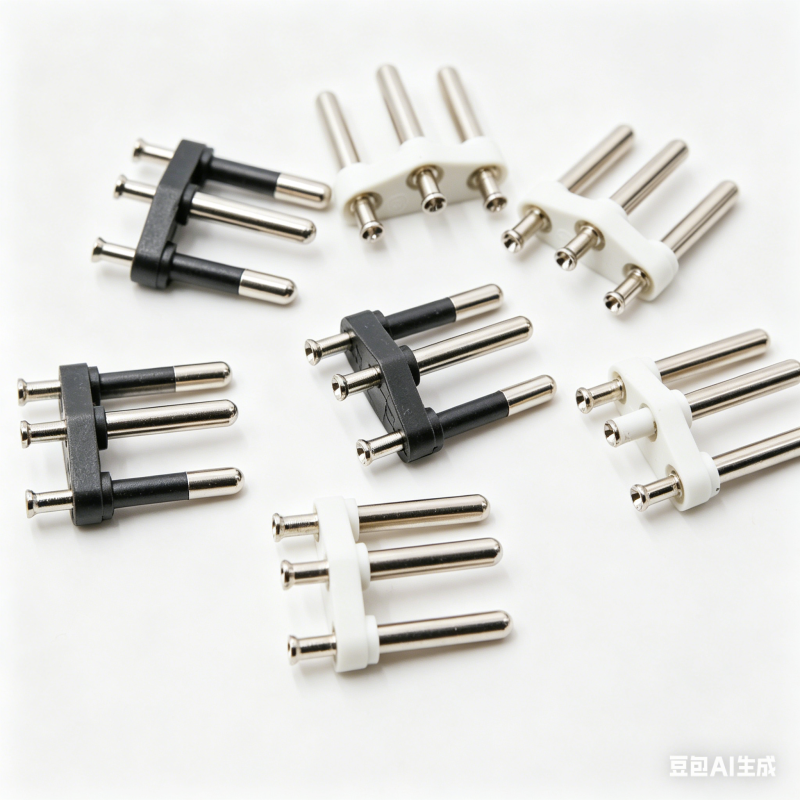
Dongguan Zhenghao Electric utilizes fully automated primary and secondary overmolding injection processes. The internal wire joints are ultrasonically welded or crimped under calibrated strain, then encased in a seamless, high-density PVC matrix. This yields a non-rewireable, tamper-proof, IP-sealed plug unit that easily passes 10,000-cycle flexing and pull-force retention tests.
4. Busbar Thickness & Cross-Sectional Area: 0.4mm Thin Brass vs. 0.6mm Heavy-Duty Copper
Even when factories use copper alloys, they often cut expenses by thinning the sheet metal stock. A difference of just 0.2mm in busbar thickness represents a 25% reduction in raw material weight—a massive cost saving on high-volume production runs, but a critical defect in power safety.

The Cascade Failure of Thin Metal Busbars (0.4mm or less)
Excessive Joule Heating: According to Joule's First Law (P = I2R), reducing cross-sectional area increases electrical resistance (R = L / A), causing heat output to surge under standard 13A or 16A continuous loads.
Loss of Terminal Clamping Force: Thinner metal strips lack mechanical spring tension. After plugging in an appliance 10–20 times, the socket contacts stretch open permanently. Loose spring contacts produce high-frequency electrical micro-arcing (sparks), which reach temperatures exceeding 1,000°C.
Mechanical Deformation & Internal Short Circuits: Under continuous heat expansion and contraction, thin 0.4mm brass strips warp within the narrow plastic channel slots, potentially short-circuiting Phase and Neutral lines.
5. Crucial New Insights: Additional B2B Quality Drivers Behind Price Differences
To fully understand why factory prices vary so widely, brand managers must look beyond the basic casing and conductors. Advanced manufacturing processes, quality control steps, and cable engineering significantly impact final ex-factory pricing.
5.1 Cable Conductor Purity & Core Diameter (CCA vs. OFC Copper)
The power cord attached to the extension strip often accounts for 40%–50% of the total product BOM (Bill of Materials) cost. Unscrupulous suppliers undercut legitimate factories by substituting Oxygen-Free Copper (OFC) wires with Copper-Clad Aluminum (CCA) or under-gauge wire cores (e.g., labeling a cord 3x1.5mm² when actual conductor area is only 3x0.75mm²). CCA cables suffer from high electrical resistance, low tensile strength, and extreme overheating under heavy appliance loads.
5.2 Overload Protection Devices & Surge Suppression Quality
In standard power strips, quality protection components add measurable hardware costs. A certified hydraulic-magnetic or thermal circuit breaker prevents fire hazards by cutting power instantly during overload conditions. Cheap power strips either omit overload protection entirely or use uncertified, slow-acting thermal switches that fail to trip during dangerous current spikes.
6. Regulatory Compliance, Laboratory Testing & Certification Overhead
Legitimate B2B manufacturing pricing reflects strict adherence to global safety and environmental certifications. Operating a fully certified production process requires substantial capital investment in testing infrastructure and third-party audits.
Key International Standards for Extension Sockets
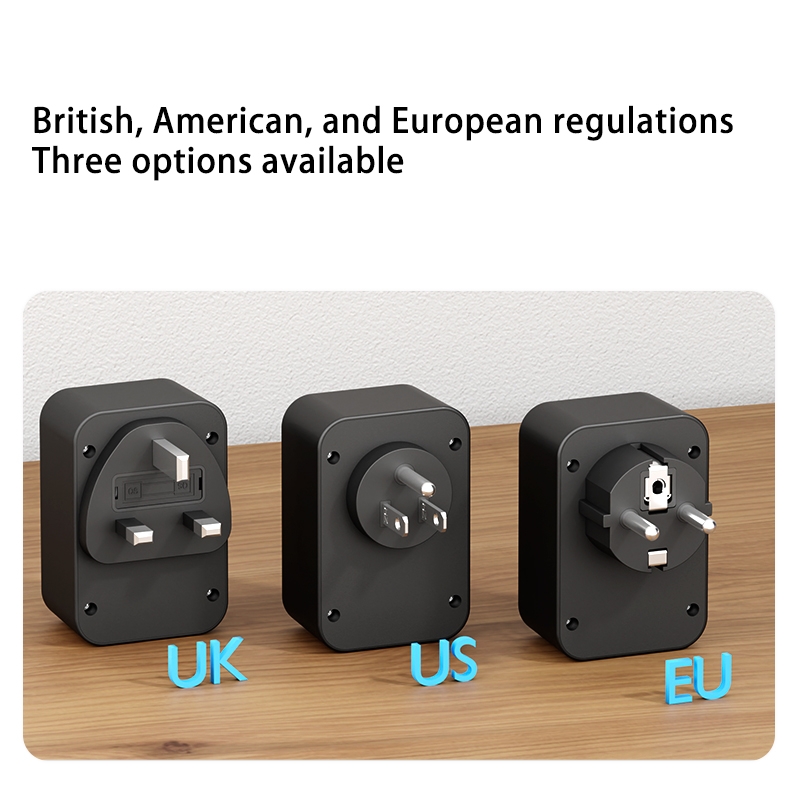
UK Market: BS 1363-2 (Extension Sockets), ASTA Certification, UKCA Mark.
European Market: IEC 60884-1, DIN VDE 0620-1, CE LVD, KEMA-KEUR / GS Marks.
North American Market: UL 1363 (Relocatable Power Taps), UL 498, ETL Listed.
Global Environmental Standards: EU RoHS Directive (2011/65/EU & 2015/863), REACH SVHC compliance.
While low-cost factories operate without quality control teams or compliance budgets, Dongguan Zhenghao Electric Co., LTD subjects every batch to full-spectrum in-house testing—including high-voltage dielectric withstand tests, temperature rise testing at 100% rated load, glow-wire flammability tests, and 10,000-cycle plug insertion longevity trials.
7. Total Cost of Ownership (TCO) & The Real Financial Risk of Buying Cheap Power Strips
For B2B buyers, importers, and brand owners, choosing a power strip based strictly on the lowest unit FOB price is a high-risk financial gamble. The table below illustrates the true Total Cost of Ownership (TCO) when comparing low-cost substandard power strips against engineered high-quality units:
| Cost Category | Substandard Low-Cost Option ($1.50 - $3.50) | Engineered TISDLIP OEM Option ($3.8.00 - $8.90) |
|---|---|---|
| Upfront Product Unit Cost | Low immediate capital outlay | Standard factory competitive pricing |
| Customs & Market Inspection | High risk of port seizure due to RoHS/REACH non-compliance | 100% smooth clearance with valid test reports |
| Field Failure & Return Rate | High (> 5%–10% due to loose sockets, melting, and arcing) | Near Zero (< 0.05% supported by 20-year factory warranty) |
| Product Liability & Recall Costs | Severe exposure to fire damage claims and EU RAPEX recalls | Fully insured, certified safety compliance protecting brand equity |
| Brand Equity Impact | Irreparable damage to distributor & retail reputation | Enhanced brand loyalty, repeat B2B reorders, and five-star reviews |
8. The Ultimate B2B Procurement Inspection Checklist for Extension Cords
When reviewing factory samples or conducting pre-shipment inspections, B2B procurement managers can use this 6-step checklist to instantly verify product quality:
Perform a Casing Flame Test / Material Check: Confirm whether the plastic casing is made of virgin PC (flame retardant, high impact) rather than recycled PP or ABS.
Measure Metal Busbar Thickness: Disassemble one sample and verify with a digital caliper that internal copper busbars meet or exceed 0.50mm in thickness.
Inspect Busbar Material & Magnet Test: Use a magnet on internal conductors. If the ground line or contact springs attract the magnet, the factory is using cheap iron parts instead of phosphor bronze or brass.
Check Plug Construction Type: Ensure plugs are fully integrated overmolded units rather than hand-assembled screwed plugs prone to overheating.
Verify Cable Wire Gauge and Conductor Type: Strip a sample cord to confirm 100% Pure Oxygen-Free Copper wire (OFC) with accurate cross-sectional area marking (e.g., H05VV-F 3G1.5mm²).
Review Certification Documentation: Request valid, traceable third-party test reports (ASTA, VDE, UL, CE, RoHS) issued under the manufacturing factory's name.
Partner with a Trusted OEM/ODM Power Manufacturer
Protect your brand equity, eliminate product liability risks, and supply your market with safe, reliable power products. Dongguan Zhenghao Electric Co., LTD offers complete OEM/ODM solutions tailored to your market specifications.
Request Engineering Samples & OEM Quotes TodayFrequently Asked Questions (FAQ)
References & Source Documentation
BSI Group: BS 1363-2 Specification for 13 A switched and unswitched socket-outlets - Official UK electrical safety standard for socket-outlets and extension units.
International Electrotechnical Commission (IEC): IEC 60884-1 Plugs and Socket-Outlets for Household Purposes - Global baseline standard for electrical performance and thermal testing.
European Commission: Directive 2011/65/EU & (EU) 2015/863 (RoHS) Restriction of Hazardous Substances - Regulations governing recycled materials and heavy metals in consumer electronics.
National Fire Protection Association (NFPA): Home Electrical Fires & Extension Cord Safety Hazards - Technical data on electrical fires caused by loose contacts, thin busbars, and arcing.
EU Safety Gate (RAPEX): Rapid Alert System for Dangerous Non-Food Products - Official repository tracking market recalls of substandard power strips, ungrounded extension cords, and non-compliant electrical imports.



 Email
Email