



Content Menu
● 1. The Short Answer: Are Power Strips Safe Within Their Rated Limits?
● 2. What Is a Power Strip Actually Rated For?
>> 2.1 Reading the Label: 15A, 125V, and 1,875W
>> 2.2 The 80% Rule: Why 1,500W Is a Useful Planning Reference
>> 2.3 Your Power Strip Shares the Circuit, Not Just the Outlet
● 3. Can Power Strips Catch Fire? Yes—Here's How
>> .1 Three Common Causes of Power Straip Fires
>> 3.2 Why Covering a Power Strip Is a Fire Hazard
>> 3.3 What Doesn't Automatically Cause Fires?
● 4. How Many Watts Can a Power Strip Handle?
>> 4.1 Typical Wattage of Common Household Devices
>> 4.2 Two Practical Wattage Calculation Examples
>> 4.3 Don't Forget the USB Ports
● 5. Surge Protector Safety: What Joules Do—and Don't Do
>> 5.1 Surge Protection vs. Overload Protection
>> 5.2 Joule Ratings: What Do the Numbers Mean?
>> 5.3 When Should You Replace a Surge Protector?
● 6. Electrical Overload: 8 Warning Signs to Never Ignore
● 7. How to Use Power Strips Safely: 10 Rules
>> Rule 1: Add Up the Wattage Before Connecting Devices
>> Rule 2: Avoid Connecting High-Power Heating Appliances
>> Rule 3: Never Daisy-Chain Power Strips
>> Rule 4: Keep Power Strips Uncovered
>> Rule 5: Keep Power Strips Away From Water
>> Rule 6: Do Not Hang a Power Strip by Its Cord
>> Rule 7: Protect Cords From Mechanical Damage
>> Rule 8: Choose Products With Appropriate Safety Certification
>> Rule 9: Match the Product to Its Operating Environment
>> Rule 10: Replace Damaged Products Instead of Repairing Them
● 8. Where Power Strips Don't Belong
● 9. Power Strip vs. Extension Cord vs. Power Tap vs. UPS
● 10. When to Call an Electrician
● 11. B2B Buying Guide: How to Identify a Safe and Reliable Power Strip
>> 11.1 Verify Market-Specific Safety and Compliance Requirements
>> Why Certification Scope Matters
>> 11.2 Evaluate Power Cord Specifications and Conductive Materials
>> 11.3 Check Housing Materials and Internal Construction
>> 11.4 Review Protection Features
>> 11.5 Evaluate Manufacturing Quality and Testing Procedures
>> 11.6 Assess OEM and ODM Manufacturing Capabilities
>> 11.7 Look Beyond the Lowest Unit Price
● 12. Frequently Asked Questions About Power Strip Safety
● Conclusion: Are Power Strips Safe?
Are power strips safe? Yes—as long as they are used within their rated limits and according to the manufacturer instructions. A standard U.S. power strip is commonly rated at 15 amps and 125 volts, giving a calculated maximum capacity of 1,875 watts. For continuous loads, approximately 80% of a 15A circuit rating—about 1,500 watts at 125V—is often used as a conservative planning reference.
Problems can arise when a power strip is overloaded, damaged, covered, or connected to another power strip. The key is understanding the product electrical rating, the capacity of the supplying circuit, and the type of equipment being connected.
This guide explains what power strip labels mean, how to calculate the combined wattage of connected devices, why surge protection is different from overload protection, and which warning signs mean you should stop using a power strip.
It also provides practical purchasing considerations for consumers, importers, wholesalers, and brand owners sourcing power strips for different markets.
1. The Short Answer: Are Power Strips Safe Within Their Rated Limits?
A power strip is not a mini electrical panel. It distributes power from one wall receptacle to multiple outlets, but it cannot create additional electrical capacity.
Its safe operation depends on its rated current, voltage, internal wiring, electrical contacts, protective components, and the branch circuit supplying it.
The practical answer has three parts:
- Generally suitable: Low- and moderate-power electronics such as computers, monitors, lamps, routers, chargers, televisions, and fans, provided their combined load remains within the product and circuit ratings.
- Use caution with high-power appliances: Space heaters, portable air conditioners, hair dryers, irons, kettles, air fryers, microwaves, and electric grills can draw substantial current. These appliances should generally be connected directly to an appropriate wall receptacle, following the appliance manufacturer instructions.
- Unsafe conditions: Using a damaged power strip, covering it with a rug or blanket, exposing an indoor-rated model to moisture, exceeding its electrical rating, or connecting multiple power strips together.
The U.S. Consumer Product Safety Commission (CPSC) has issued product safety warnings and recalls involving power strips that lacked supplementary overcurrent protection. Such cases demonstrate why product construction and appropriate protective features matter, not just the number of outlets.
The Electrical Safety Foundation International (ESFI) also advises that extension cords and multiple-outlet devices should not be used as substitutes for permanent electrical wiring.
The product itself is not necessarily dangerous. Its rating, construction, operating environment, and usage determine whether it is suitable for a particular application.
2. What Is a Power Strip Actually Rated For?
2.1 Reading the Label: 15A, 125V, and 1,875W
Turn over a typical U.S. power strip and you may find a label similar to:
15A / 125V~ / 60Hz / 1,875W
These figures describe the product& electrical rating:
- 15A (Amps): The rated current capacity of the power strip.
- 125V (Volts): The rated AC operating voltage.
- 60Hz: The rated AC frequency.
- 1,875W (Watts): The calculated power at 15A and 125V.
The basic calculation is:
Power (W) = Voltage (V) × Current (A)
For a 15A, 125V product:
15A × 125V = 1,875W
This represents the calculated maximum load under those rated conditions. It applies to the total connected load, not to each outlet individually.
A 10A, 125V product has a calculated capacity of 1,250W. A 20A, 125V product has a calculated capacity of 2,500W, provided the product, plug configuration, receptacle, and supplying circuit are all suitable for that rating.
Do not assume that two power strips with the same number of outlets have the same electrical capacity.
Always check the product nameplate and manufacturer documentation.
2.2 The 80% Rule: Why 1,500W Is a Useful Planning Reference
In U.S. electrical codes, a continuous load is generally one expected to operate at its maximum current for three hours or more.
Under commonly applicable National Electrical Code (NEC) requirements, branch-circuit conductors and overcurrent protection are generally sized at 125% of the continuous load, subject to applicable exceptions.
This is the basis of the commonly discussed 80% guideline.
For a 15A, 125V circuit:
- Calculated maximum capacity: 1,875W
- 80% planning reference: 1,500W
Therefore, approximately 1,500W is a useful conservative reference when planning a continuous load on a 15A, 125V circuit.
However, it is not a universal legal maximum for every power strip. The actual permissible load depends on the product& listing, rated current, circuit configuration, overcurrent protection, connected equipment, and applicable electrical requirements.
The additional capacity can help accommodate practical operating conditions, including:
- Startup current from motors, compressors, and certain electronic equipment.
- Other equipment operating on the same branch circuit.
- Operating temperature and ventilation conditions.
- The electrical characteristics of connected appliances.
A 1,500W space heater, for example, already represents approximately 80% of a 15A, 125V rating. This is why connecting high-power heating appliances directly to a suitable wall receptacle is generally the safer practice.

2.3 Your Power Strip Shares the Circuit, Not Just the Outlet
The power strip own rating is only part of the picture.
The wall receptacle is connected to a branch circuit, commonly rated at 15A or 20A in U.S. residential installations. That circuit may also supply other receptacles, lighting, and electrical equipment.
For example, imagine a room with:
- A power strip carrying a 1,200W load.
- A separate television consuming 150W.
- A lamp consuming 15W.
- A phone charger consuming 10W.
The combined load is:1,200 + 150 + 15 + 10 = 1,375W
Even if the power strip itself is within its rating, other loads on the same branch circuit must also be considered.
Repeated circuit-breaker trips should never be ignored. Stop adding loads and have the circuit assessed by a qualified electrician if the problem continues.
A power strip cannot increase the electrical capacity of the wall circuit supplying it.
3. Can Power Strips Catch Fire? Yes—Here's How
Power strips can overheat and catch fire under certain conditions. They are not inherently unsafe, but several electrical and mechanical problems can create fire hazards.
3.1 Three Common Causes of Power Strip Fires
1. Electrical overload
When connected equipment draws more current than the power strip or supplying circuit is designed to carry, excessive heating can occur.
Some products incorporate circuit breakers or thermal protection devices designed to respond to specified abnormal current or temperature conditions.
However, not every product has the same protective features. Buyers should verify the actual design and applicable certification rather than assuming every power strip contains equivalent protection.
2. Heat caused by poor electrical connections
A loose plug, worn wall receptacle, bent plug pin, contaminated contact, or poorly maintained electrical connection can increase contact resistance.
According to Joule Law:P = I² × R
Electrical power converted into heat increases with the square of the current and the resistance.
This means a poor connection can create localized heating even when the overall connected load is below the product rated capacity.
A heavy adapter hanging from a power strip can also place mechanical stress on the plug and socket connection, potentially reducing contact stability.
3. Damaged power cords
Power cords can become damaged when they are:
- Pinched under sofa legs or heavy furniture.
- Crushed in doorways.
- Stapled or nailed to walls or baseboards.
- Chewed by pets.
- Bent sharply or repeatedly near the plug.
- Exposed to excessive heat or mechanical stress.
Internal conductor damage may not always be visible from the outside.
A damaged cord can increase resistance and create an electrical shock, overheating, or fire hazard.
3.2 Why Covering a Power Strip Is a Fire Hazard
A power strip placed under a rug, behind a mattress, inside a closed cabinet, or beneath piles of laundry may not have sufficient ventilation.
When heat cannot dissipate properly, the product can experience higher operating temperatures.
ESFI specifically warns that covered cords can prevent heat from escaping and create a fire hazard.
Keep power strips uncovered, accessible, and away from materials that could obstruct heat dissipation.
3.3 What Doesn't Automatically Cause Fires?
Some common concerns deserve a more balanced explanation.
- Leaving a charger plugged in: Modern chargers generally have low standby power consumption when no device is connected. This does not mean every charger is equally safe; product quality and condition still matter.
- Using all six outlets: The number of occupied outlets alone does not determine whether a power strip is overloaded. The combined electrical load is what matters.
- Using a surge protector: Surge protection does not automatically provide overload protection.
- Turning the power strip off at night: Switching off unused equipment can reduce standby consumption, but it does not replace correct loading and inspection practices.

4. How Many Watts Can a Power Strip Handle?
A common U.S. power strip rated at 15A and 125V has a calculated maximum capacity of 1,875W.
For continuous-load planning, approximately 1,500W is a useful conservative reference for a 15A, 125V circuit.
Other products have different ratings, so always check the nameplate.
4.1 Typical Wattage of Common Household Devices
The following figures are approximate examples. Actual consumption varies by model, operating mode, and manufacturer.
| Device | Typical Power Consumption | Practical Consideration |
|---|---|---|
| Phone / tablet charger | 5–30W | Low-power load |
| LED bulb | 8–15W | Low-power load |
| Router / modem | 10–20W | Usually suitable |
| Laptop | 45–100W | Usually suitable |
| Monitor | 25–60W | Usually suitable |
| LED TV (55-inch) | 80–150W | Check actual rating |
| Box fan | 50–100W | Check operating load |
| Desktop PC (office use) | 200–400W | Depends on configuration |
| Laser printer | 300–500W while printing | May have higher startup demand |
| Dehumidifier | 500–750W | Consider continuous operation |
| Vacuum cleaner | 800–1,200W | Wall outlet preferred |
| Coffee maker | 900–1,200W | Heating load; use a suitable wall outlet |
| Microwave | 1,000–1,500W | Wall outlet preferred |
| Iron | 1,200–1,500W | Wall outlet preferred |
| Air fryer | 1,400–1,800W | Wall outlet preferred |
| Hair dryer | 1,500–1,875W | Connect directly to a suitable wall receptacle |
| Space heater | 750–1,500W | Connect directly to a suitable wall receptacle |
| Portable AC | 1,000–1,400W | Follow manufacturer's instructions |
| Electric kettle | Around 1,500W | Connect directly to a suitable wall receptacle |
| Welder / power tool | Varies widely | Follow equipment requirements; a suitable dedicated circuit may be necessary |
These figures are reference values, not product specifications. Always check the appliance nameplate.
4.2 Two Practical Wattage Calculation Examples
Example 1: A Home Office Desk Setup
Suppose you connect: Desktop PC: 300WTwo monitors: 100WDesk lamp: 12WSpeakers: 30WRouter: 15W
Total:300 + 100 + 12 + 30 + 15 = 457W
Compared with a 1,875W power strip rating:457 ÷ 1,875 × 100 ≈ 24.4%
This setup uses approximately 24% of the product calculated maximum rating.
It is a relatively modest load, provided the power strip, supplying circuit, and connected equipment are properly rated.
Example 2: A Kitchen Counter Setup
Suppose someone connects:Air fryer: 1,500W Coffee maker: 1,000W
Total:
1,500 + 1,000 = 2,500W
Compared with a 1,875W-rated power strip:2,500 ÷ 1,875 × 100 ≈ 133%
The combined load exceeds the product& calculated maximum capacity.
A protective device may interrupt the supply, but users should never rely on a circuit breaker as permission to exceed a product& rating.
The practical lesson is simple: electronic devices often add relatively small loads, while heating appliances can consume a large proportion of available capacity.
4.3 Don't Forget the USB Ports
USB charging ports are convenient, but their power consumption must also be considered.
A USB-C port delivering 100W to a connected laptop does not necessarily draw exactly 100W from the AC supply. The charging module has conversion losses, so its AC input power is generally higher than its DC output power.
For a USB-equipped power strip, consider:
- Maximum USB-A and USB-C output power.
- The number of ports.
- Whether maximum output is available simultaneously.
- The charging module conversion efficiency.
- Total product input rating and load limitations.
For example, six USB ports delivering a combined 150–300W of DC output may require more than 150–300W from the AC supply.
Do not count USB output power as a separate capacity that can be added beyond the power strip's total rating.
B2B buyers should request the complete product specification and verify how the USB module is integrated and evaluated as part of the finished product.
5. Surge Protector Safety: What Joules Do—and Don't Do
Surge protection and overload protection perform different functions. Confusing them is one of the most common misconceptions when selecting power strips.
5.1 Surge Protection vs. Overload Protection
Overload protection
Overload protection is designed to interrupt excessive current under specified conditions.
Depending on the product, it may be provided by a circuit breaker, fuse, or thermal protection device.
Its purpose is to help protect the product and connected circuit against certain overcurrent conditions.
Surge protection
Surge protection is designed to limit or divert transient overvoltage events that may damage connected electronic equipment.
Many consumer surge protectors use metal oxide varistors (MOVs) as part of their protection circuitry.
An MOV-based protection system can degrade after exposure to surge events.
However, surge protection does not automatically protect against sustained overload, damaged wiring, loose electrical connections, or every possible electrical fault.
For U.S. buyers, it is important to distinguish between:
- UL 1363: Standard for Relocatable Power Taps.
- UL 1449: Standard for Surge Protective Devices.
A relocatable power tap incorporating surge protection may also require evaluation under additional applicable requirements. The exact certification scope should be checked for the finished product.
5.2 Joule Ratings: What Do the Numbers Mean?
Some consumer surge protectors display a joule rating.
This figure is commonly used as an indication of the energy associated with the device's surge-handling capability.
However, joule ratings should not be used as the only basis for comparing surge protectors.
The NEMA Surge Protection Institute explains that comparing joule ratings can be misleading because there is no single straightforward comparison method that captures overall SPD performance.
More useful technical information may include:
- Voltage Protection Rating (VPR): A standardized rating associated with the measured limiting voltage under specified UL 1449 test conditions.
- Nominal Discharge Current (In): A marked rating used to evaluate an SPD's ability to withstand specified repetitive surge-current tests.
- Maximum Continuous Operating Voltage (MCOV): The maximum continuous operating voltage for which the SPD is designed.
- Short-Circuit Current Rating (SCCR): The declared short-circuit current suitability of the SPD under specified conditions.
- Certification status: Confirmation that the exact product has been evaluated under the applicable standard.
A higher joule number alone does not prove that one surge protector provides better overall protection than another.
The original fixed joule-rating categories for desk use, home theaters, and whole-room protection have therefore been removed. They could give readers an unjustified impression that a particular joule number guarantees a particular level of safety.
5.3 When Should You Replace a Surge Protector?
MOV components can degrade after significant surge events.
The condition and service life of a surge protector depend on its design, operating environment, exposure to surges, and manufacturer specifications.
Consider replacing the product when:
- Its protection indicator shows that protection is no longer available.
- It has experienced a significant surge event and the manufacturer recommends replacement.
- Its housing is cracked, discolored, melted, or damaged.
- Its cord, plug, or socket connections are damaged.
- It becomes unusually warm or produces an abnormal smell.
- The manufacturer specified replacement or service conditions have been reached.
There is no universal three-to-five-year replacement interval for every surge protector.
A power strip is also not a guarantee against lightning damage. During severe storms, follow local electrical safety advice and the equipment manufacturer recommendations. Disconnecting sensitive equipment from the supply may provide an additional level of protection when it can be done safely.
6. Electrical Overload: 8 Warning Signs to Never Ignore
Electrical overload and product damage do not always begin with visible flames.
Look for these eight warning signs:
1. Unusual warmth: The power strip, plug, or cord feels unusually warm during normal operation.
2. Discoloration: Brown or melted marks appear around an outlet, plug, or switch.
3. Burning smell: A burning plastic or insulation smell is noticeable near the product.
4. Unusual sounds: Buzzing, crackling, or sizzling comes from the power strip or wall receptacle.
5. Loose plugs: Plugs do not fit securely or slide out easily.
6. Repeated breaker trips: The same electrical circuit trips repeatedly.
7. Flickering lights: Lights dim or flicker when an appliance starts.
8. Visible damage: The housing is cracked, the cord is brittle, or scorch marks are visible.
If any of these conditions appear, stop using the product immediately.
If it is safe to do so, disconnect the power strip without touching exposed or damaged electrical parts. If there is smoke, active sparking, or fire, move away and contact emergency services.
If the wall receptacle itself is discolored, loose, or making unusual sounds, stop using it and have it inspected by a qualified electrician.
Do not attempt to repair a damaged power strip by taping its cord, bypassing protective components, or replacing internal parts without appropriate authorization and evaluation.
7. How to Use Power Strips Safely: 10 Rules
Following these practical rules can reduce common electrical hazards.
Rule 1: Add Up the Wattage Before Connecting Devices
Check the rated wattage of every connected appliance.
Calculate the combined load and compare it with the power strip's rating and the supplying circuit capacity.
For continuous-load planning on a typical 15A, 125V U.S. circuit, approximately 1,500W is a conservative reference, subject to the applicable product and electrical requirements.
Rule 2: Avoid Connecting High-Power Heating Appliances
Space heaters, portable air conditioners, hair dryers, irons, kettles, microwaves, and air fryers can draw substantial current.
As a general safety practice, connect these appliances directly to an appropriate wall receptacle when required by their manufacturer instructions.
Make sure the supplying circuit is suitable for the appliance.
Rule 3: Never Daisy-Chain Power Strips
Do not connect one power strip to another.
Likewise, do not use chained extension cords and power strips as a substitute for an appropriate electrical outlet.
OSHA explains that listed relocatable power taps must be used according to their listing instructions. Such products commonly require direct connection to a permanently installed branch-circuit receptacle rather than series connection with other power taps or extension cords.
Rule 4: Keep Power Strips Uncovered
Never place power strips under rugs, blankets, mattresses, or piles of clothing.
Avoid locations where heat cannot dissipate or where the product cannot be inspected easily.
Rule 5: Keep Power Strips Away From Water
Do not use indoor-rated power strips in wet or damp environments.
Keep them away from sinks, bathtubs, standing water, and other sources of moisture.
Use suitable GFCI protection where required by applicable electrical codes and installation conditions.
GFCI requirements depend on location, installation type, and local regulations; they should not be treated as identical for every kitchen, laundry room, or outdoor application.
Rule 6: Do Not Hang a Power Strip by Its Cord
Heavy adapters can place stress on plugs and socket connections.
Use the product intended mounting features if provided, or place it on a stable surface.
Never suspend the product by its power cord.
Rule 7: Protect Cords From Mechanical Damage
Do not run cords through doorways, beneath heavy furniture, or under carpets.
Avoid stapling or nailing cords to walls.
Inspect them regularly for cuts, cracks, crushing, and other damage.
Rule 8: Choose Products With Appropriate Safety Certification
Look for a recognized certification or listing appropriate to the product category and destination market.
For U.S. products, UL or ETL listing may be relevant, depending on the applicable standard.
Do not rely on a printed logo alone. Verify the exact model and certification scope.
A resettable circuit breaker, protective housing, and other safety features should be evaluated according to the product design and applicable requirements rather than treated as universal requirements for every model.
Rule 9: Match the Product to Its Operating Environment
Indoor and outdoor power strips are not interchangeable.
For outdoor applications, choose products specifically rated for the intended environment and follow their instructions for weather protection, moisture exposure, and GFCI use where required.
Rule 10: Replace Damaged Products Instead of Repairing Them
Do not continue using products with damaged cords, cracked housings, loose contacts, or failed protective devices.
Do not bypass switches, breakers, or other protective components.
When in doubt, replace the product with one that meets the required specifications.
8. Where Power Strips Don't Belong
Some environments create additional electrical and mechanical risks.
8.1 Kitchen Counters
Kitchens often contain high-power heating appliances, water sources, and multiple electrical loads.
Use suitable wall receptacles for kettles, microwaves, air fryers, and other high-power appliances.
Avoid combining multiple high-power heating appliances on an overloaded circuit.
8.2 Bathrooms
Bathrooms involve moisture and water exposure.
Ordinary indoor power strips should not be used near sinks, bathtubs, showers, or other wet locations.
If additional permanent outlets are needed, consult a qualified electrician.
8.3 Laundry Rooms
Washing machines and dryers have specific electrical requirements.
Keep cords away from moisture, heat, moving equipment, and lint accumulation.
Use electrical products suitable for the installation environment.
8.4 Garages and Workshops
Power tools may draw high current, including higher startup current for motors.
Dust, metal particles, vibration, and mechanical damage can also affect electrical equipment.
Use appropriately rated supplies and avoid treating ordinary household power strips as substitutes for workshop wiring.
8.5 Outdoors
Indoor power strips are not designed for outdoor exposure.
Choose outdoor-rated products with suitable environmental protection and follow the manufacturer instructions.
8.6 Nurseries and Under Beds
Avoid placing power strips where cords may be chewed, pulled, crushed, or covered by bedding.
Keep electrical connections visible and accessible.
8.7 Inside Sealed Cabinets and Behind Permanent Furniture
Enclosed spaces may restrict heat dissipation and make it difficult to identify warning signs.
Keep power strips accessible and avoid crushing their cords or plugs.
9. Power Strip vs. Extension Cord vs. Power Tap vs. UPS
These products may look similar, but they perform different functions.
| Product | What It Does | Best For | What to Watch For |
|---|---|---|---|
| Power strip | Distributes power to multiple outlets, sometimes with surge protection | Desks, TVs, charging stations | Total load and product rating |
| Extension cord | Extends the reach of an electrical supply | Temporary power connections | Wire gauge, length, load, and environment |
| Power tap / outlet extender | Adds outlets directly at a wall receptacle | Limited outlet availability | Receptacle compatibility and total load |
| UPS | Provides battery backup and may include surge protection | Computers, NAS devices, routers | Output capacity, runtime, and battery maintenance |
| Surge protector | Limits or diverts transient voltage surges | Sensitive electronic equipment | Does not replace overload protection |
An extension cord adds reach, while a power strip adds outlets.
A UPS provides temporary battery power when the incoming supply is interrupted, depending on its design and capacity.
A surge protector addresses transient overvoltage events, not general electrical overload.
If a room permanently requires more outlets, the appropriate solution may be to have additional receptacles installed by a qualified electrician rather than relying on multiple splitters.
10. When to Call an Electrician
A power strip cannot fix problems in a building electrical wiring.
Contact a qualified electrician if:
- A wall receptacle or switch becomes warm, discolored, or makes unusual sounds, even when nothing is plugged in.
- Circuit breakers trip repeatedly on the same circuit.
- A breaker will not reset.
- Plugs do not fit securely into wall receptacles.
- Lights flicker when electrical appliances start.
- You notice burning smells near a wall, outlet, or electrical panel.
- The building has old or damaged wiring that needs assessment.
- You need additional permanent outlets.
If there is smoke or an electrical fire, move away and contact emergency services.
Never attempt to solve a building wiring problem by adding another power strip.
11. B2B Buying Guide: How to Identify a Safe and Reliable Power Strip
For importers, wholesalers, distributors, brand owners, and electrical product manufacturers, choosing a power strip involves more than comparing outlet quantities and unit prices.
Product safety, component quality, market compliance, and manufacturing consistency should all be considered before placing an order.
11.1 Verify Market-Specific Safety and Compliance Requirements
Power strip requirements differ across countries and product categories.
| Target Market | Relevant Standards or Compliance Frameworks |
|---|---|
| United States | Applicable UL standards, including UL 1363 for relocatable power taps and UL 1449 for surge protective devices |
| Canada | Applicable Canadian electrical product standards and certification requirements |
| European Union | Applicable EN standards and relevant EU legislation; CE marking where required |
| United Kingdom | Applicable UK product safety requirements and relevant BS standards, including BS 1363 for relevant plug and socket configurations |
| China | Applicable GB standards and CCC requirements where the product category is included in the compulsory certification catalogue |
| Australia and New Zealand | Applicable AS/NZS standards and relevant electrical equipment approval requirements |
These are reference frameworks, not a claim that every listed certification applies to every power strip.
The applicable requirements depend on the exact product construction, plug and socket configuration, rated values, protection features, and destination market.
For example, CE marking is a manufacturer declaration of conformity under applicable EU legislation; it should not be described as a universal third-party safety certification.
Why Certification Scope Matters
Before purchasing, verify:
- Does the certificate cover the exact finished-product model?
- Does it cover the plug and socket configuration being ordered?
- Are the rated voltage and current consistent with the product nameplate?
- Are the relevant protective components included in the evaluated construction?
- Are the required reports and supporting documents available?
- Are changes to critical components controlled under the certification process?
A certificate for one product or component should not automatically be assumed to cover every model in a supplier catalog.
11.2 Evaluate Power Cord Specifications and Conductive Materials
The power cord carries the electrical load supplied to the power strip.
Important specifications include:
- Conductor material.
- Conductor cross-sectional area or AWG size.
- Number of conductors.
- Cable insulation and jacket material.
- Rated voltage and temperature.
- Cord length.
- Plug configuration.
- Applicable cable standards and certification.
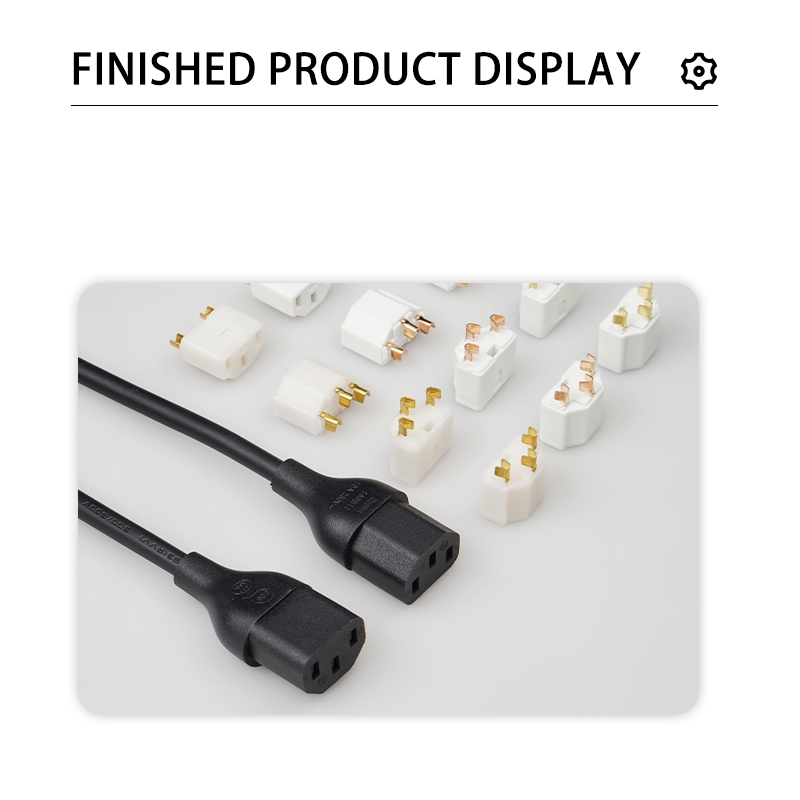
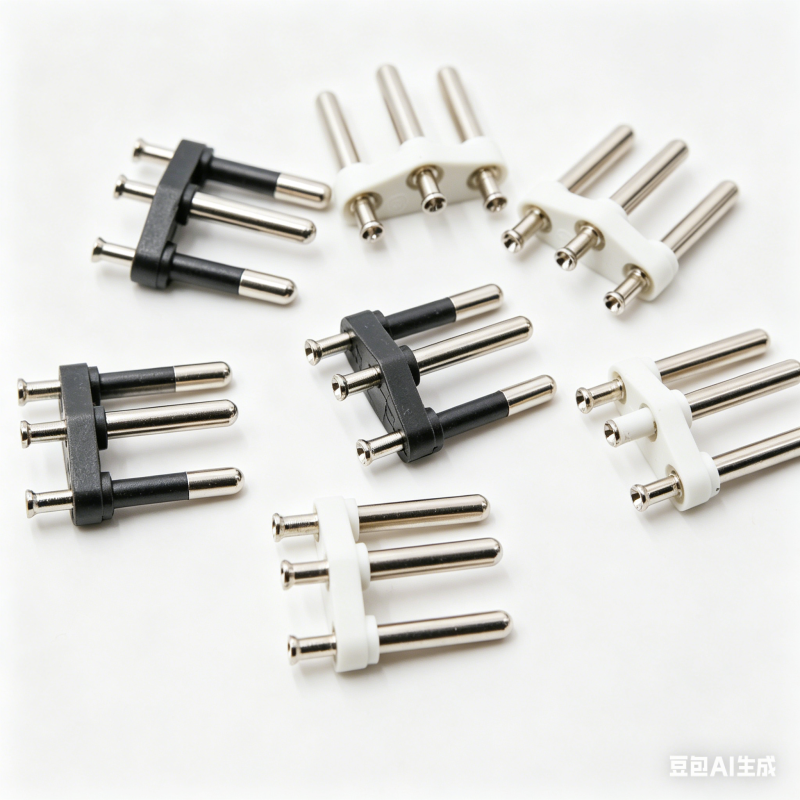
Conductive contacts inside the plug and socket assembly also deserve attention.
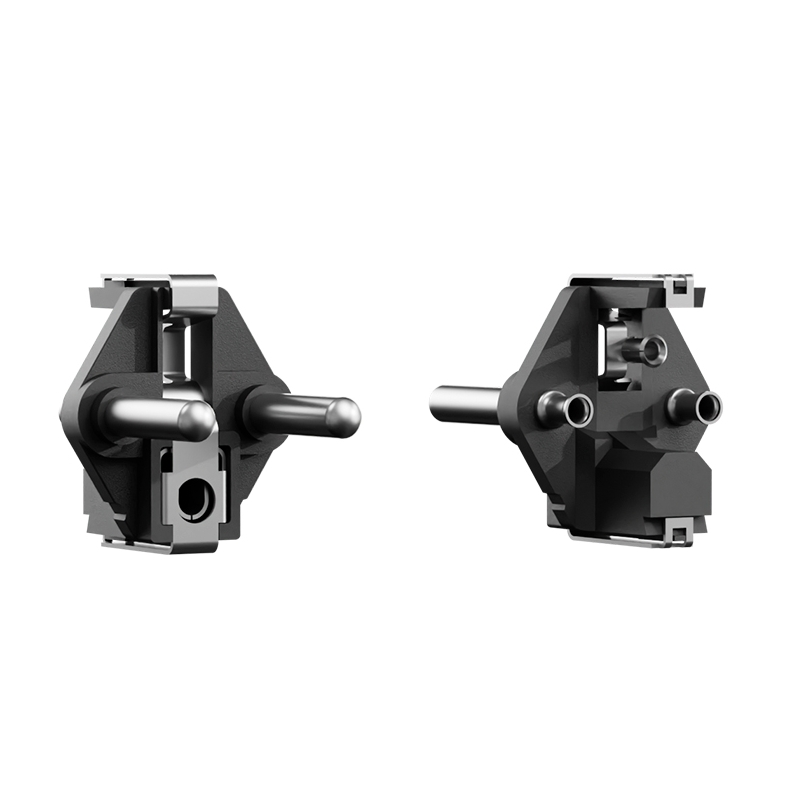
Material selection, contact geometry, thickness, surface finish, contact pressure, and assembly quality can influence electrical resistance and temperature-rise performance.
Do not assume that a visually similar brass or copper component has identical electrical and mechanical characteristics.
Request the relevant material and component specifications when these factors are important to the project.
11.3 Check Housing Materials and Internal Construction
The outer housing is only one part of power strip safety.
Buyers should also review:
- Insulating material properties.
- Applicable flame-resistance requirements.
- Electrical separation and insulation design.
- Internal conductor layout.
- Terminal and contact connections.
- Strain relief and cable retention.
- Switch and protective component specifications.
A flame-retardant material claim should be supported by the relevant material data and test documentation.
Likewise, do not assume that a thicker housing automatically means a safer product.
11.4 Review Protection Features
Determine which protection functions are required for the intended product.
These may include:Overload protection.Circuit-breaker protection.Surge protection. Grounding protection. Thermal protection.Child safety shutters.Master switches.
Not every power strip includes every feature.
The supplier should clearly identify which functions are present in the specific model and provide relevant technical documentation.
11.5 Evaluate Manufacturing Quality and Testing Procedures
A reliable supplier should be able to explain how critical product characteristics are controlled during production.
Relevant inspection and testing areas may include:
| Test or Inspection | Purpose |
|---|---|
| Temperature-rise testing | Evaluates temperature performance under specified loads |
| Dielectric withstand testing | Evaluates insulation under specified electrical stress |
| Insulation resistance testing | Assesses electrical insulation |
| Ground continuity testing | Checks protective grounding connections |
| Plug and socket endurance testing | Evaluates mechanical and electrical durability |
| Cord flexing or swing testing | Evaluates mechanical durability of cord connections |
| Abnormal operation testing | Evaluates product response under specified fault conditions |
| Visual and dimensional inspection | Checks component and assembly consistency |
The exact tests required depend on the applicable product standard and certification program.
For B2B buyers, request actual model-specific test reports and quality records rather than relying only on general statements about factory testing equipment.
11.6 Assess OEM and ODM Manufacturing Capabilities
For brand owners and wholesalers, product customization may be an important part of the purchasing decision.
Discuss the following requirements with the manufacturer:
- Plug and socket configurations.
- Number and arrangement of outlets.
- Product dimensions and housing design.
- Power cord type and length.
- Switch and protection options.
- USB-A and USB-C configurations.
- Packaging and labeling.
- Product-specific testing and certification requirements.
A capable manufacturer should review drawings, samples, and technical specifications before confirming production feasibility.
11.7 Look Beyond the Lowest Unit Price
Two power strips may look almost identical but differ in internal materials, component specifications, contact design, and production tolerances.
For example, conductive contacts with inadequate thickness or poor contact pressure may experience higher resistance and temperature rise under load.
Likewise, unsuitable insulation materials or inconsistent assembly can affect product reliability.
A good sourcing decision should consider:
- Product specifications.
- Component quality.
- Applicable certification.
- Manufacturing consistency.
- Inspection procedures.
- Documentation.
- Production capacity.
- Communication and after-sales support.
The lowest purchase price does not necessarily represent the lowest overall sourcing risk.
12. Frequently Asked Questions About Power Strip Safety
Are power strips safe to leave plugged in all the time?
A properly rated and undamaged power strip can remain connected during normal use if it is operated according to the manufacturer instructions.
Keep it uncovered, avoid overloading it, and inspect its cord, plug, and housing regularly.
Unplug or switch off unused equipment when appropriate.
Can power strips catch fire when nothing is plugged in?
It is possible, although the risk depends on the product condition and construction.
A damaged cord, worn switch, internal fault, or poor connection at the wall receptacle can create an electrical hazard even when no external device is connected.
If a power strip becomes unusually warm with no connected load, stop using it and have the condition investigated.
How many watts can a power strip handle?
A common U.S. power strip rated at 15A and 125V has a calculated maximum capacity of 1,875W.
For continuous-load planning on a typical 15A circuit, approximately 1,500W is a conservative reference.
Check the product nameplate because other ratings, such as 10A and 20A, are also available.
Is it safe to plug a surge protector into an extension cord?
Do not assume that this configuration is permitted.
Many listed relocatable power taps are required by their listing instructions to connect directly to a permanently installed branch-circuit receptacle.
Check the product specific instructions and applicable requirements. If a longer reach is needed, choose an appropriate product configuration or have an additional receptacle installed.
Do surge protectors prevent electrical fires?
Surge protectors are designed to address transient voltage surges, not every electrical hazard.
They do not replace correct overload protection, properly rated wiring, secure electrical connections, or safe operating practices.
Can I plug a space heater into a power strip?
As a general safety practice, connect a space heater directly to an appropriate wall receptacle rather than a power strip or extension cord.
Space heaters can draw substantial current for extended periods.
Follow the heater manufacturer instructions and make sure the supplying circuit is suitable.
Does a power strip with more outlets handle more total power?
No.
The number of outlets does not increase the product rated electrical capacity.
The total connected load must remain within the power strip specified current and voltage limits.
Are USB-equipped power strips safe?
USB-equipped power strips can be suitable when properly designed, manufactured, evaluated, and used according to their specifications.
Buyers should review the complete product applicable certification, USB output ratings, AC input rating, thermal performance, and component documentation.
What is the most important factor when choosing an OEM power strip manufacturer?
There is no single factor that guarantees product safety.
Buyers should assess the manufacturer product knowledge, component specifications, applicable certification scope, production controls, quality documentation, and ability to maintain consistent manufacturing standards.
Conclusion: Are Power Strips Safe?
Are power strips safe? Yes, when they are properly designed, correctly rated, and used according to the manufacturer instructions.
The most important practices are straightforward:
- Check the rated voltage, current, and maximum load.
- Consider the combined load of all connected devices.
- Avoid connecting high-power heating appliances to ordinary power strips.
- Never connect multiple power strips together.
- Keep products uncovered and away from moisture.
- Inspect plugs, cords, and housings regularly.
- Choose products evaluated for the applicable market and product category.
For businesses sourcing power strips, safety should be considered from both the product-design and manufacturing perspectives.
Rated specifications, plug and socket standards, component quality, protection features, testing records, and certification scope all deserve attention before a purchasing decision is made.
At TISDLIP, we focus on power distribution products, electrical cords, extension cords, and related manufacturing solutions for overseas brand owners, wholesalers, and business customers.
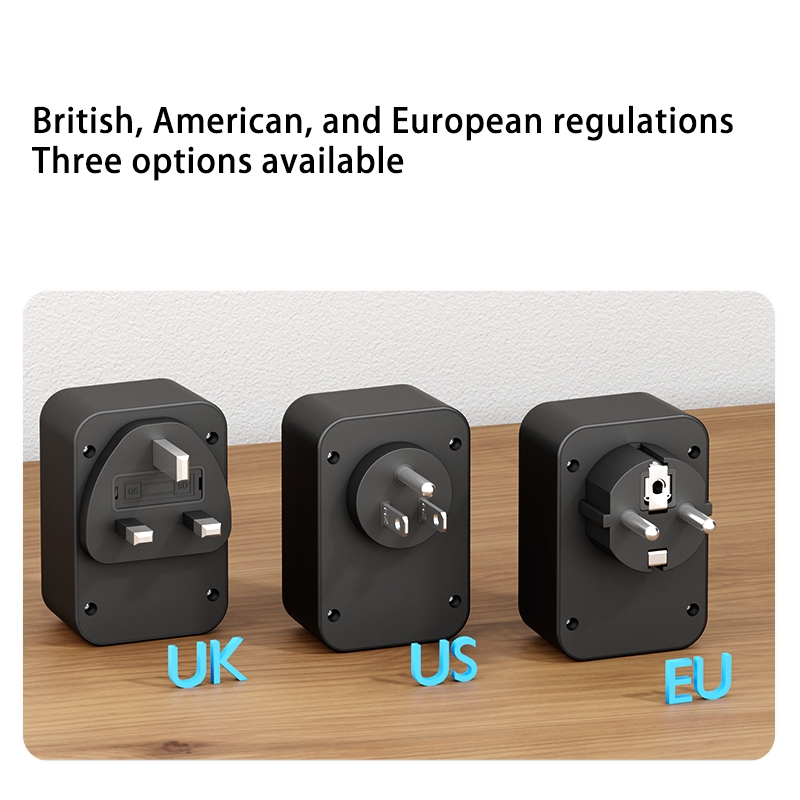
For buyers developing UK, EU, US, or other regional power strip products, our team can discuss plug and socket configurations, electrical specifications, product construction, and OEM/ODM requirements.
Looking for a Power Strip Manufacturing Partner?
Contact our team to discuss your product specifications, review your project requirements, and request a quotation.
Contact TISDLIP
References
1. Electrical Safety Foundation International (ESFI) – Extension Cord Safety Tips https://www.esfi.org/extension-cord-safety-tips
2. U.S. Fire Administration – Appliance and Electrical Fire Safety https://www.usfa.fema.gov/prevention/home-fires/prevent-fires/appliance-and-electrical/
3. U.S. Consumer Product Safety Commission (CPSC) – Power Strip Safety Warning and Recall Information
https://www.cpsc.gov/Recalls/2026/CCCEI-Brand-Power-Strips-Recalled-Due-to-Risk-of-Serious-Injury-or-Death-from-Fire-Sold-by-Middle-Way-Electronics
4. Occupational Safety and Health Administration (OSHA) – Compliance Requirements for Relocatable Power Taps
https://www.osha.gov/laws-regs/standardinterpretations/2002-11-18
5. National Electrical Manufacturers Association (NEMA) – Surge Protection Institute FAQs
https://www.nemasurge.org/faqs/
6. NEMA Surge Protection Institute – UL 1449: Surge Protective Devices
https://www.nemasurge.org/ul-1449-transient-voltage-surge-suppressors/
7. NEMA Surge Protection Institute – Safety-Related Information
https://www.nemasurge.org/spd-safety/
8. Schneider Electric – NEC 210.19 Conductors: Minimum Ampacity and Size
https://www.productinfo.schneider-electric.com/na-std-ref/5c0fee4b347bdf0001de4d55/Conductor%20Ampacity%20Tables/English/Data%20Bulletin%20-%20Conductor%20Ampacity%20Tables%20%28bookmap%29_0000264293.ditamap/%24/NEC210.19ConductorsMinimumAmpacityA-F20BBAC1
9. Intertek – UL 1363: Relocatable Power Taps
https://www.intertek.com/standards-updates/ul-1363-relocatable-power-taps/
10. International Electrotechnical Commission (IEC)
https://www.iec.ch/
Disclaimer: This article provides general educational information about power strip safety, electrical loading, and product sourcing. It is not a substitute for professional electrical engineering advice, applicable electrical codes, or product-specific certification requirements. Always follow the manufacturer instructions and the regulations applicable to the destination market.



 Email
