



Content Menu
● What Is Overload Protection in a Power Strip?
>> What Causes an Electrical Overload?
>> Overload Protection vs. Short-Circuit Protection
● How Does Power Strip Overload Protection Work?
>> How a Circuit Breaker Works
>> The Role of Thermal Protection
>> Common Overcurrent Protection Devices
● Overload Protection vs. Surge Protection: What's the Difference?
>> How Overload Protection Works
>> Can a Power Strip Have Both?
● What Happens When a Power Strip Is Overloaded?
>> Common Signs of an Overloaded Power Strip
>> Potential Risks of Excessive Electrical Loads
● How to Check Whether a Power Strip Has Overload Protection
>> Check the Product Label and Rated Current
>> Identify the Circuit Breaker and Reset Mechanism
>> Verify Product Certification and Documentation
● How to Choose a Power Strip with Overload Protection
>> 1. Check the Rated Voltage, Current, and Maximum Load
>> 2. Check the Protection Device Specifications
>> 3. Check Power Cord and Conductor Specifications
>> 4. Check Housing Materials and Electrical Safety
>> 5. Check Product Standards and Market Compliance
>> 6. Evaluate Outlets and USB Charging Functions
>> 7. Compare Product Value, Not Just Price
● What Should B2B Buyers Check When Sourcing Power Strips?
>> 1. Confirm the Overload Protection Configuration
>> 2. Confirm Specifications for the Target Market
>> 3. Review Electrical Safety Testing and Quality Control
>> 4. Confirm OEM and ODM Requirements
● How to Reset a Tripped Power Strip
● How to Use Power Strips Safely
● Conclusion: Choose Power Strips Based on Verified Protection and Product Specifications
Overload protection is an important safety feature in power strips and extension sockets. It is designed to interrupt the electrical supply when the current exceeds a product& permitted operating limit, helping reduce the risk of excessive heating, damaged components, and electrical hazards.
However, overload protection is not the same as surge protection, and not every power strip uses the same protection device or internal design. Some products use resettable circuit breakers, while other designs may use different overcurrent protection components depending on the applicable product requirements.
For buyers, distributors, and brand owners, understanding these differences is essential when selecting or sourcing power strips for different markets.
This guide explains how power strip overload protection works, how it differs from surge protection, what product specifications to check, and what B2B buyers should consider when evaluating a power strip manufacturer.
What Is Overload Protection in a Power Strip?
Overload protection is a safety function designed to interrupt current when the electrical load exceeds the permitted rating of a power strip or its protective components.
Every power strip has a rated voltage and current. Connecting devices with a combined load above the product permitted capacity can cause excessive current to flow through its conductors, terminals, and internal connections.
If the current remains too high, electrical components may overheat. Depending on the product design and the nature of the fault, this can damage insulation, contacts, or the enclosure and increase the risk of fire.
An overload protection device helps reduce this risk by disconnecting the supply when its operating conditions are reached.
What Causes an Electrical Overload?
An electrical overload occurs when equipment draws more current from a circuit or product than that circuit or product is designed to carry under the specified conditions.
Common causes include:
- Connecting several high-power appliances to one power strip.
- Exceeding the rated current or maximum load marked on the product.
- Using a power strip with an unsuitable cable or internal components.
- Operating equipment under conditions that cause sustained high current.
- Connecting devices with high starting currents without considering the protective device's characteristics.
For example, consider a power strip rated at 15A and 125V, a common rating for certain products designed for the US market.
The theoretical power at this rating is:15A × 125V = 1,875W
If an air fryer rated at 1,500W and a coffee maker rated at 1,000W are connected to the same strip, their combined rated power is 2,500W.
This exceeds the example product 1,875W rating. The actual current drawn depends on the appliances and supply conditions, but the combined load clearly exceeds the stated capacity.
This example is specific to a 15A, 125V product. Other markets and products may have different voltage, current, and power ratings. Always follow the rating label and manufacturer instructions.
Overload Protection vs. Short-Circuit Protection
Overload and short-circuit protection address different electrical conditions.
| Feature | Overload Protection | Short-Circuit Protection |
|---|---|---|
| Typical Condition | Current above the permitted operating level over time | A fault creates a very low-resistance current path |
| Current Behavior | May be moderately above the rated current | Can rise to a very high level |
| Possible Cause | Too many or excessively powerful connected loads | Damaged insulation, incorrect wiring, or component failure |
| Protection Response | Depends on the protective device and its time-current characteristics | Requires protection suitable for the prospective fault current |
| Main Purpose | Reduce risks associated with sustained excessive current | Interrupt dangerous fault currents |
The same protective device may provide protection against more than one type of overcurrent condition, depending on its design and rating. However, the terms should not be treated as interchangeable.
How Does Power Strip Overload Protection Work?
Power strips can use different types of overcurrent protection devices. The actual configuration depends on the product design, rated current, applicable standards, and intended market.
A resettable circuit breaker is one common solution. It is designed to open the circuit when the current and operating conditions reach its specified trip characteristics.
Some products may also incorporate thermal interruption mechanisms or other protective components. These should be described according to the actual product construction rather than assumed to be present in every power strip.
How a Circuit Breaker Works
A circuit breaker is an electrical protection device that interrupts the circuit when its operating conditions meet a specified trip characteristic.
Depending on the design, a breaker may use thermal, magnetic, or combined thermal-magnetic operating principles.
A thermal breaker responds to heating associated with current flow. A magnetic mechanism responds to sufficiently high current. Some designs combine both mechanisms.
When the breaker trips, its contacts open and interrupt the electrical supply to the connected outlets or protected circuit.
Some power strips use a reset button or resettable switch to restore operation after the cause of the trip has been addressed.
The trip time is not necessarily instantaneous. It depends on factors such as:
- The magnitude of the overcurrent.
- The breaker time-current characteristics.
- Ambient and internal operating temperatures.
- The device construction and rated specifications.
For this reason, it is not technically accurate to promise that every overload-protected power strip will trip within a fixed number of milliseconds or seconds.
The Role of Thermal Protection
Thermal protection is designed to respond to excessive temperature under specified operating conditions.
A power strip contains multiple electrical connections, including terminals, conductors, switches, and socket contacts. Excessive resistance at a poor connection can generate localized heat.
This means that not every overheating problem is necessarily caused by the total current exceeding the rated current.
Depending on the design, a thermal interruption mechanism may provide an additional layer of protection against certain temperature-related conditions.
However, thermal protection is not a substitute for correct conductor sizing, secure connections, suitable materials, or proper product testing.
It is also important to distinguish between a thermal circuit breaker and a separate thermal cutoff. They may operate differently and should not be described as the same component without checking the actual construction.
Common Overcurrent Protection Devices
Different products may use different protective components.
| Protection Device | General Function | Buyer Considerations |
|---|---|---|
| Resettable circuit breaker | Opens the circuit under specified overcurrent conditions and can be reset after the cause is addressed | Rated current, trip characteristics, reset mechanism |
| Thermal circuit breaker | Uses temperature-related behavior associated with current flow to interrupt the circuit | Operating temperature, current rating, reset behavior |
| Thermal cutoff | Interrupts a circuit when its specified temperature condition is reached | Temperature rating, location, replacement or one-time operation |
| Fuse | Opens the circuit when current and time conditions cause its element to operate | Rated current, voltage, breaking capacity, replacement requirements |

These devices are not automatically interchangeable. The appropriate solution must be evaluated against the product intended application and applicable safety requirements.
Overload Protection vs. Surge Protection: What's the Difference?
Overload protection and surge protection serve different purposes.
Overload protection addresses excessive current. Surge protection is designed to limit transient overvoltage events that may occur in the electrical supply.
A power strip may include one function or both, depending on its design and certification.
| Comparison | Overload Protection | Surge Protection |
|---|---|---|
| Main purpose | Interrupt excessive current | Limit transient voltage surges |
| Electrical condition | Overcurrent | Transient overvoltage |
| Common components | Circuit breaker, fuse, or other overcurrent protection devices | MOVs and other surge-protection components |
| Product information | Rated current and protection-device specifications | Surge protection ratings and relevant performance information |
| US standard reference | UL 1363 may apply to relocatable power taps | UL 1449 applies to surge protective devices |
| Main concern | Excessive current and associated heating | Voltage transients that may affect connected equipment |
How Overload Protection Works
Overload protection monitors or responds to electrical conditions associated with excessive current.
When the protective device reaches its specified operating conditions, it interrupts the circuit to help prevent the product from continuing to carry an excessive load.
It is primarily concerned with current and the product permitted operating limits.
How Surge Protection Works
Surge protection is designed to limit transient overvoltage events.
Many surge-protection products use metal oxide varistors (MOVs). An MOV changes its electrical behavior when the voltage across it rises above its operating threshold, helping divert or limit transient energy.
Surge protection performance should be evaluated using the product's relevant ratings and test information. A joule rating alone does not describe every aspect of surge protection performance.
UL 1449 is a US safety standard for surge protective devices. IEC 61643-11 is an international standard covering surge protective devices connected to AC low-voltage power systems.
These standards address surge protection, not the general overload-protection function of a power strip.
Can a Power Strip Have Both?
Yes. A power strip can combine overcurrent protection and surge-protection components in one product.
For example, a product may include:
- A circuit breaker or other overcurrent protection device.
- MOV-based surge protection components.
- Multiple socket outlets.
- An on/off switch and indicator light.
- USB charging outputs, if included in the product design.
However, the presence of one function does not automatically confirm the presence or performance of the other.
When comparing products, check the actual product specifications, safety documentation, and applicable certification records.
One more distinction is important:
- GFCI (Ground-Fault Circuit Interrupter): Designed to provide protection against certain electric shock hazards caused by ground-fault current.
- AFCI (Arc-Fault Circuit Interrupter): Designed to detect specified arcing conditions that may create fire hazards.
GFCI and AFCI protection are different from ordinary overload protection. Their presence should not be assumed in a power strip unless the product is specifically designed and evaluated for those functions.
What Happens When a Power Strip Is Overloaded?
The result of an overload depends on the power strip construction, protective components, connected load, and operating conditions.
In a product with suitable overcurrent protection, the protective device may interrupt the supply when its specified trip conditions are reached.
In a product without appropriate local protection, excessive current may continue to flow until another protective device in the electrical installation operates or a component fails.
A building branch-circuit protection does not necessarily respond to every localized overheating problem inside a power strip. For example, a poor electrical connection may generate heat even when the total current is below the branch circuit breaker& trip threshold.
This is why product construction, connection quality, component selection, and correct use all matter.
Common Signs of an Overloaded Power Strip
Pay attention to the following warning signs:
- The circuit breaker or resettable protection device trips repeatedly.
- The power strip or plug becomes unusually warm or hot.
- There is a burning smell.
- The enclosure becomes discolored or deformed.
- The power cord or plug shows visible damage.
- The socket contacts become loose or show signs of overheating.
- Connected equipment loses power unexpectedly.
If any of these signs appear, disconnect the load if it is safe to do so and stop using the product until the cause has been identified.
Do not continue resetting a protective device without investigating why it has operated.
Potential Risks of Excessive Electrical Loads
An overloaded or damaged power strip may experience:
- Excessive conductor heating.
- Degradation of cable insulation.
- Damage to socket contacts and terminals.
- Deformation of plastic components.
- Electrical arcing at damaged or loose connections.
- Increased risk of electric shock or fire.
Overload protection can reduce certain risks, but it cannot correct every electrical or mechanical fault. Damaged cords, loose connections, unsuitable installation conditions, and defective components still require attention.
How to Check Whether a Power Strip Has Overload Protection
A product photograph or marketing description alone may not be enough to confirm its protection configuration.
Before buying, check the product label, technical specifications, physical design, and relevant certification information.
Check the Product Label and Rated Current
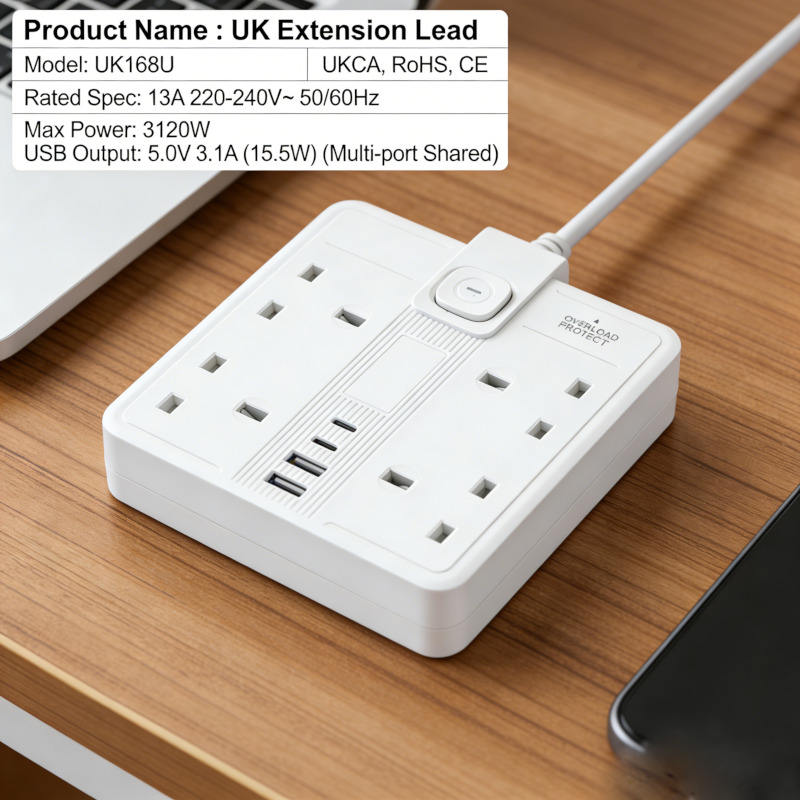
Start with the rating label on the power strip.
Look for:
- Rated voltage (V).
- Rated current (A).
- Maximum rated power (W), where specified.
- Applicable product standard or certification information.
- Manufacturer and model identification.
- Protection-device information, where provided.
For example, a US-market power strip may be marked 15A, 125V, and 1,875W.
These figures describe a particular product rating. They should not be applied to products designed for other markets.
A power strip rated current is not, by itself, proof of a particular internal protection device. Check the product documentation for details.
Identify the Circuit Breaker and Reset Mechanism
Some power strips have a clearly identifiable reset button or a switch that incorporates a circuit breaker.
However, not every switch is a circuit breaker.
A normal on/off switch simply controls whether power is supplied to the outlets. It does not necessarily provide overcurrent protection.
If the product claims to have overload protection, ask the manufacturer to identify the protective component and provide relevant technical information.
Verify Product Certification and Documentation
Look for certification information that matches the product intended market and product category.
For example:
- UL 1363 is a US standard for relocatable power taps.
- CSA requirements may apply to relevant Canadian product categories.
- IEC 60884-2-7:2025 covers specified cord extension sets for household and similar purposes.
- UL 1449 applies to surge protective devices, not general overload protection.
A certification logo on a listing page is not sufficient by itself. Buyers should verify the exact model, manufacturer, product category, certification scope, and relevant listing or certificate records.
Do not assume that a product is certified simply because a seller uses terms such as UL standard, CE approved,or international quality.
How to Choose a Power Strip with Overload Protection
Choosing a suitable power strip requires more than checking the number of outlets or the advertised wattage.
The electrical rating, protection configuration, cable construction, housing materials, and target-market requirements should all be considered.
Use the following checklist when comparing products.
1. Check the Rated Voltage, Current, and Maximum Load
The rated voltage and current determine the electrical operating limits specified for the product.
For a simple single-phase load, the relationship between voltage, current, and power can be expressed as:
P = V × I
For example:
| Example Product Rating | Calculation | Rated Apparent Power |
|---|---|---|
| 15A, 125V | 15 × 125 | 1,875 VA |
| 10A, 250V | 10 × 250 | 2,500 VA |
| 16A, 230V | 16 × 230 | 3,680 VA |
These are mathematical examples, not universal product ratings or confirmation that a specific product is suitable for those loads.
For AC equipment, the relationship between real power in watts and voltage and current can also depend on power factor and the characteristics of the connected load.
Always follow the product actual rated values and the manufacturer instructions.
2. Check the Protection Device Specifications
Do not rely only on phrases such as overload protection or safety switch."
Ask for details such as:
- Protection-device type.
- Rated current.
- Rated voltage.
- Trip characteristics, where applicable.
- Resettable or non-resettable operation.
- Relevant component specifications.
- How the protective device is integrated into the product.
For B2B purchases, these details should be included in the technical specification or product approval documentation.
3. Check Power Cord and Conductor Specifications
The power cord is an important part of the overall electrical safety design.
Relevant specifications include:
- Conductor material.
- Conductor cross-sectional area or wire gauge.
- Number of cores.
- Cable type.
- Rated voltage and temperature.
- Cable length.
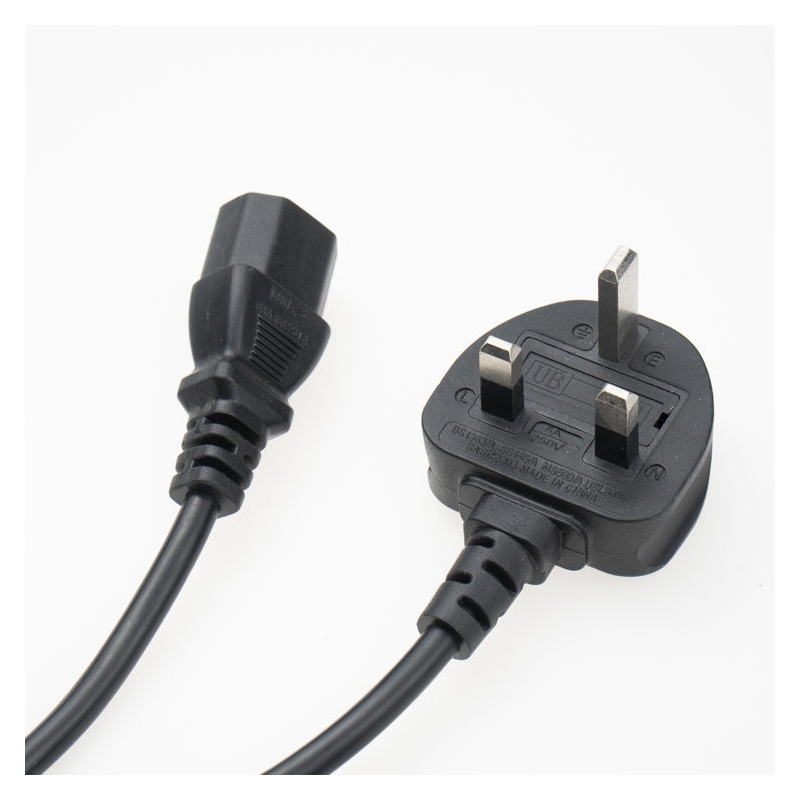
- Applicable cable standards.
In the US market, cable specifications may be expressed in AWG. In many other markets, conductor cross-sectional area is commonly expressed in mm².
Do not select a cable based on length alone. The suitable conductor size depends on current, cable length, installation conditions, material, temperature rating, and applicable product requirements.
A longer cable may introduce additional voltage drop and heating under load. The complete product must be evaluated using the relevant requirements.
4. Check Housing Materials and Electrical Safety
The enclosure should be suitable for the intended electrical and environmental conditions.
When evaluating a power strip, consider:
- Insulation properties.
- Heat resistance.
- Mechanical strength.
- Resistance to normal operating conditions.
- Suitability of the material for the intended product category.
- Relevant flammability or material test documentation, where required.
A plastic housing should not be described as fireproof simply because it uses an engineering plastic.
Material properties and product-level safety performance are different things. Buyers should request relevant material specifications and test evidence.
5. Check Product Standards and Market Compliance
A power strip designed for one market may not be suitable for another market without changes to its plug, socket, construction, ratings, and certification.
The applicable requirements depend on the product category and destination country.
| Market or Product Category | Relevant Standard or Framework | What Buyers Should Check |
|---|---|---|
| United States relocatable power taps | UL 1363 | Product scope, construction, ratings, and certification status |
| Canada | Applicable CSA requirements, such as CSA-C22.2 No. 308 for relevant products | Product category and certification scope |
| IEC-based cord extension sets | IEC 60884-2-7:2025 | Whether the product falls within the standard's scope |
| US surge protective devices | UL 1449 | Surge-protection product evaluation and listing |
| AC low-voltage surge protective devices | IEC 61643-11 | Applicable SPD classification and requirements |
IEC 60884-2-7:2025 applies to specified cord extension sets with rated voltage above 50V and up to 440V, and rated current not exceeding 16A, for household and similar purposes. It does not cover every type of power distribution product. For example, products with cable-reeling mechanisms may fall under additional or different requirements.
For global sourcing, do not assume that one certificate or standard automatically covers every country. Confirm the destination market applicable regulations and the exact product category before placing an order.
6. Evaluate Outlets and USB Charging Functions
The number and arrangement of outlets affect how a power strip can be used.
Consider:
- Outlet spacing.
- Plug compatibility.
- Grounding arrangements.
- Switch configuration.
- USB-A or USB-C availability.
- USB output voltage and current.
- USB power-sharing behavior.
- Total product input rating.
USB charging output should not be confused with the power drawn from the AC supply.
For example, a USB-C port advertised as providing up to 100W refers to its specified DC output capability. The power drawn from the AC supply will also depend on the charging module conversion efficiency and operating conditions.
When evaluating the total electrical load, consider the complete product input rating and the USB module input specifications. Do not simply add the advertised USB output wattage to the AC outlet load as if they were identical quantities.
7. Compare Product Value, Not Just Price
A low purchase price does not necessarily mean a product offers good value.
When comparing suppliers, consider:
- Product construction and component quality.
- Protection-device specifications.
- Cable and conductor specifications.
- Applicable certification and test documentation.
- Production consistency.
- Quality-control procedures.
- Warranty and after-sales support.
- Minimum order quantity and lead time.
For distributors and brand owners, a reliable product specification and consistent production quality are often more important than a small difference in unit price.

What Should B2B Buyers Check When Sourcing Power Strips?
For importers, wholesalers, retailers, and brand owners, sourcing a power strip is not simply a matter of choosing a model with enough outlets.
The product must meet the electrical, mechanical, and regulatory requirements of its intended market.
Before confirming an order, review the following areas with the manufacturer.
1. Confirm the Overload Protection Configuration
Ask the supplier to identify the actual protection components used in the product.
Important questions include:
- Does the product use a resettable circuit breaker, fuse, thermal cutoff, or another protection device?
- What are the rated current and voltage of the protection component?
- What are its operating or trip characteristics?
- Does the product include any additional thermal interruption mechanism?
- Is the protection device covered by the product safety evaluation?
- Can the supplier provide relevant component specifications or technical documentation?
Do not accept a general statement such as equipped with full protection without supporting product details.
2. Confirm Specifications for the Target Market
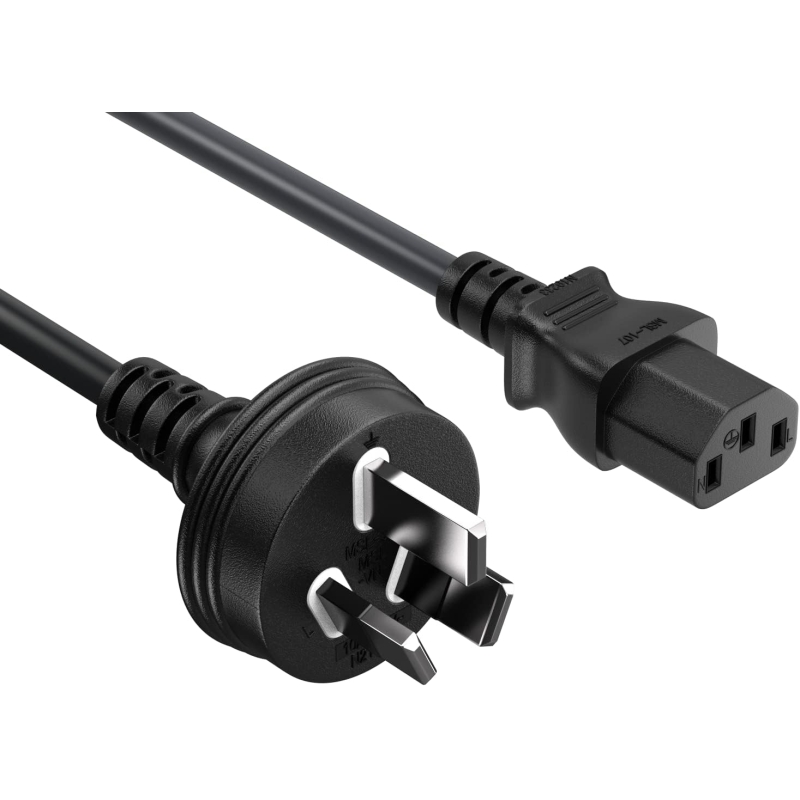
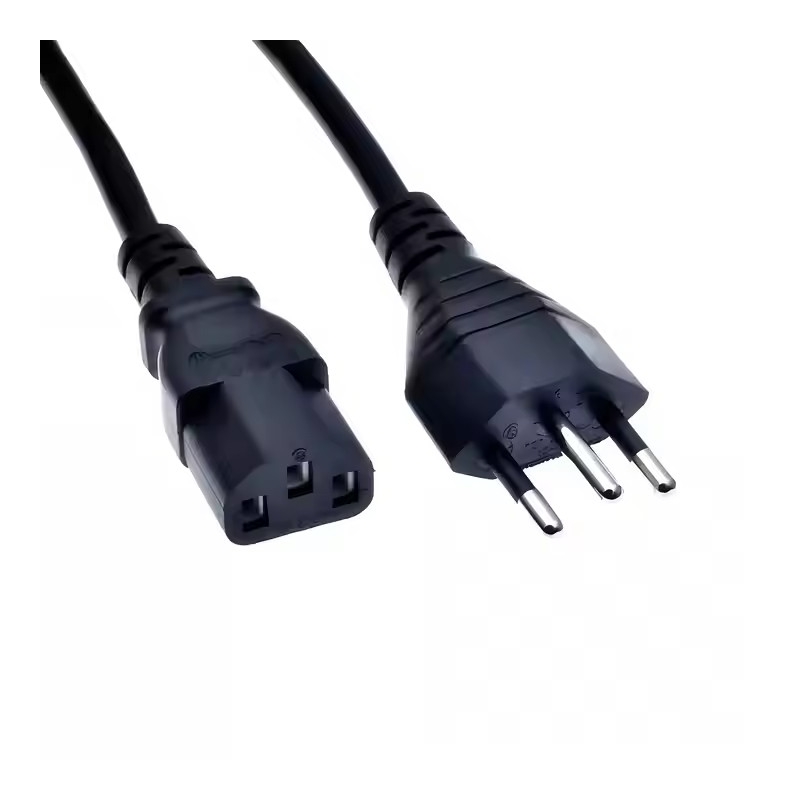
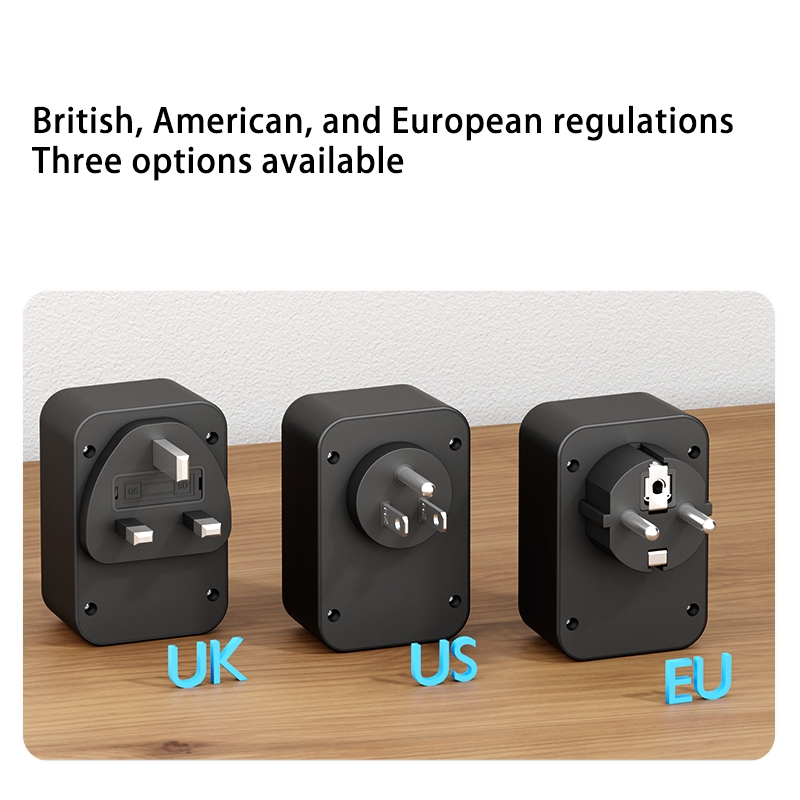
The plug, socket, cable, and rated electrical parameters must match the destination market.
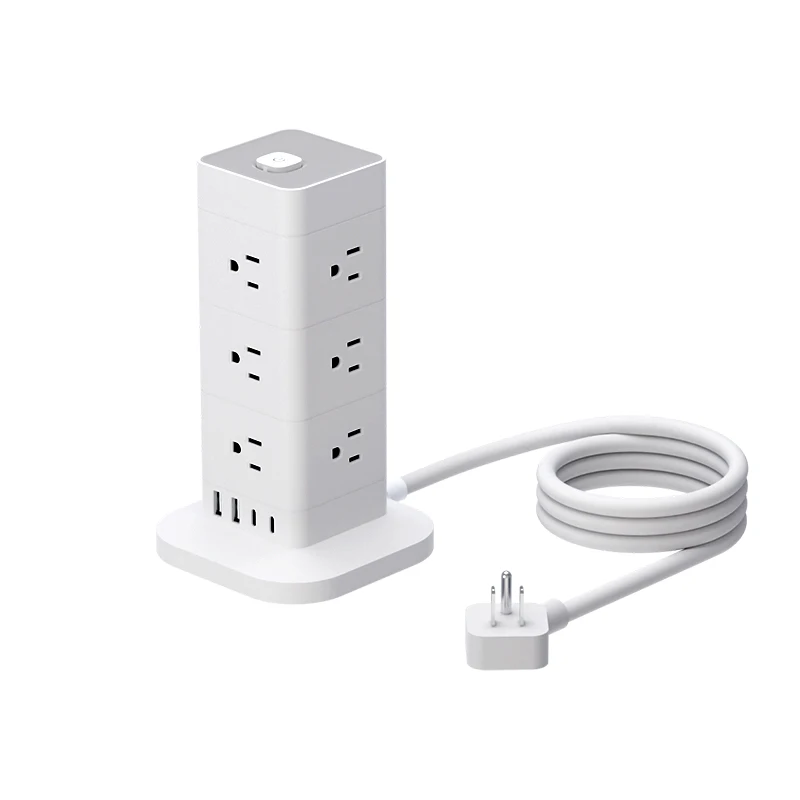
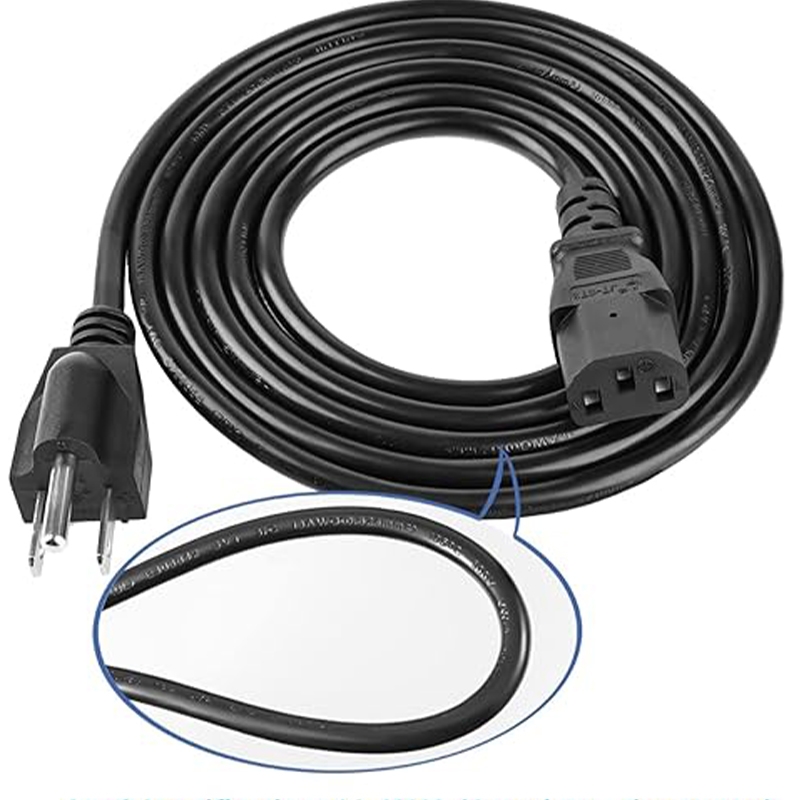
For example, a buyer sourcing products for the US market may need to specify the relevant NEMA plug and receptacle configuration.
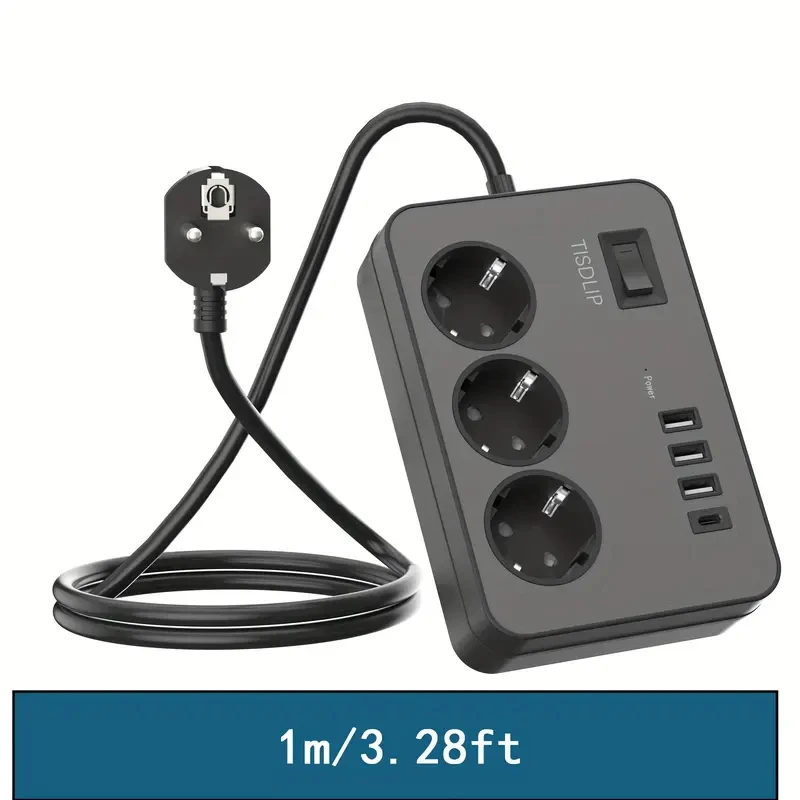
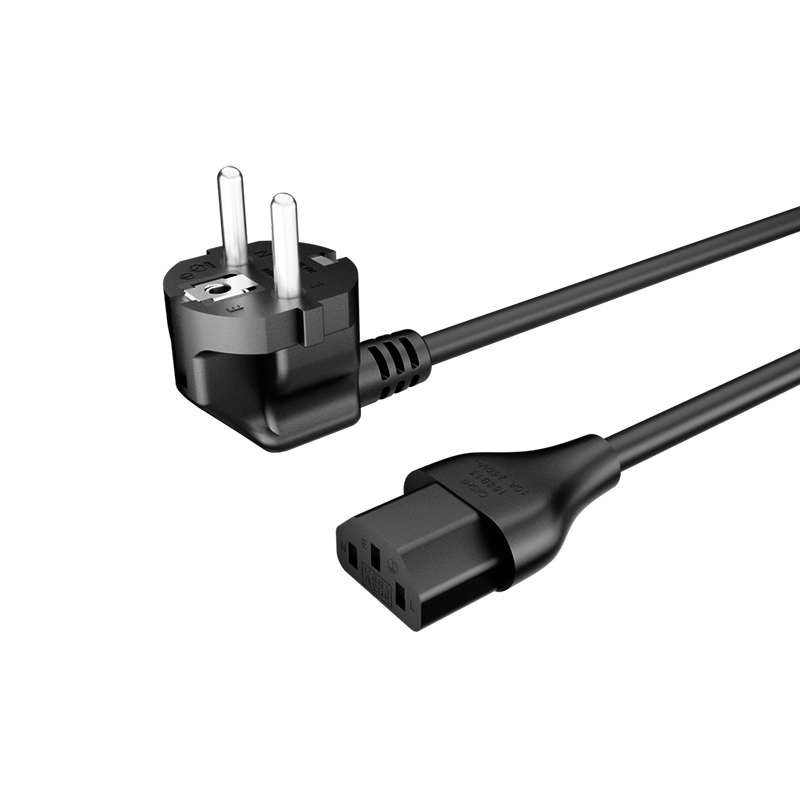
A buyer sourcing products for European markets may need to specify the appropriate national plug and socket configuration, such as Schuko-compatible designs where applicable.
The specification should clearly identify:
- Destination country or market.
- Plug type and applicable standard.
- Socket type and applicable standard.
- Rated voltage and current.
- Maximum load.
- Cable type, length, and conductor size.
- Grounding requirements.
- Required certification or conformity documentation.
- Indoor or outdoor use, where relevant.
These details should be confirmed before sampling and mass production.
3. Review Electrical Safety Testing and Quality Control
A professional sourcing process should include a review of the product relevant safety evaluation and quality-control records.
Depending on the product and applicable requirements, buyers may need to review:
- Insulation resistance testing.
- Electric strength testing.
- Temperature-rise testing.
- Grounding continuity testing.
- Plug and socket mechanical checks.
- Cord and terminal connection inspections.
- Switch and protection-device function checks.
- Visual inspection and final product testing.
Not every test applies to every product. The required test plan should be determined by the product category, applicable standard, and certification requirements.
Buyers should request actual test reports or inspection records where available rather than relying on unsupported statements about testing capability.
4. Confirm OEM and ODM Requirements
For brands and distributors, OEM and ODM requirements should be discussed before tooling or production begins.
Typical customization points may include:
- Number and arrangement of outlets.
- Plug and socket configuration.
- Power cord type and length.
- Housing shape and color.
- Switch and indicator-light design.
- USB charging configuration.
- Product labeling and rating information.
- Packaging and branding.
- Market-specific certification requirements.
The final approved sample, technical drawing, bill of materials, and product specification should be aligned before mass production.
This helps reduce misunderstandings between the buyer and manufacturer and provides a clearer reference for quality control.
How to Reset a Tripped Power Strip
If a power strip has a resettable circuit breaker and it trips, follow the manufacturer's instructions.
A general approach is:
1. Switch off the power strip, if it has a separate on/off switch.
2. Disconnect the connected appliances.
3. Identify and reduce the excessive load.
4. Allow the product to cool if the manufacturer specifies a cooling period.
5. Reset the protective device according to the product instructions.
6. Reconnect equipment carefully while keeping the total load within the rated limit.
If the protective device trips repeatedly, do not keep resetting it.
A repeated trip may indicate an excessive load, a damaged appliance, a faulty power strip, or a problem with the electrical supply.
If there is a burning smell, visible damage, unusual heating, or discoloration, stop using the product. Do not tape, jam, bypass, or replace the protective device with an unsuitable component.
How to Use Power Strips Safely
Overload protection is one part of a product safety design. Correct use and suitable installation conditions are also important.
Follow these practical precautions:
- Do not exceed the rated current or maximum load marked on the product.
- Avoid connecting multiple high-power heating appliances to one power strip.
- Do not connect one power strip to another unless the product is specifically designed and approved for that use.
- Keep the power strip away from water and unsuitable environmental conditions.
- Do not cover the power strip with rugs, furniture, or other materials that may restrict heat dissipation.
- Keep cables away from sharp edges, excessive pressure, and mechanical damage.
- Stop using products with damaged plugs, cords, sockets, or enclosures.
- Use the product according to its instructions and intended application.
Is the 80% Rule Applicable to Every Power Strip?
No. The commonly discussed 80% loading guideline is associated with particular electrical-code requirements and continuous-load applications. It should not be treated as a universal rule for every power strip in every country.
The permitted load depends on the product rating, applicable installation rules, connected equipment, and manufacturer instructions.
For a 15A, 125V US-market example, 80% of 15A is 12A, equivalent to 1,500W at 125V for a unity-power-factor load.
This calculation is an example, not a universal operating limit for all power strips. Always follow the applicable local requirements and product instructions.
Frequently Asked Questions
What Is Overload Protection on a Power Strip?
Overload protection is a safety function designed to interrupt the electrical supply when current exceeds the permitted operating conditions of the product or its protective device. It may be provided by a circuit breaker, fuse, or another suitable protection mechanism, depending on the design.
Does Every Surge Protector Have Overload Protection?
Not necessarily. Surge protection and overcurrent protection are different functions.
Some products combine both functions, while others may provide surge protection without the same type of resettable circuit breaker used in another product.
Check the product actual specifications, safety documentation, and certification records.
What Happens When a Power Strip Overloads?
If the product has suitable overcurrent protection, its protective device may interrupt the supply when the specified operating conditions are reached.
If the product lacks appropriate protection, excessive current or a localized electrical fault may cause overheating and damage. The exact result depends on the product design and the electrical fault.
How Many Watts Can an Overload-Protected Power Strip Handle?
There is no single wattage limit for all overload-protected power strips.
The permitted load depends on the product's rated voltage, rated current, design, and applicable requirements.
For example, a product rated at 15A and 125V has a calculated apparent power of 1,875VA. This is a US-market example, not a global standard rating.
Always check the product label.
Why Does My Power Strip Trip Even When I Am Not Using High-Power Appliances?
Several factors may cause a protective device to trip:
- The combined load is higher than expected.
- One connected appliance has an abnormal current condition.
- The protective device is faulty or damaged.
- The power strip has experienced excessive temperature.
- There is a fault in the connected equipment or electrical supply.
If the device trips repeatedly, disconnect the loads and investigate the cause. Replace a damaged product rather than continuing to use it.
Is Overload Protection Enough to Prevent Electrical Fires?
No. Overload protection can help reduce risks associated with excessive current, but it cannot prevent every possible electrical fault.
Loose connections, damaged insulation, unsuitable cables, poor installation conditions, and mechanical damage can still create hazards.
A safe product requires suitable design, correct components, appropriate testing, and proper use.
What Is the Difference Between a Circuit Breaker and a Thermal Cutoff?
A circuit breaker is designed to interrupt current under specified overcurrent conditions. A thermal cutoff is designed to interrupt a circuit when a specified temperature condition is reached.
Some products use one type of protection, while others may combine different mechanisms. Their functions and operating characteristics should be confirmed from the actual component specifications.
Which Standard Applies to Power Strips?
The applicable standard depends on the product category and destination market.
For example, UL 1363 is relevant to relocatable power taps in the United States. IEC 60884-2-7:2025 covers specified cord extension sets for household and similar purposes.
Surge-protection functions may require additional evaluation under standards such as UL 1449 or IEC 61643-11.
Buyers should confirm the exact product scope and applicable local requirements before sourcing.
Conclusion: Choose Power Strips Based on Verified Protection and Product Specifications
Overload protection is an important part of power strip safety, but it should not be evaluated in isolation.
A suitable product needs an appropriate protection configuration, correctly rated conductors and connections, suitable housing materials, and compliance with the requirements of its intended market.
For consumers, checking the product label, rated current, protection mechanism, and manufacturer instructions is a practical starting point.
For distributors, importers, and brand owners, the evaluation should go further. Confirm the protection-device specifications, plug and socket standards, cable construction, certification scope, test documentation, and production quality before placing an order.
Looking for a power strip manufacturer for your target market?
If you are sourcing power strips for distribution or private-label projects, share your required plug standard, rated voltage, current, outlet configuration, protection requirements, and destination market with our team.
We can discuss product specifications and OEM/ODM options based on your project requirements.
References
The following standards and technical resources provide background for understanding power strip safety, cord extension sets, and surge protective devices.
1. UL Solutions – Power Strips Testing and Certification
https://www.ul.com/services/power-strips-testing-and-certification
Overview of power strip product categories, relocatable power taps, and relevant US and Canadian evaluation standards.
2. UL 1363 – Relocatable Power Taps
https://webstore.ansi.org/standards/ul/UL1363Ed2023
US safety standard for applicable relocatable power taps.
3. IEC 60884-2-7:2025 – Particular Requirements for Cord Extension Sets
https://webstore.iec.ch/en/publication/80434
International standard covering specified household and similar-purpose cord extension sets.
4. UL 1449 – Surge Protective Devices
https://www.shopulstandards.com/ProductDetail.aspx?productId=UL1449
US safety standard for surge protective devices.
5. IEC 61643-11 – Low-Voltage Surge Protective Devices
https://webstore.iec.ch/en/publication/117200
International standard covering surge protective devices connected to AC low-voltage power systems.
6. UL Solutions – Guide to Power Strips and Surge Protectors
https://www.ul.com/insights/guide-power-strips-and-surge-protectors
Consumer-oriented guidance on power strips, surge protection, electrical ratings, and safe use.
*Note: Standards may be revised, amended, or adopted differently by individual countries. Always confirm the latest applicable edition and local regulatory requirements for the specific product and destination market.*



 Email
